
What You Need to Know Before Starting Window Glass Installation
Window glass installation is one of the most practical home repair skills you can learn — especially if you live in Colorado Springs, where hail storms and temperature swings can crack or fog up window panes fast.
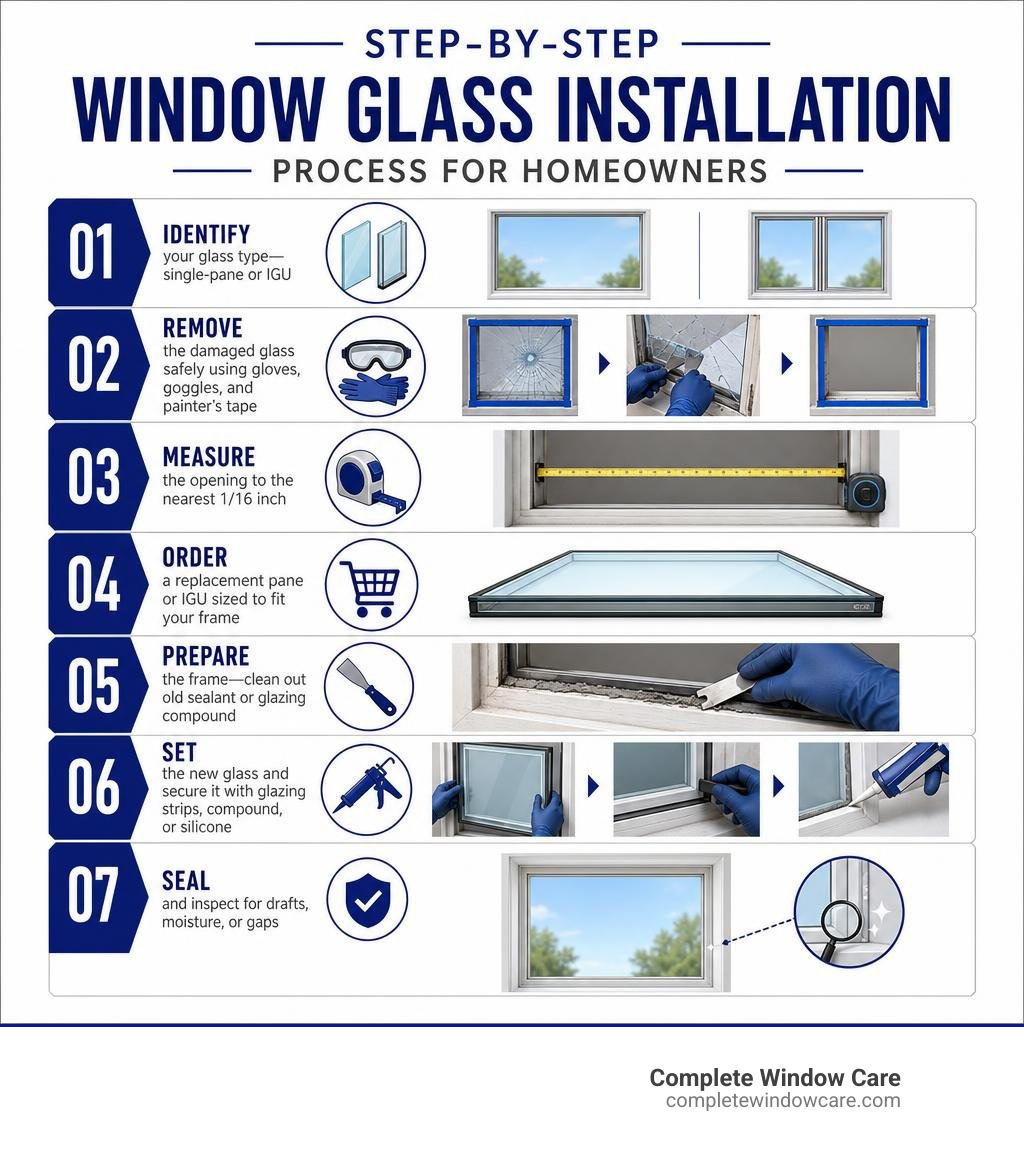
Here’s a quick overview of the window glass installation process:
- Identify your glass type — single-pane or insulated glass unit (IGU)
- Remove the damaged glass safely using gloves, goggles, and painter’s tape
- Measure the opening to the nearest 1/16 inch
- Order a replacement pane or IGU sized to fit your frame
- Prepare the frame — clean out old sealant or glazing compound
- Set the new glass and secure it with glazing strips, compound, or silicone
- Seal and inspect for drafts, moisture, or gaps
Whether you have a cracked single pane in a wood frame or a fogged-up double-pane unit in a vinyl window, the steps above apply. The details change depending on your frame type and glass — and that’s exactly what this guide covers.
Knowing how to do this yourself can save you real money. Professional installation of a replacement IGU can run around $520, compared to roughly $270 if you order the glass and do it yourself.
I’m Michael Smith, owner of Complete Window Care and an AAMA Installation Masters Program certified instructor with over 18 years of hands-on window glass installation experience across Colorado Springs and the Front Range. In this guide, I’ll walk you through everything — from understanding what kind of glass you have to installing it correctly the first time.
Understanding Insulated Glass Units (IGUs) vs. Single-Pane Glass
Before you grab a putty knife, you need to understand what kind of glass you are dealing with. Older homes in the Pikes Peak Region often have single-pane glass, which is just a single sheet of glass secured with metal glazing points and putty.
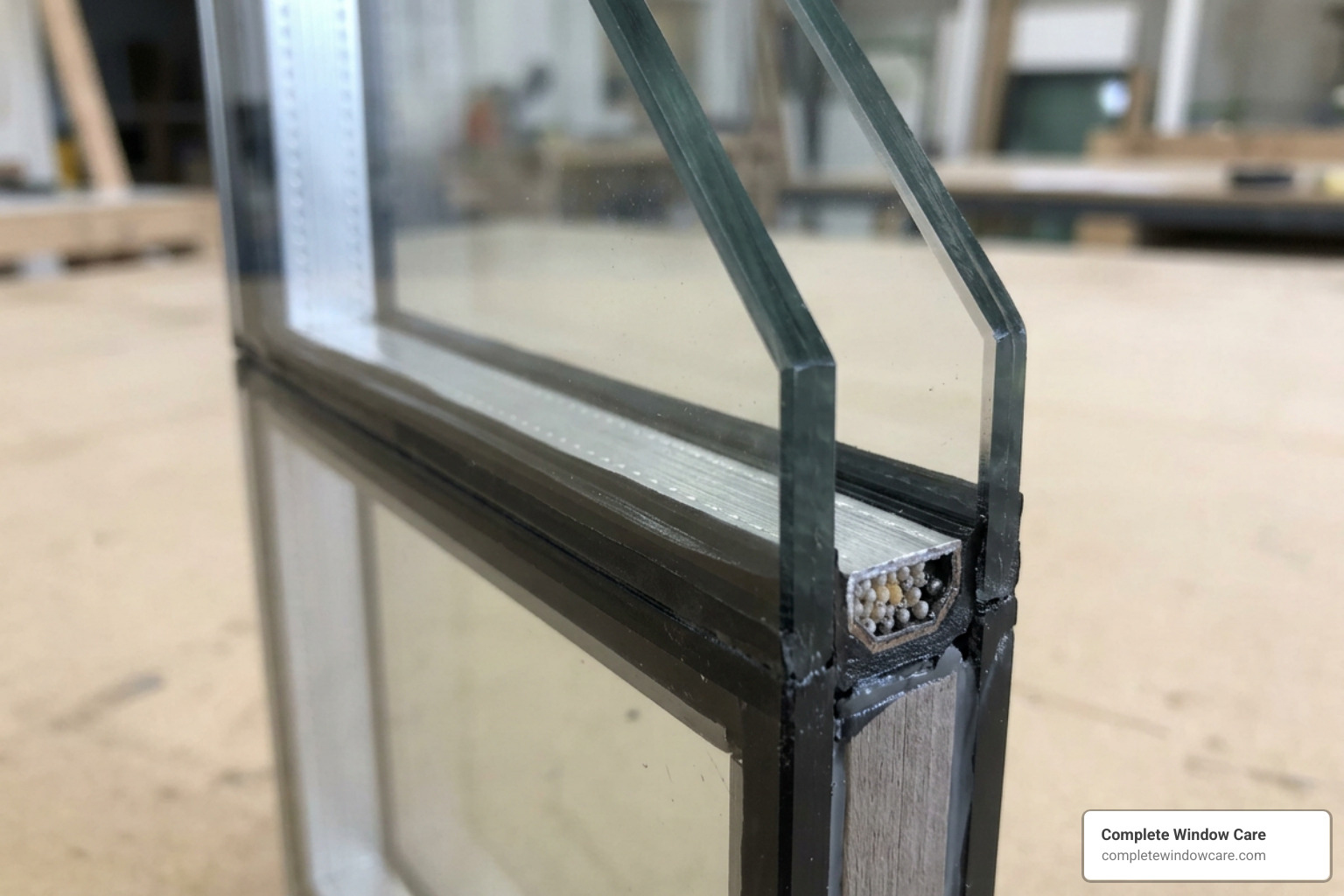
Modern homes, however, use what we call Insulated Glass Units (IGUs), also known as sealed window units or double-pane glass. An IGU consists of two or more panes of glass separated by a spacer bar and hermetically sealed to create an insulating pocket of air or gas.
If you want to understand why this matters for your home’s comfort, start with this guide to why professional installation matters.
| Feature | Single-Pane Glass | Dual-Pane Sealed Window Unit (IGU) |
|---|---|---|
| Construction | One single sheet of glass | Two panes separated by a spacer bar |
| Seal Type | None (held by putty/glazing points) | Hermetically sealed with primary & secondary sealants |
| Thermal Performance | Poor (high heat loss) | Excellent (reduces heat transfer) |
| Noise Reduction | Minimal | Significant sound dampening |
| Condensation Risk | High | Low (unless the hermetic seal fails) |
The Anatomy of a Sealed Window Unit
A sealed window unit is a highly engineered piece of technology. It features double-pane construction where two sheets of tempered or annealed glass are held together by a perimeter spacer bar. Inside that spacer bar is a desiccant—a moisture-absorbing material that prevents condensation from forming inside the unit.
While some units are filled with argon gas to boost insulation, air-filled units remain the industry standard. Why? Air-filled units actually have a longer seal life. Argon gas is prone to slowly leaking out over time, which can eventually lead to seal failure and fogging. Air-filled units, while slightly less insulating, offer excellent long-term durability and gas retention.
Energy Efficiency and Noise Reduction Benefits
Upgrading to dual-pane sealed window units is one of the smartest moves you can make for your home. First, they can reduce your heating and cooling energy costs by 10-15% compared to single-pane windows. In Colorado Springs, where winter nights are freezing and summer days are blazing, that translates to real savings.
Beyond energy savings, dual-pane units offer incredible noise reduction, helping to block out street traffic and neighborhood noise. They also eliminate those chilly drafts that make your living room uncomfortable and boost your home’s overall resale value. If you want the bigger picture, here is a simple overview of window glass installation.
Customization Options: Shapes, Sizes, and Coatings
When ordering a replacement IGU, you aren’t limited to standard clear rectangles. Modern manufacturing allows for an incredible range of customization to match your home’s architectural style.
- Custom Shapes: You can order sealed units in almost any shape, including squares, rectangles, circles, arches, triangles, trapezoids, and irregular polygons.
- Sizes: Custom units can be built up to a maximum overall dimension of 96 inches by 60 inches.
- Glass Tints: Options like bronze, gray, and green tints help reduce glare and solar heat gain.
- Safety Glass: You can choose tempered safety glass (which crumbles into tiny, harmless fragments if broken) or laminated glass. You can also request a permanent tempering logo to be etched in the corner to satisfy local building codes.
How Low-E Glass Works and Proper Orientation
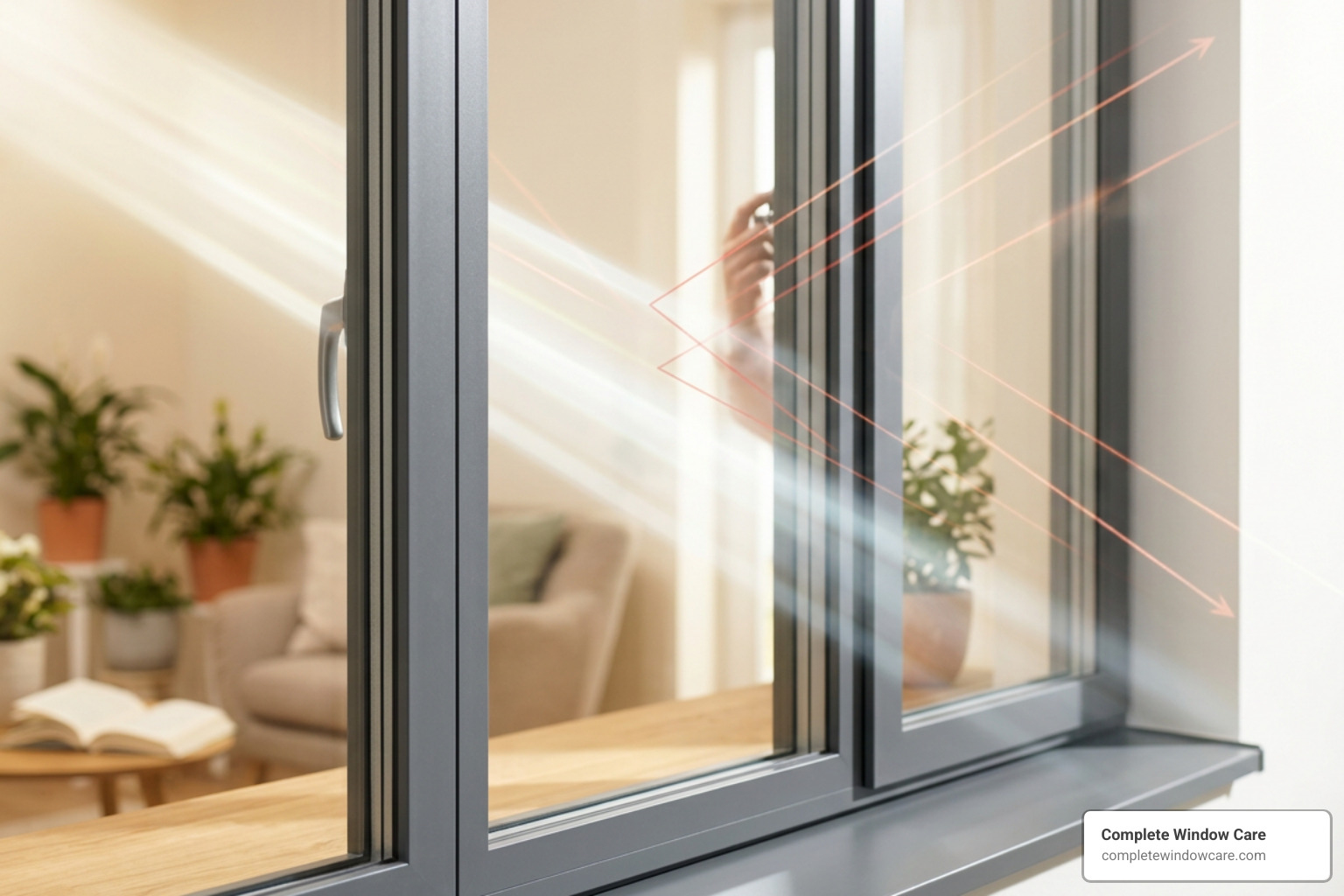
Low-E (low-emissivity) glass features a microscopically thin, transparent metal oxide coating applied directly to the glass surface. This coating acts like a two-way mirror for thermal energy: it reflects indoor heat back into your home during the winter and rejects solar heat and harmful UV rays during the summer.
When installing a Low-E IGU, proper orientation is critical. The Low-E coated surface must face the outside (specifically on surface #2, which is the inside face of the outer pane), while the clear glass pane faces the interior of the room. Installing it backward will severely diminish its energy efficiency. For more on this, see our guide to installing window glass the right way.
Spacer Bars, Grids, and Capillary Tubes
The edge of your IGU can be customized to match your existing window frames:
- Spacer Bars: Available in materials like aluminum or warm-edge foam, and in colors such as clear (silver), black, bronze, and white.
- Internal Grids: You can add decorative grids (also called grilles or mullions) inside the sealed unit so you never have to clean around them. These are available in various patterns and colors to match your home’s style.
- Capillary Tubes: Because Colorado Springs sits at a high altitude (over 6,000 feet), shipping a sealed glass unit from a sea-level manufacturing plant would cause it to bow or explode due to the pressure difference. Capillary tubes are tiny tubes inserted into the IGU seal to let the air pressure equalize during transit. Crucial Step: Once the unit arrives at its final altitude, you must remove or crimp these tubes and seal the opening with a dab of high-grade silicone to keep moisture out.
Mastering the Prep: Measuring and Ordering Custom Glass
The golden rule of window glass installation is simple: measure twice, order once. If your measurements are off by even an eighth of an inch, your new glass will not fit, and custom-ordered glass cannot be returned.
For a complete breakdown of what to look out for, read these practical glass replacement tips.
How to Measure for Window Glass Installation
To get an accurate measurement, you must measure the actual glass unit, not just the visible glass area. This often requires temporarily removing the window sash or prying off the interior glazing stops to expose the edge of the IGU.
- Measure the Width and Height: Measure the outside dimensions of the existing sealed unit to the nearest 1/16 inch. Take measurements at three different points (top, middle, bottom) and use the smallest dimension.
- Subtract Expansion Tolerance: To allow for natural frame expansion and contraction, subtract 1/16 inch to 1/8 inch from your final width and height measurements.
- Measure the Overall Thickness: Measure the total thickness of the IGU from the front face of the exterior pane to the back face of the interior pane. Common overall thicknesses range from 1/2 inch to 1 inch (e.g., two 1/8-inch glass panes with a 1/4-inch spacer yield a 1/2-inch overall thickness).
Ordering Custom IGUs: Costs, Shipping, and Warranties
Once you have your measurements, you can order your custom IGU online or from a local glass shop.
Most custom orders are fabricated quickly, with production typically taking 2-5 business days and shipping occurring within 1-2 days via standard ground carriers.
A standard 36 x 58-inch non-tempered IGU replacement unit costs around $250, though choosing tempered safety glass or adding custom tints and Low-E coatings will increase the price. Most high-quality sealed window units come with a 10-year limited warranty from the date of manufacture, protecting you against seal failure and dust or moisture intrusion.
If you are planning to handle the replacement yourself, make sure you know how to replace window panes safely at home before you start.
Step-by-Step Guide to Professional Window Glass Installation
Now that you have your custom-sized IGU and your workspace is prepped, it is time to perform the installation.
For a detailed visual map of the entire process, follow this step-by-step installation walkthrough.
Essential Tools and Safety Precautions
Safety must be your absolute top priority when handling glass. Even if the old glass is not shattered, a single slip can cause severe injury.
- Safety Gear: Always wear heavy-duty, cut-resistant gloves, safety goggles, and closed-toe shoes.
- The Painter’s Tape Trick: Before removing a cracked window pane, apply a large “X” of painter’s tape across the glass. This holds the shards together and prevents them from showering down on you during removal.
- Essential Tools:
- Putty knife or 5-in-1 tool
- Heat gun (for softening old glazing compound)
- High-grade neutral-cure silicone sealant
- Glass setting blocks (rubber or plastic shims)
- Pry bar or glazing tool
- Rubber mallet
Frame Preparation and Glazing Techniques
A successful installation depends entirely on how clean your frame is. Any leftover silicone, old glazing putty, or dirt will prevent the new sealant from bonding, leading to immediate drafts and water leaks.
Use a heat gun to soften stubborn, dried glazing compound or old silicone in the frame channel, then scrape it clean down to the bare wood, vinyl, or aluminum using a putty knife. Wipe the entire channel down with denatured alcohol to remove any oily residues.
Step-by-Step Window Glass Installation in Vinyl, Wood, and Aluminum Frames
The installation method varies slightly depending on your frame material:
- Vinyl Frames: Vinyl windows typically use snap-in glazing strips on the interior side. Carefully pry these strips out using a thin putty knife, remove the old IGU, scrape away the old double-sided foam glazing tape, apply new tape or a thin bead of silicone, place your setting blocks, set the new glass, and snap the glazing strips back into place.
- Wood Frames: Wood frames require you to scrape away old putty, apply a fresh bed of glazing compound or silicone, press the glass firmly into the frame, secure it with metal glazing points driven every 10 inches, and apply a neat, sloped bead of exterior glazing compound around the perimeter.
- Aluminum Frames: Many aluminum windows feature a screw-together frame. You may need to disassemble one or more sides of the frame sash, slide the old glass out of its rubber gasket, wrap the new glass in the gasket, slide it back into the frame, and re-secure the frame screws.
For more helpful trade secrets, check out these tips for getting a cleaner installation.
Frequently Asked Questions about Glass Replacement
We get a lot of questions from homeowners in Colorado Springs about when to DIY and when to call in the pros.
If you are considering hiring a team, here is what to expect from a professional window installation visit.
Can I replace just the glass instead of the entire window?
Yes, absolutely! In fact, this is our specialty at Complete Window Care. If your window frame is still structurally sound, square, and operates smoothly, there is no reason to spend thousands of dollars replacing the entire window unit. Replacing just the glass is incredibly cost-effective, saves you money, and restores your window’s energy efficiency to brand-new standards.
To learn more about how this works, take a look at what glass replacement service usually includes.
Why is there condensation or fogging inside my double-pane window?
When you see fog, condensation, or water droplets trapped between the two panes of glass, it means the hermetic seal around the perimeter of the IGU has failed. Once the seal breaks, moist air enters the gap, and the internal desiccant becomes saturated.
Unfortunately, there is no way to clean or repair the inside of a failed double-pane window; the entire IGU must be replaced to restore clarity and insulation.
How long does a custom sealed window unit last?
Under normal conditions, a high-quality sealed window unit (IGU) will last between 15 and 25 years. However, its lifespan depends heavily on environmental factors. In Colorado Springs, our intense high-altitude UV rays and dramatic temperature swings (which cause the glass to expand and contract rapidly) can put extra stress on window seals, making high-quality installation and proper sealant application even more important.
For more information on professional standards, see what a good window install service should cover.
Conclusion
Learning the basics of window glass installation is a fantastic way to understand your home’s building envelope and tackle simple repairs. But if you run into a tricky high-altitude installation, a massive picture window, or a frame that needs expert attention, we are here to help.
At Complete Window Care, we are proud to serve Colorado Springs and the entire Pikes Peak Region. Our primary goal is always to save you money by offering cost-effective glass and screen repairs over expensive, unnecessary full window replacements.
Whether you need a quick glass replacement, screen repair, patio door glass services, or a comprehensive leak investigation to stop water damage in its tracks, our experienced local team has you covered.
Schedule a professional glass repair or replacement service with us today, and let us restore your home’s comfort, efficiency, and view!