
Why Repairing Home Windows Is Often Simpler Than You Think
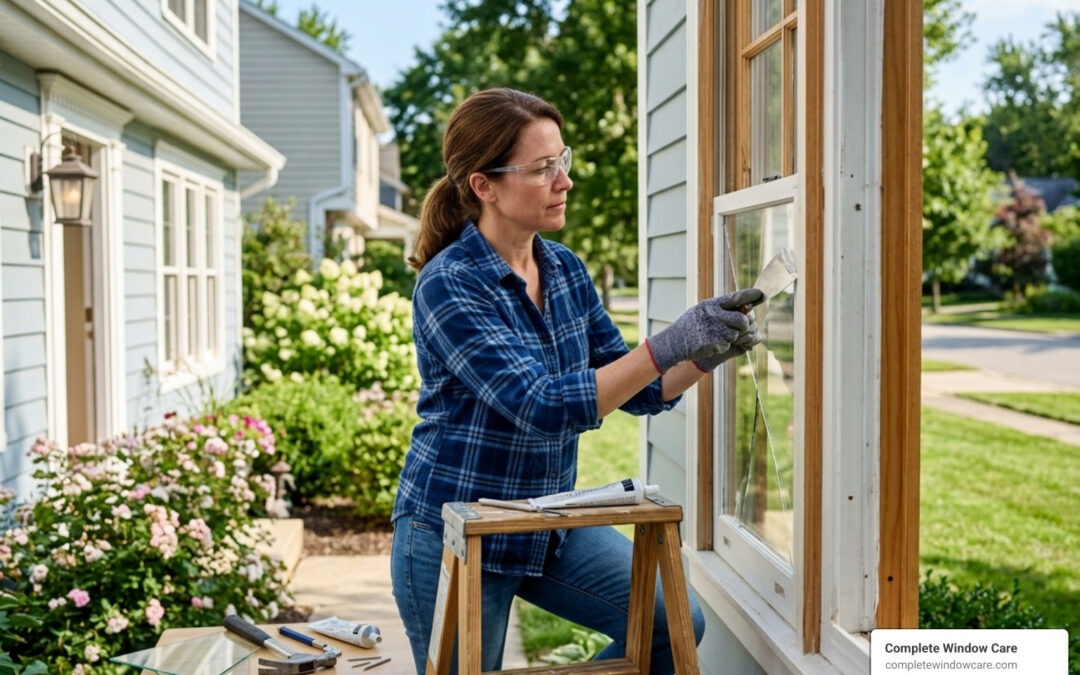
Repairing home windows is something most homeowners in Colorado Springs face at some point — whether it’s a cracked pane from hail, a broken seal letting in drafts, or a sash that won’t budge.
Here’s a quick answer to what most people want to know:
| Situation | Best Action |
|---|---|
| Single cracked pane | DIY repair or glass-only replacement |
| Foggy glass between panes | Replace the insulated glass unit (IGU) |
| Drafts or air leaks | Reseal with weatherstripping or caulk |
| Rotting or warped frame | Professional assessment needed |
| Broken hardware (latch, hinge) | Repair or swap the hardware |
| Hail damage to multiple windows | Contact a professional for evaluation |
In most cases, you don’t need to replace the whole window. A targeted repair — often with less than $50 in materials — can restore full performance and extend your window’s life by decades.
That said, knowing which repair to make, and how to make it safely, is what separates a lasting fix from a costly mistake.
I’m Michael Smith, owner of Complete Window Care and an AAMA Installation Masters Program certified instructor with over 18 years of hands-on experience repairing home windows across Colorado Springs and the Front Range. I’ll walk you through everything you need to know — from diagnosing the damage to finishing the job right.
Repair vs. Replace: Evaluating Damage, Costs, and Efficiency
When a window fails, the first instinct for many homeowners is to browse catalogs for a full replacement. However, at Complete Window Care, we advocate for a “repair first” mentality. Understanding the 12 signs you need home window repair asap can save you thousands of dollars.
The decision often comes down to the window glass replacement vs window replacement which is right for you debate. If your frames are structurally sound—meaning no major rot in wood or warping in vinyl—replacing just the glass or the hardware is the smarter move.
Comparing the Costs
The financial difference is staggering. Restoring a historic wood window yourself often costs less than $50 in materials (putty, points, and glass). Even a professional restoration might range from $400 to $1,000 per window, whereas a full high-quality replacement can easily soar to $2,000 per opening when labor and trim work are included.
| Service Type | DIY Cost | Professional Cost |
|---|---|---|
| Single Pane Glass | $40 – $100 | $175 – $300 |
| Insulated Glass Unit (IGU) | $100 – $250 | $250 – $600 |
| Full Window Replacement | N/A | $800 – $2,000+ |
Lifespan and Energy Efficiency
Modern double-paned glass units (IGUs) have a finite lifespan, usually failing between 10 and 20 years when the seals break and they begin to fog. In contrast, a well-maintained historic window with a good sash rope can last 60+ years. Research from the Department of Energy shows that weatherstripped historic windows combined with a high-quality storm window can actually exceed the energy requirements of the 2012 International Energy Conservation Code.
In Colorado Springs, our windows face unique thermal stress. The intense high-altitude UV rays and rapid temperature swings can cause “seal failure” in double-pane units. When this happens, the argon gas escapes, and moisture enters, creating that unsightly “blown” or foggy look. While you can’t “refill” the gas at home, replacing the IGU within the existing frame restores the window’s thermal performance without the waste of a full replacement.
A Comprehensive Guide to Repairing Home Windows
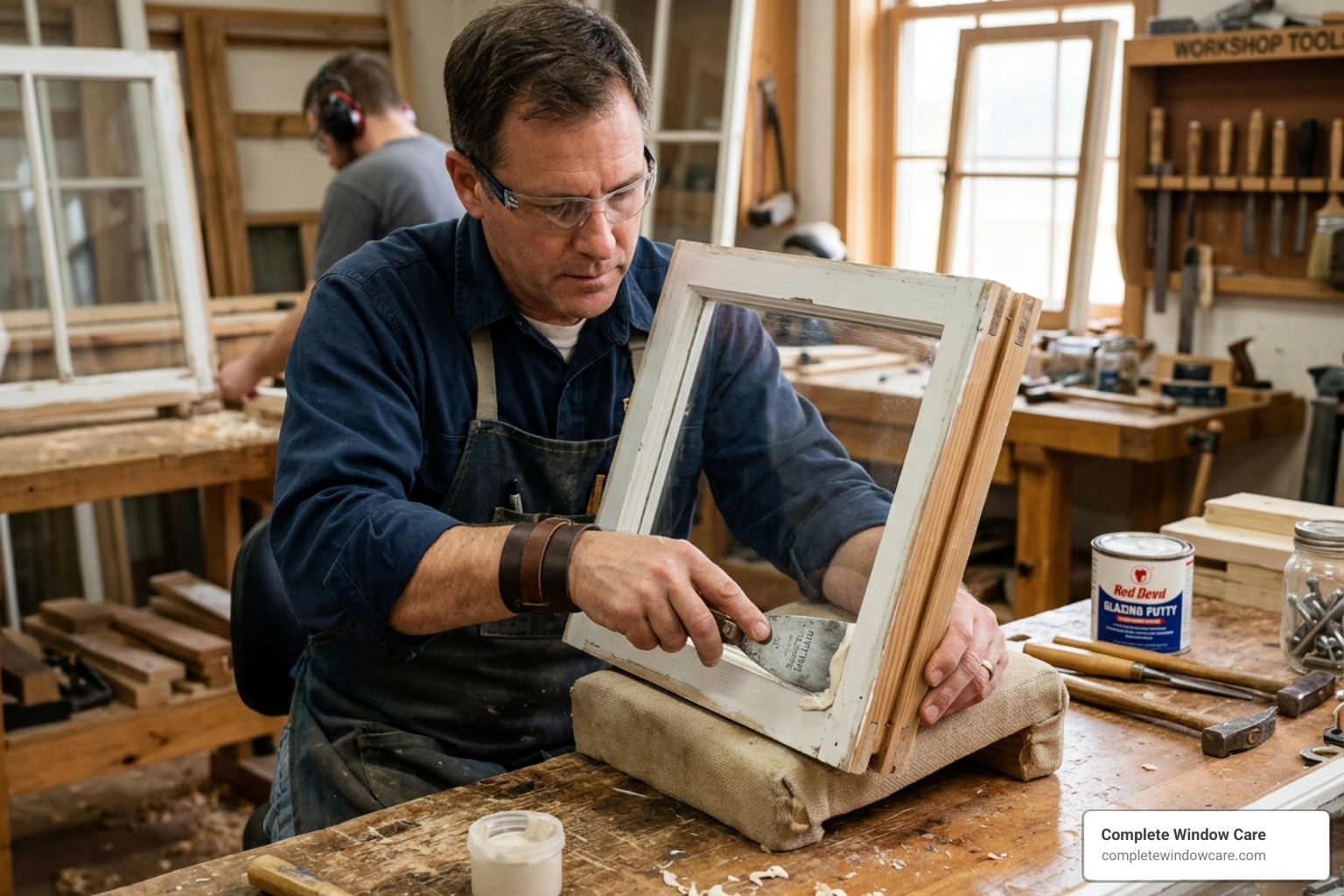
If you are ready to tackle repairing home windows yourself, preparation is your best friend.
Safety First: The Lead Paint Factor
If your home was built before 1978, there is a high probability of lead-based paint. Before you start scraping, you must take precautions:
- PPE: Wear a P100 or N100 respirator and disposable coveralls.
- Containment: Lay down 6-mil plastic sheeting inside and outside to catch any chips.
- HEPA Vacuum: Never use a standard shop vac; only use a vacuum with a certified HEPA filter to clean up dust.
- Wet Scraping: Mist the paint with water to keep dust from becoming airborne.
Step-by-Step Window Restoration
Following a step by step guide to window glass installation ensures a watertight seal.
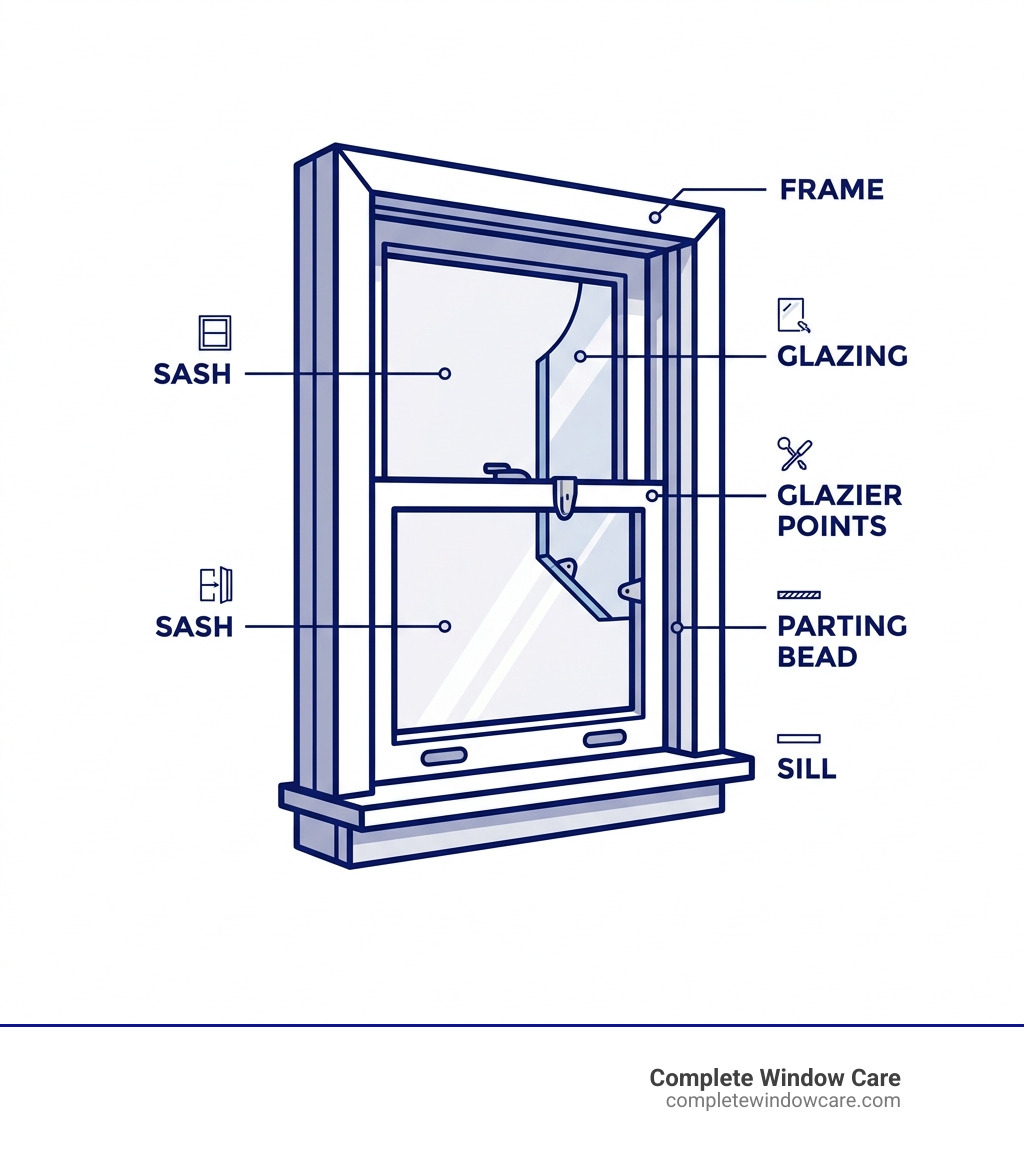
- Sash Removal: For double-hung windows, remove the window stops (the vertical trim holding the sash in). Carefully pull the bottom sash out and disconnect the sash ropes or balances. To get the top sash out, you’ll need to remove the “parting bead”—the thin strip of wood between the two sashes.
- Deglazing: Use a heat gun to soften old, rock-hard putty. Be careful not to crack adjacent glass; some pros use aluminum foil to shield the glass from the heat.
- Wood Repair: If you find minor rot, don’t panic. Scrape away the soft wood and apply a high-quality wood epoxy. Once cured, it can be sanded and painted just like real wood.
- Bedding the Glass: Apply a thin “bed” of glazing compound into the frame’s groove (the rabbet). This prevents the glass from rattling and creates a seal against the wood.
- Setting Points: Press the new glass into the bed. Secure it with glazier points—small metal triangles—spaced every 4 to 6 inches.
- Final Glazing: Roll the putty into a long “rope” and press it against the glass. Use a putty knife at a 45-degree angle to create a smooth, beveled edge that sheds water.
- Curing and Painting: Let the putty cure for 7 to 10 days until it develops a “skin.” When painting, overlap the paint onto the glass by exactly 1/16 of an inch. This creates a “weather seal” that prevents water from getting behind the putty.
Cost-Effective Tips for Repairing Home Windows
To keep your project under budget, focus on the basics that protect the window and extend its life:
- Sash Ropes: Avoid cheap nylon rope, which can break down in sunlight. Use high-quality cotton sash cord with a synthetic core. A good sash cord can last for decades.
- Linseed Oil: Before adding new glazing putty to old wood, brush the bare wood with boiled linseed oil. This helps stop dry wood from pulling oil out of the putty, which can lead to early cracking.
- Hardware: Do not rush to replace old locks, lifts, and hinges. Many can be cleaned, restored, and reused, especially on older wood windows with original hardware.
Common Mistakes in Repairing Home Windows
A few small missteps can turn a simple repair into a bigger project. We see these issues often around the Pikes Peak Region, and many of the same problems that happen during DIY window installs show up in repairs too:
- Measuring too tightly: Do not order glass that fits the opening exactly. Subtract 1/8 inch from the height and width so the frame has room to expand and contract.
- Painting the sliding edges: Avoid painting the sides of the sash or the tracks where the window moves. Paint buildup can make the window stick. Leave those areas bare, or use a little paste wax or a bar of soap to help it glide.
- Ignoring frame rot: New glass will not solve a failing frame. If the wood is soft, cracked, or rotting, fix the structure before spending money on replacement glass.
Material-Specific Techniques and Professional Indicators
The approach to repairing home windows changes significantly based on the frame material.
Wood Frames: These are the most repairable. With epoxy and new glazing, even a window that looks “too far gone” can often be saved. Aluminum Frames: These usually use rubber gaskets or silicone. Repair involves unscrewing the frame corners, sliding out the old glass, and replacing the gasket. Vinyl Windows: Most modern vinyl windows in Colorado Springs are vinyl window repair colorado springs candidates. Repairs usually involve replacing the entire IGU. You’ll need to pop out the vinyl “glazing beads” (the strips holding the glass in) to access the unit.
When to Call the Experts
While we love a good DIY project, there are 4 reasons to avoid diy window repairs and call the experts instead:
- Structural Damage: If the window opening is sagging or the wall around it is soft, you have a structural issue that needs an engineer or a pro.
- Complex Mechanisms: Tilt-and-turn windows or those with integrated blinds are highly complex and easy to break during disassembly.
- Safety and Heights: If the repair is on a second or third story and you aren’t comfortable on a ladder, it isn’t worth the risk.
- Large IGUs: Large double-pane units are heavy and under significant pressure. If they aren’t set perfectly level on “setting blocks,” the glass will crack under its own weight within weeks.
Frequently Asked Questions about Window Repair
Can you replace just one pane of a double-pane window?
Technically, no. A double-pane window is a factory-sealed Insulated Glass Unit (IGU). The two panes are separated by a spacer and sealed with a primary and secondary sealant, with argon gas inside to provide insulation. If one pane breaks, the seal is compromised, and the gas is gone. You must replace the entire IGU “sandwich,” though you can usually keep your original window frame.
How do you identify Low-E glass during a repair?
If you are replacing one window in a room, you want the glass to match. Use the “flashlight test.” Hold a light up to the glass at night. You will see four reflections (two for each pane). On a standard window, all four reflections will be the same color. On a Low-E window, one of those reflections will be a different color—usually purple, green, or red—indicating the metallic energy-efficient coating.
Is it cheaper to repair or replace home windows?
In the vast majority of cases, repair is significantly cheaper. A new glass unit or a hardware fix might cost a few hundred dollars, while a new window can cost $1,000+. Furthermore, the return on investment (ROI) for repair is often higher because you aren’t paying for the “demo” and “re-trimming” of your home’s walls. Plus, it’s the more environmentally friendly choice, keeping perfectly good frames out of Colorado landfills.
Conclusion
Repairing home windows doesn’t have to be a daunting task. Whether you are preserving the historic charm of a Pikes Peak Victorian or simply fixing a foggy view in a modern suburban home, the “repair over replace” philosophy serves your wallet and your home’s integrity.
At Complete Window Care, we make window fixes simpler and less stressful. Whether you need help with repair services, leak investigations, or screen repairs, we’ve served the Colorado Springs 80915 area and the wider Pikes Peak region for years. Our goal is always the practical, cost-effective solution that keeps your home comfortable and looking its best through every Colorado season. Call us today, we are here to help!