
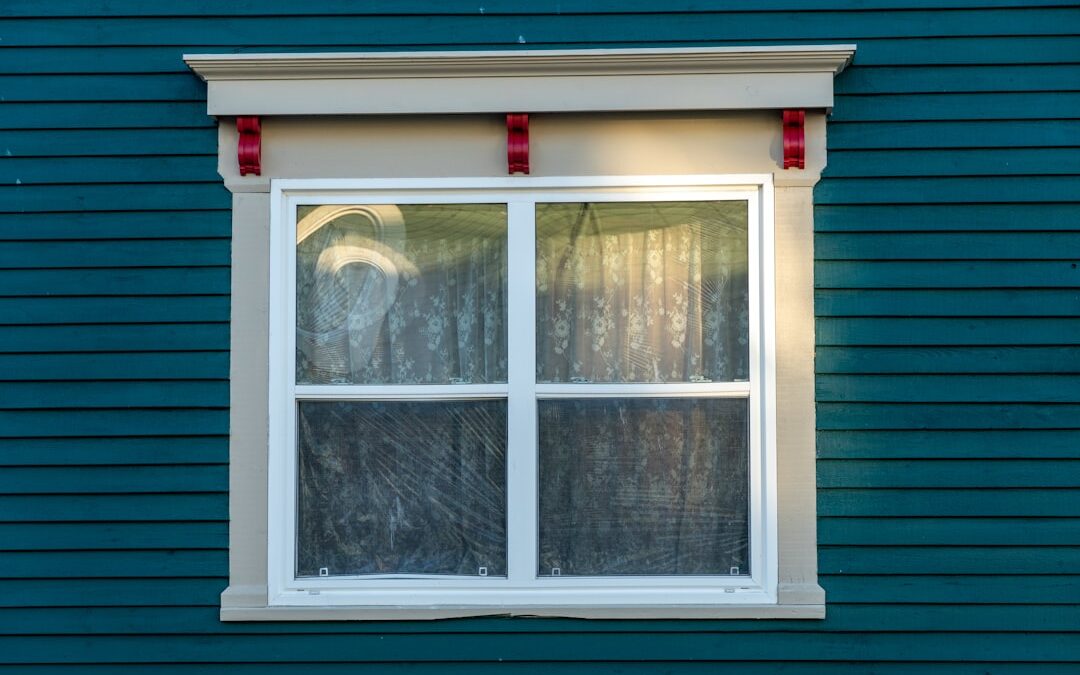
Why Knowing How to Repair Vinyl Window Trim Can Save You Real Money
Repair vinyl window trim the right way and you can avoid a costly full window replacement. Here’s a quick breakdown of when and how to fix it:
Quick Answer: How to Repair Vinyl Window Trim
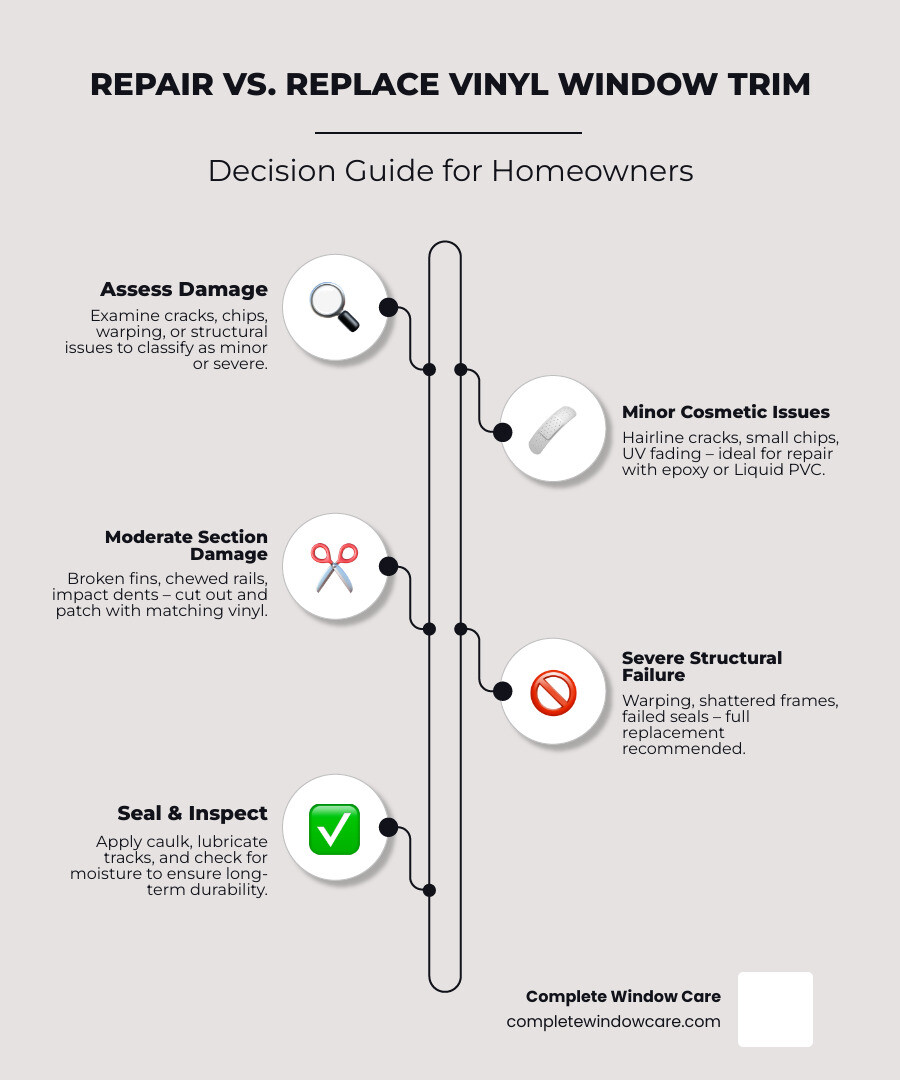
- Assess the damage – Small cracks, chips, or broken fins? Repair. Severe warping or structural failure? Replace.
- Clean the area – Use denatured alcohol or mild soap to prep the surface.
- Choose your repair method:
- Surface cracks: Apply vinyl-rated flexible epoxy or Liquid PVC, cure 24 hours, sand smooth.
- Damaged sections: Cut out the bad piece with tin snips, glue in a matching scrap trim patch with polyurethane adhesive.
- Broken lift fins or rails: Overlay with aluminum or use a vinyl trim repair kit like VinylDoc.
- Seal the edges with latex caulk to block moisture.
- Fill nail holes with color-matched putty for a clean finish.
Vinyl window trim is built to last. It’s waterproof, weather-resistant, and low maintenance. But it’s not indestructible.
Strong winds, hail, falling branches, pet damage, and years of thermal expansion and contraction can all leave your trim cracked, chipped, or broken. In Colorado Springs especially, the freeze-thaw cycles and hail storms put real stress on vinyl frames and trim — leaving many homeowners staring at damage and wondering whether to repair or replace.
The good news? Most vinyl trim damage is repairable. You don’t need to gut the whole window.
This guide walks you through exactly what to do — from spotting the damage to finishing it like a pro.
I’m Michael Smith, owner of Complete Window Care and an AAMA-certified window installation expert with over 18 years of hands-on experience helping Colorado Springs homeowners repair vinyl window trim without unnecessary replacements. I’ve seen how a simple, well-executed repair can restore both function and appearance at a fraction of the cost of a new window.
Assessing Damage: When to Repair Vinyl Window Trim
Before you grab your putty knife, we need to determine if your window is a candidate for a quick fix or if it’s waving a white flag. Vinyl is a fantastic material—Polyvinyl Chloride (PVC) is energy-efficient and rust-proof—but it has a high coefficient of thermal expansion. In the Pikes Peak Region, where a sunny afternoon can plummet into a freezing night, that vinyl is constantly growing and shrinking.
Identifying Common Issues
We often see a few common vinyl window problems, from simple cosmetic dings to bigger “uh-oh” structural issues.
- Hairline Cracks: Usually less than 1/16 inch wide. These are almost always cosmetic and easily fixed with a chemical weld or specialized filler.
- Impact Damage: Did a stray hailstone or an “errant football” (we’ve seen it all!) leave a hole? If the hole is isolated to the trim and hasn’t punctured the main thermal chamber of the frame, we can patch it. Check out our guide on hail damage on vinyl windows for more specifics.
- UV Degradation: Over decades, cheap or recycled vinyl can become brittle and yellow. If the trim crumbles when you touch it, it’s time for a replacement.
- Moisture Infiltration: If the trim has pulled away from the wall, water can sneak behind it. This leads to rot in the wooden buck or drywall damage.
The Repair vs. Replace Matrix
Use this table to help you decide your next move:
| Damage Type | Severity | Recommended Action |
|---|---|---|
| Hairline Crack | Minor/Cosmetic | DIY Repair (Liquid PVC/Epoxy) |
| Small Hole/Gouge | Moderate | Patch with scrap vinyl or repair kit |
| Chewed Lift Rail | Functional | Specialty repair (aluminum or overlay) |
| Severe Warping | Structural | Full Window Replacement |
| Failed Glass Seal | Energy Loss | IGU Replacement |
Our local weather and climate play a huge role here. If the damage is letting Colorado winter drafts into your living room, don’t wait.
Essential Tools and Materials for Vinyl Repair
To repair vinyl window trim effectively, you need materials that “play nice” with PVC. Using the wrong adhesive is like trying to tape a puddle—it just won’t stick. Vinyl expands and contracts, so your repair materials must be flexible.
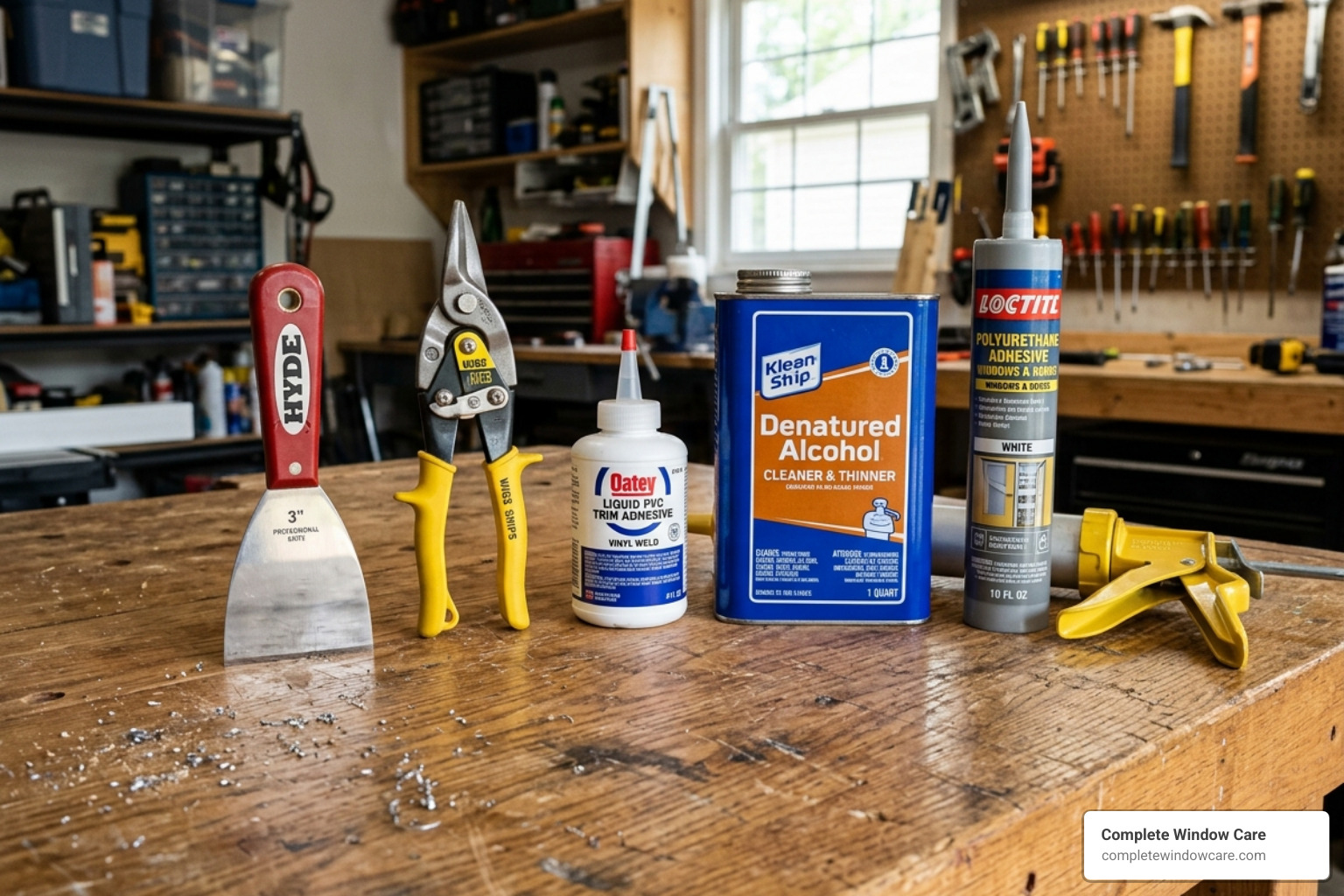
The Must-Have Kit
- Cleaning agents: Denatured alcohol or isopropyl alcohol. Start with a surface that’s free of oils, grime, and Colorado dust.
- Specialized fillers: For cracked or missing trim pieces, a kit with Liquid PVC can make the job much easier. Liquid PVC works differently than regular glue because it chemically bonds the vinyl surfaces together.
- Adhesives: Use polyurethane adhesive for larger patches. Skip standard super glue, which can turn brittle and fail during freeze-thaw cycles.
- Cutting tools: Tin snips work well for thin trim. For thicker exterior trim boards, you may need a circular saw.
- Finishing tools: Keep a stiff putty knife, pry bar, and sandpaper nearby. Use 120-grit for shaping and 220-grit for smoothing.
- Safety gear: Wear safety goggles. Cut vinyl can splinter, and chemical bonding products may give off strong fumes.
For a deeper dive into why we choose these specific items, see our article on material options for home window repair.
Step-by-Step Guide to Repair Vinyl Window Trim
Ready to get to work? Replacing or repairing trim is a process that rewards patience. If you rush it, you’ll end up with gaps that look like a jigsaw puzzle gone wrong.
1. Workspace Preparation
Clear the area. If you’re working inside, put down a drop cloth. If you’re working outside, make sure the temperature is above 45°F. Most vinyl adhesives won’t cure properly in freezing temperatures, and cold vinyl is much more likely to crack while you’re prying it.
2. Measuring and Marking
The old carpenter’s rule applies: measure twice, cut once. If you are replacing a whole length of trim, use the old piece as a template if possible. If the old piece is in shards, measure the window frame height and width carefully.
3. Removal Order
Vinyl trim often overlaps. Usually, the side pieces overlap the top and bottom. Identify which piece is “on top” and start prying there. This prevents you from snapping the underlying pieces.
4. Precision Cutting
When using new vinyl stock, cut it slightly long—maybe 1/16th of an inch. You can always sand it down for a “snug” fit, but you can’t magically grow more vinyl if you cut it too short. Use tin snips for a clean, burr-free edge on thinner trim.
5. Securing the Trim
Position the trim and pre-drill your holes. Vinyl is prone to “zipper” cracks if you drive a nail or screw directly through it without a pilot hole. Secure with 2.5-inch nails or screws, ensuring they hit the wooden framing behind the window.
For more on keeping your windows in top shape after the fix, read how to maintain vinyl windows in your home.
How to Remove and Replace Damaged Sections to Repair Vinyl Window Trim
Sometimes you don’t need to replace the whole 4-foot strip. If a falling branch dented just one corner, a patch is much faster.
- Cut the “Bad” Out: Use tin snips or a utility knife to cut out the damaged section. If the trim is tucked under siding, use a putty knife to gently lift the siding so you can reach the nails.
- Find a Match: This is the hardest part. Try to find scrap vinyl from the same manufacturer to ensure the color and width match perfectly.
- The “V-Groove” Trick: If you’re filling a crack rather than patching a hole, use a utility knife to carve a small “V” into the crack. This gives the filler more surface area to grip.
- Adhesion: Sand the back of your patch and the area around the hole. Apply polyurethane adhesive to the edges.
- The Wait: Press the patch into place. Use masking tape to hold it tight while it dries. Most adhesives need 24 to 48 hours to fully cure before you can sand them.
Techniques to Repair Vinyl Window Trim Fins and Rails
We get a lot of calls in Colorado Springs about “dog-damaged” windows. If your pup has chewed the lift rail (the part you grab to slide the window up), it can feel like the whole sash is ruined. Because these sashes are often welded at the corners, you can’t just “pop out” the rail.
To restore functionality:
- Chemical Welding: For minor teeth marks, Liquid PVC can fill the gouges.
- Aluminum Reinforcement: For severe damage, some DIYers use a thin piece of aluminum “roof edge” or “poster frame edging.” You can bond this over the chewed rail with a plastic-rated epoxy. It restores the “lip” so you can actually open the window again.
- The “Sash Swap”: If the damage is structural, we can often replace just the sash (the moving part) without replacing the whole window frame.
Restoring these parts is a key part of our vinyl window repair services in Colorado Springs.
Achieving a Professional Finish and Preventing Future Damage
A repair shouldn’t look like a “repair.” It should look like part of the window.
Finishing Touches
- Sanding Grits: Start with 120-grit sandpaper to level your filler or patch. Once it’s flush, switch to 220-grit to remove the sanding marks. If you want a factory shine, you can even go up to 400-grit and use a vinyl polish.
- Color Matching: Most vinyl comes in White, Almond, or Clay. If your repair is slightly off-color, you can use a vinyl-safe paint or a color-matched putty to hide the seam.
- Sealing Edges: Once the trim is in, run a bead of latex caulk along the edges where the trim meets the wall. This is your primary defense against moisture.
- Nail Holes: Use a tiny dab of matching putty to hide your fastener heads.
Future Prevention
Don’t let your hard work go to waste!
- Lubricate Tracks: Use a silicone-based spray on the tracks once a year. This reduces the force needed to open the window, which prevents stress on the lift rails and trim.
- Clear the Weep Holes: Make sure the little drainage holes at the bottom of the frame aren’t clogged with dirt. Standing water is the enemy of window longevity.
- Seasonal Inspections: Every spring, walk around your house. Catching a hairline crack early means a $20 repair instead of a $500 replacement later.
Proper sealing and maintenance are essential for maximizing energy efficiency.
Frequently Asked Questions about Vinyl Trim Repair
Can I use Bondo or super glue on vinyl window trim?
We strongly advise against it. Bondo and standard super glues are designed to be rigid. Vinyl is a “living” material that moves with the temperature. Rigid fillers will crack and fall out within one season. Always use a vinyl-rated, flexible epoxy or Liquid PVC. If you’re unsure what to buy, check our tips for hiring a repair service to see what the pros use.
How much does it cost to repair vs. replace vinyl trim?
- DIY Repair: Typically $20–$50 for a kit and basic supplies.
- Professional Repair: Usually ranges from $100–$250 depending on the extent of the damage.
- Full Replacement: Can cost $500–$1,200 per window once you factor in labor, the new unit, and interior trim work.
Repairing is almost always the more cost-effective choice for newer windows (under 15 years old). For more pricing insights, see our guide on hiring a window repair company.
When should I call a professional for vinyl window repairs?
You should hang up the DIY hat and call us if:
- The Frame is Warped: If the window won’t lock because the frame is “bowed,” that’s usually an installation or structural failure.
- Foggy Panes: If you see moisture between the glass, the seal has failed. No amount of trim repair will fix that; you need an IGU replacement.
- Recurring Drafts: If you’ve repaired the trim but still feel the wind whistling through, there may be deeper issues with the window’s weatherstripping or balance system.
Conclusion
At Complete Window Care, we believe in the power of restoration. You don’t always need a whole new window to make your home look great and stay energy-efficient. Whether you’re dealing with hail damage, a curious puppy’s handiwork, or just the wear and tear of Colorado’s wild weather, learning how to repair vinyl window trim is a valuable skill for any homeowner.
If the job feels a bit too big for a Saturday afternoon, or if you want the peace of mind that comes with a professional warranty, we’re here to help. We’ve been the Pikes Peak Region’s trusted experts for nearly two decades, specializing in cost-effective fixes that save you money.
Ready to get those windows looking like new again? Contact our team today for an estimate and let us help you “trim” the trouble out of your home!