

Why Sliding Glass Door Screens Belong on Every Patio Door
Sliding glass door screens are one of the simplest upgrades you can make to your home — and one of the most overlooked.
Quick answer: Here’s what you need to know at a glance.
| Question | Quick Answer |
|---|---|
| What do they do? | Block bugs and debris while letting fresh air in |
| Main types | Fixed sliding, retractable, magnetic mesh |
| Best for pets? | Look for PetScreen mesh — 7x stronger than standard |
| DIY or professional? | Both are options; depends on your skill level and fit needs |
| Where to buy? | Hardware stores, online retailers, or specialty screen companies |
| Cost range | Roughly $50 for basic magnetic mesh up to $200+ for custom assembled doors |
If your screen is torn, warped, or missing entirely, you’re not just dealing with bugs — you’re losing ventilation and comfort in your own home. For Colorado Springs homeowners especially, where summer afternoons beg for an open patio door, a damaged or absent screen is a real quality-of-life problem.
The good news? Most sliding glass door screen issues are fixable without replacing the entire door. This guide walks you through everything — types, features, installation, and maintenance — so you can make the right call.
I’m Michael Smith, owner of Complete Window Care and a certified AAMA Installation Masters instructor with over 18 years of hands-on experience installing and servicing sliding glass door screens across Colorado Springs and the Front Range. I’ve put this guide together to give you honest, practical advice so you get the right screen the first time.
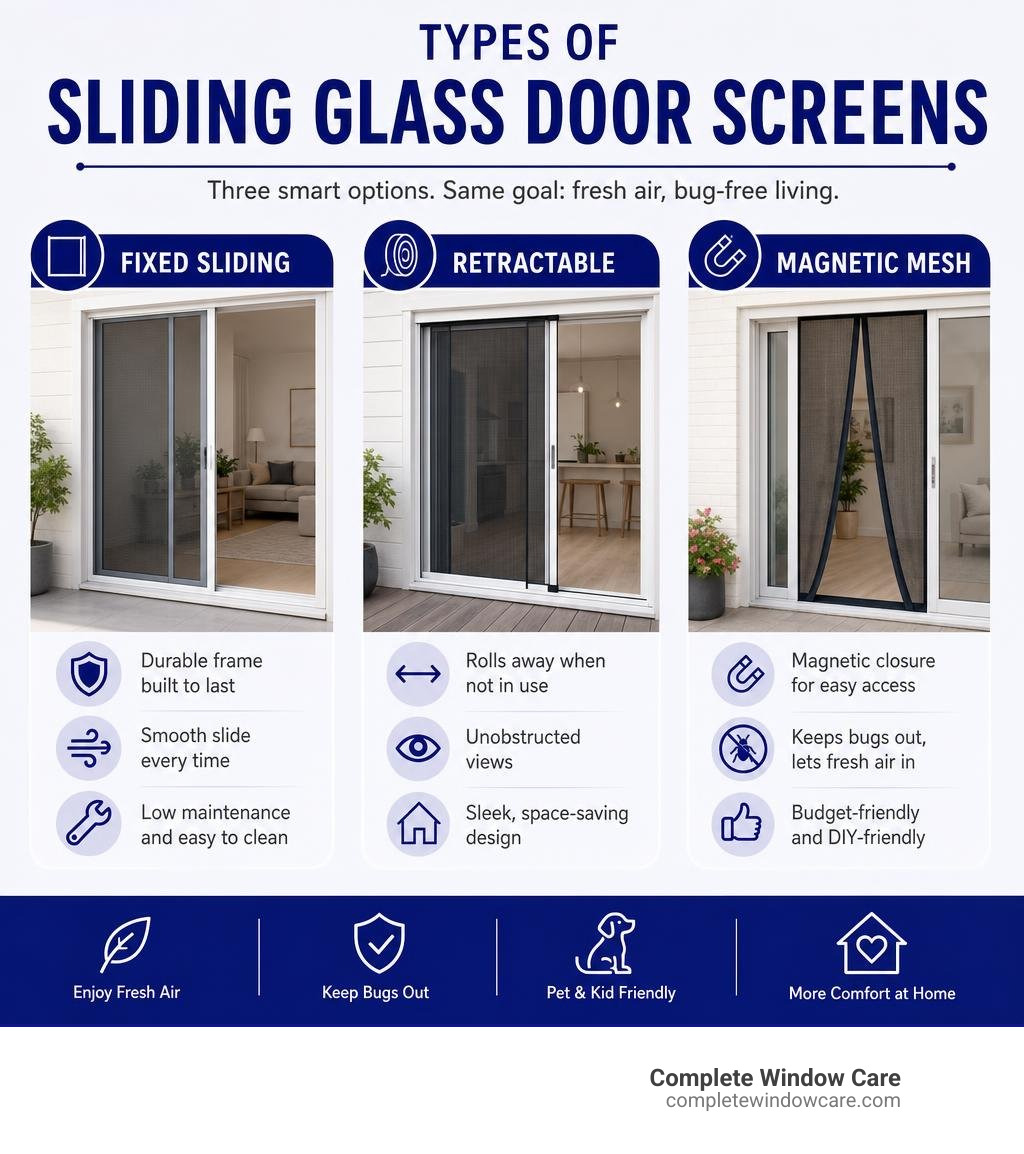
Understanding the Types of Sliding Glass Door Screens
Choosing the right screen starts with understanding the different styles available. Depending on your home’s layout, budget, and lifestyle, one specific type of sliding glass door screen will likely stand out as the perfect fit.
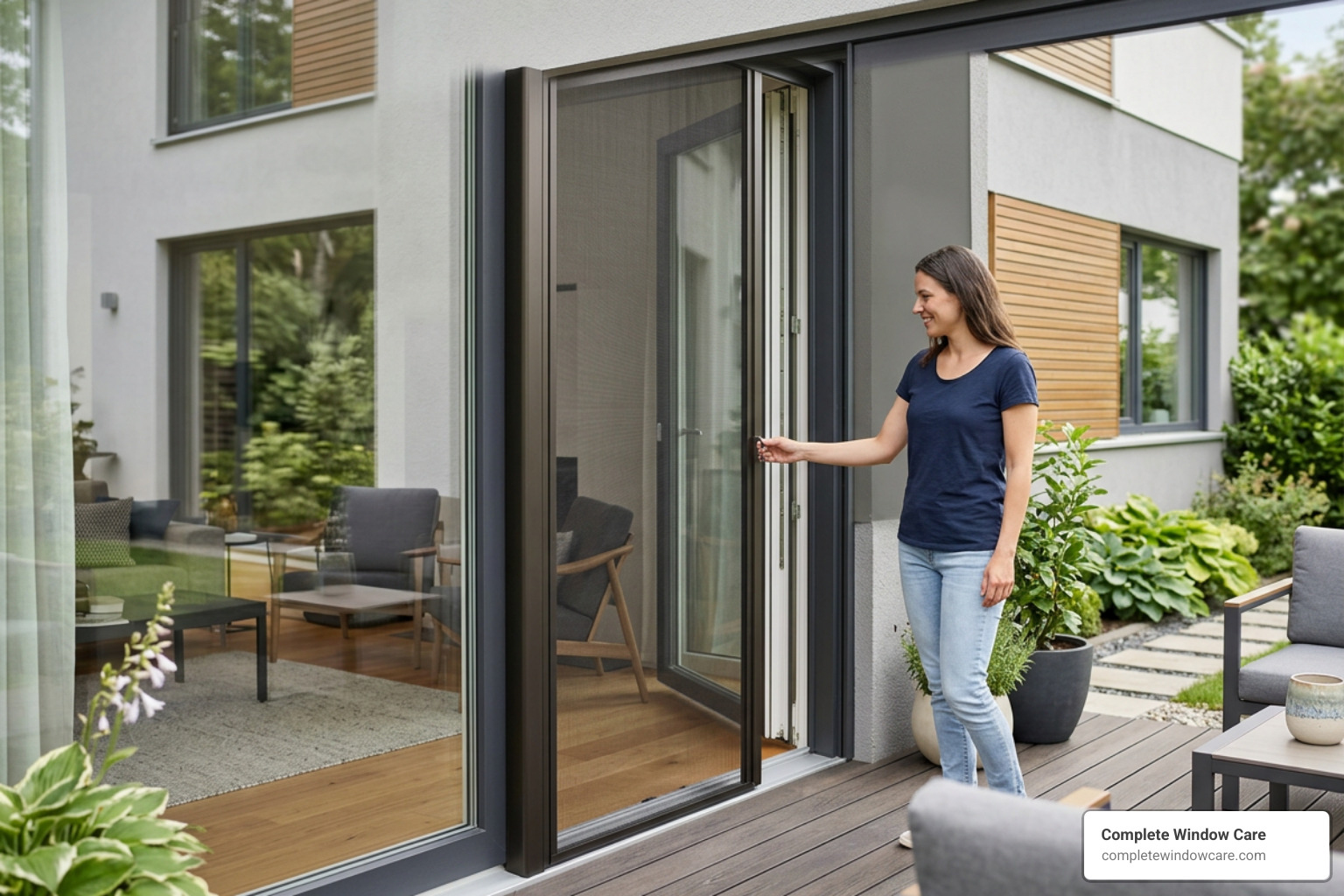
| Screen Type | Best For | Frame Material | Average Durability | Key Benefit |
|---|---|---|---|---|
| Traditional Fixed | Budget-conscious, high-traffic | Extruded or roll-form aluminum | High (with extruded frames) | Sturdy, classic design, easily replaced |
| Retractable | Unobstructed views, modern homes | Powder-coated aluminum housing | Medium-High | Disappears when not in use, no slamming |
| Magnetic Mesh | Temporary use, renters, high pet traffic | No rigid frame (fabric/velcro) | Low-Medium | Hands-free entry, ultra-affordable |
Traditional Fixed Sliding Glass Door Screens vs. Modern Alternatives
Traditional fixed screens are the most common type. They consist of a rigid frame—usually made of aluminum—that slides along a dedicated track parallel to your sliding glass door.
When shopping for these, frame construction is everything. Many low-cost options use cheap roll-form frames that bend, warp, and twist out of square under light pressure. We always recommend heavy-duty extruded aluminum frames because they offer superior structural integrity and longevity.
For standard sizes, you can find pre-made aluminum patio screen. However, because no two door frames are exactly identical due to settling or installation variances, custom-fit screens are often required to prevent gaps.
Retractable and Magnetic Screen Options
If you dislike the look of a permanent screen blocking your backyard view, modern alternatives are excellent solutions:
- Retractable Screen Doors: These screens roll up into a powder-coated aluminum housing mounted on the side of your door frame when not in use. They offer a clean, roll-away design that preserves your clear view of the Pikes Peak region.
- Magnetic Mesh Screens: These are frameless, flexible mesh panels that hang from the top of the door frame using adhesive hook-and-loop tape. The center seam is lined with strong magnets, allowing hands-free entry for kids and pets. Once you walk through, the magnets snap shut behind you. While highly affordable, they lack the polished look and long-term durability of solid frame systems.
Key Features to Look For in Sliding Glass Door Screens
Investing in a high-quality screen means looking closely at the materials that dictate how long it will last and how well it will perform.
Selecting the Right Mesh and Frame Materials

The mesh material you choose determines your screen’s performance against pests, sunlight, and wear:
- Standard Fiberglass: The industry standard. It is lightweight, affordable, and provides excellent visibility, but it can tear easily under claw pressure.
- Aluminum Mesh: Sturdier than fiberglass, but it can dent or crease if bumped hard.
- PetScreen Mesh: If you have dogs or cats, upgrading to a heavy-duty pet screen is a necessity. Made from vinyl-coated polyester, PetScreen is seven times stronger than standard fiberglass mesh and easily resists scratching and clawing. You can find ready-to-assemble options that include built-in PetScreen mesh.
If you are dealing with pests sneaking past a damaged screen, our guide to stopping bugs with better rescreening walks through your material options in more detail.
Roller Systems and Hardware Durability
A screen is only as good as its rollers. Cheap plastic rollers degrade quickly under UV exposure and cold Colorado winters, leading to sticking and jumping off the track.
For smooth sliding and long-term durability, look for adjustable steel rollers or heavy-duty composite rollers. If your current door is dragging, sticking, or scraping, these tips for getting a sliding glass door moving smoothly again can help.
How to Install and Maintain Your Screen Door
Whether you choose a DIY approach or hire a professional, proper installation and regular upkeep are key to a long-lasting screen.
Step-by-Step DIY Installation Guide
Many homeowners opt for DIY kits to save on upfront costs. If you go this route, an adjustable sliding screen door kit can be a practical option because it is designed to fit most standard door frames.
Tools Needed for DIY Installation:
- Phillips head screwdriver
- Spline roller tool
- Utility knife
- Pliers
- Safety glasses
Standard Steps:
- Measure the Opening: Take precise measurements using the top-of-track to bottom-of-track method to ensure your new door will fit.
- Assemble the Frame: Lay out the frame corners on a flat surface and secure them with the provided screws or corner inserts.
- Lay and Secure the Mesh: Roll the mesh across the frame. Use your spline roller to push the rubber spline into the frame groove, locking the mesh tight.
- Trim Excess Mesh: Carefully run a utility knife along the outer edge of the spline to cut away excess screen.
- Mount and Adjust Rollers: Place the screen into the door tracks and use a screwdriver to adjust the roller tension screws at the bottom until the door slides smoothly and sits level.
Maintenance Tips for Sliding Glass Door Screens
To keep your screen operating smoothly year-round, establish a simple seasonal maintenance routine:
- Clean the Mesh: Vacuum loose dust and pollen using a soft brush attachment. For a deeper clean, remove the screen, wash it gently with mild dish soap and water, rinse thoroughly, and let it air dry completely before reinstalling. Avoid harsh chemicals like bleach or ammonia, which can corrode aluminum frames.
- Lubricate the Tracks: Keep the bottom track free of dirt, pet hair, and debris. Apply a dry silicone spray lubricant to the tracks and rollers; avoid wet lubricants (like WD-40), which attract dirt and clog the roller bearings.
- Winter Storage: Heavy snow and freezing temperatures can cause frame warping or mesh damage. Consider removing your screen door during late autumn to avoid common winter patio door problems and prevent issues like cold-weather sticking.
For more tips on troubleshooting general patio door issues, read our guide to common sliding glass door repairs.
Frequently Asked Questions about Patio Screens
How do I measure for a replacement sliding screen door?
To get a perfect fit, do not measure your old, potentially warped screen door. Instead, measure the door frame opening itself:
- Height: Measure from the top of the bottom track up into the deepest part of the top U-channel. Subtract 1/4 inch to ensure clearance for installation.
- Width: Measure from the jamb where the door closes to the center of the opposite side.
- Track Depth: Check the width of your track channel to ensure the new door frame thickness (typically 1/2 inch) will slide freely.
For more detailed sizing advice, refer to our guide on standard sliding glass door height.
Can I upgrade to a pet-proof screen mesh?
Yes! You can easily upgrade almost any standard screen door to PetScreen. This heavy-duty, vinyl-coated polyester mesh resists scratches from claws and is highly recommended for households with active pets. It is slightly thicker than standard fiberglass, which reduces visibility slightly, but the massive leap in durability is well worth the trade-off.
Is it better to repair or replace a damaged screen?
If your aluminum frame is straight, unwarped, and structurally sound, a simple rescreening (replacing just the mesh and spline) is highly cost-effective. However, if the frame is bent, rusted, or the roller corners are completely broken, it is usually more practical to replace the entire screen unit.
If you’re unsure whether the issue lies within the screen or the glass door frame itself, our guide on when a broken sliding glass door should be repaired or replaced can help you make an informed decision.
Conclusion
A high-performing sliding glass door screen is essential for enjoying fresh air, keeping bugs out, and maintaining a comfortable home in Colorado Springs. Whether you opt for a sturdy extruded aluminum fixed screen, a sleek retractable option, or a pet-proof mesh upgrade, selecting the right materials will save you time, money, and frustration down the road.
At Complete Window Care, we specialize in helping homeowners throughout Colorado Springs and the Pikes Peak Region extend the lifespan of their doors and windows. From professional screen repairs and custom rescreening to glass replacements, we focus on cost-effective repairs over expensive full replacements whenever possible.
If your sliding glass door is drafty, hard to slide, or ready for an upgrade, let us help you find the perfect solution. You can also learn more about when replacement makes sense or contact us today to schedule your professional service.