

Keep the Bugs Out: Your Guide to Sliding Door Rescreening
If you’re wondering about sliding door rescreening, here’s a quick overview of what it involves:
- What it is: Replacing torn or damaged screen mesh in your existing sliding door frame.
- Why do it: To keep insects out, allow fresh air in, improve your home’s appearance, and restore door functionality.
- DIY Cost: Typically $10–$50 for parts if you do it yourself.
- DIY Time: Around 30 to 45 minutes for most homeowners, even beginners.
- When to consider it: When the mesh is ripped, sagging, or just looks old, but the door frame itself is still in good shape.
Let’s face it—we all love the idea of a breezy, open home during spring and summer. But a damaged sliding screen door can quickly turn that dream into a frustration, letting in unwanted guests (bugs!) or just being an eyesore. Whether it’s a tear from a playful pet or just wear and tear from the Colorado Springs weather, rescreening your sliding door is often a simple, cost-effective fix.
I’m Michael Smith, owner of Complete Window Care. With over 18 years of experience, I’ve seen countless sliding screen doors brought back to life through expert sliding door rescreening, offering homeowners a practical alternative to full replacement. My goal is to help you understand how to tackle these common issues yourself, saving you money and stress.
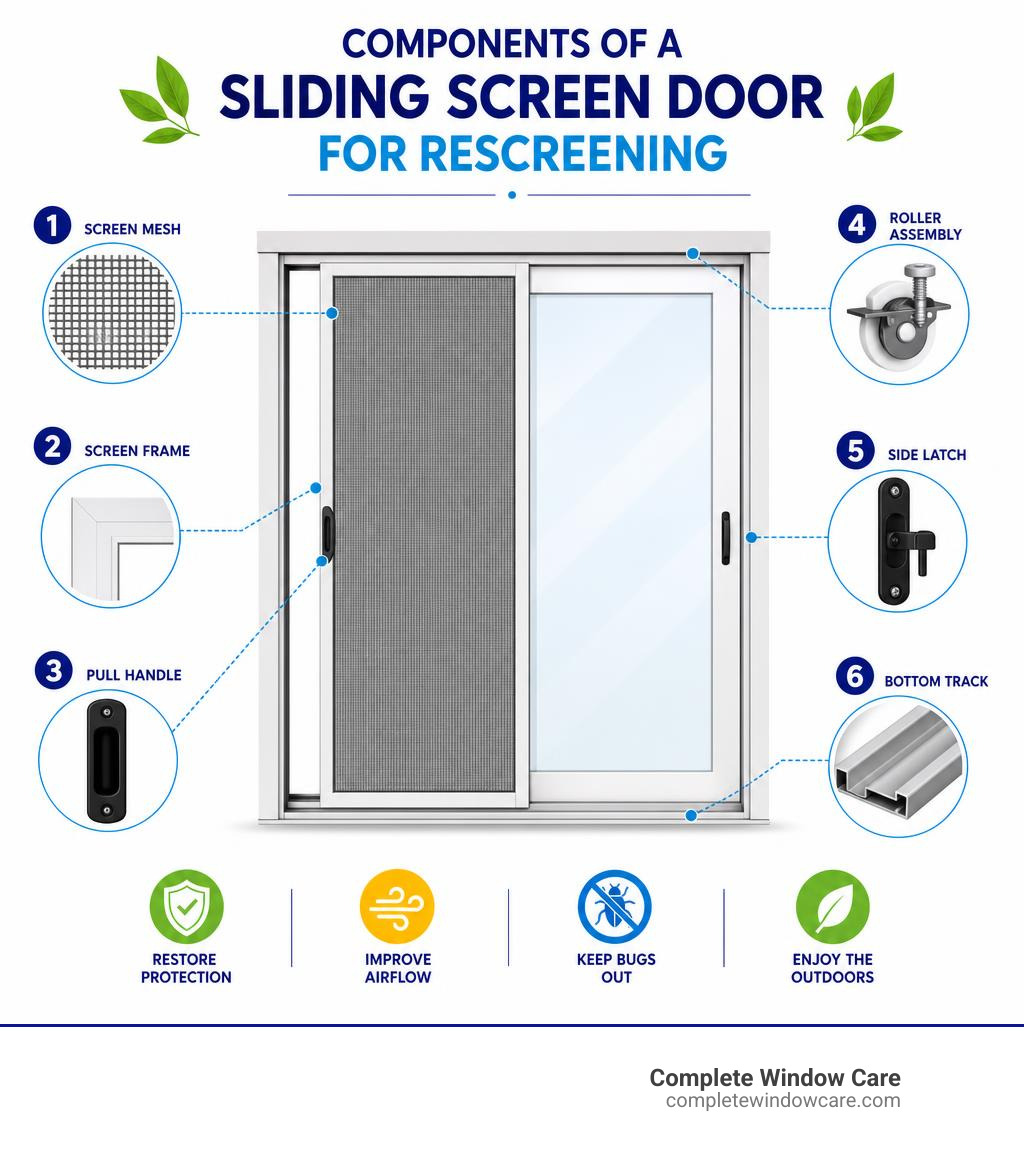
Essential Tools and Materials for Sliding Door Rescreening
Before you dive into the project, you need to gather your “battle gear.” Having the right tools on hand is the difference between a 30-minute success story and a frustrating afternoon of running back and forth to the hardware store. Luckily, sliding door rescreening doesn’t require a specialized degree or a truckload of heavy machinery.
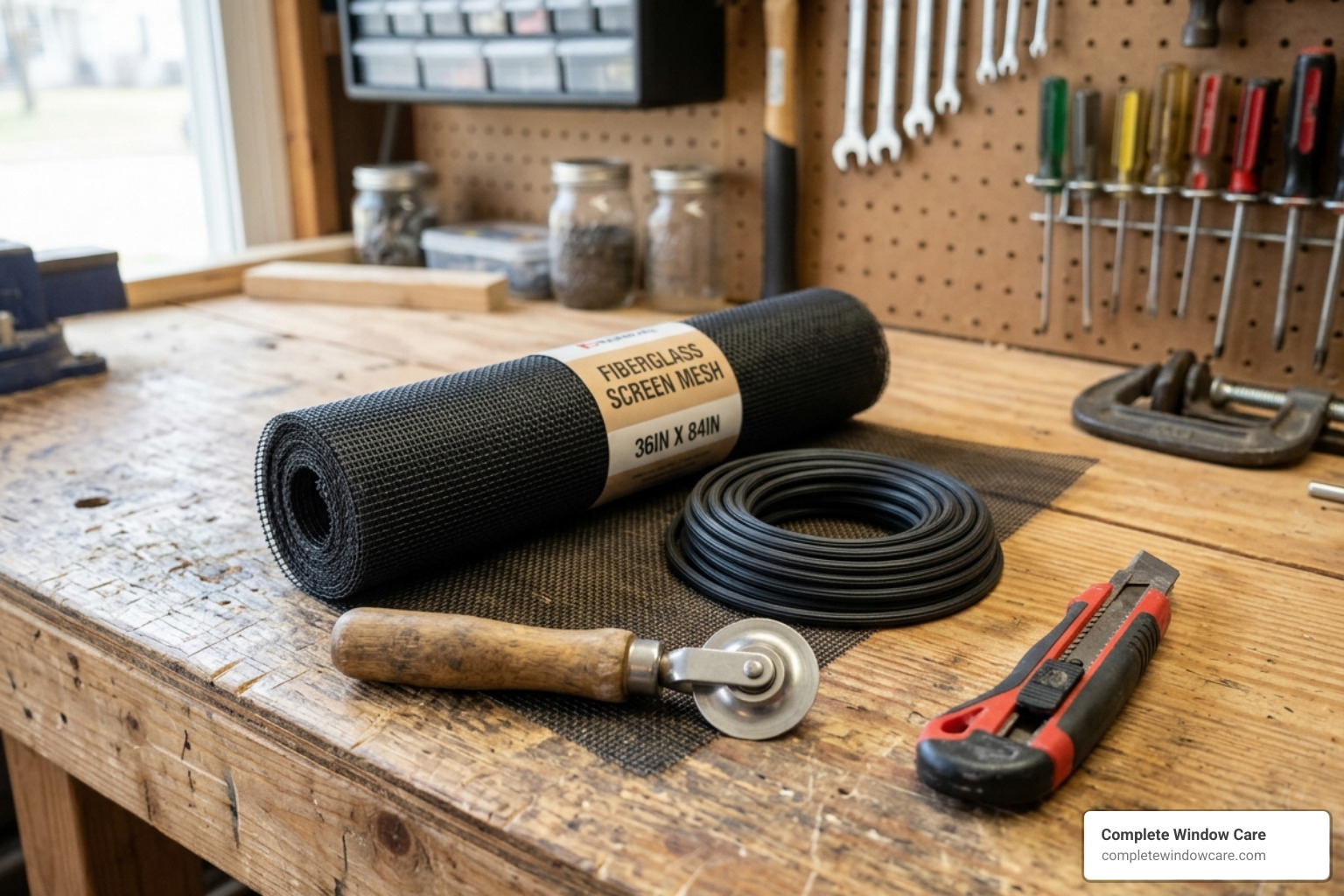
Here is what you will need to get the job done:
- New Screen Mesh: This is the “fabric” of your door. You can find various options in our Product Category/Screen section. Common choices include fiberglass, aluminum, and specialty materials such as solar screens, depending on your ventilation and sun-control needs.
- Vinyl Spline: Think of this as the “glue” that isn’t actually glue. It is a flexible vinyl cord that wedges the mesh into the frame’s groove. It is usually black or grey.
- Spline Roller Tool: This is the most important tool in the kit. It has two wheels: one concave and one convex. It’s designed to push the spline into the channel without tearing the mesh.
- Utility Knife or Box Cutter: You’ll need this to trim the excess mesh once the spline is in place.
- Flat-head Screwdriver: Helpful for prying out the old, brittle spline.
- Tape Measure: To ensure you buy enough mesh to cover the entire frame with a few inches of “wiggle room” on each side.
When choosing your mesh, consider your specific needs. Standard fiberglass mesh is the most common and affordable choice. However, if you have a high-energy dog or a cat with a penchant for climbing, you might want to look into specialized materials like pet-resistant screen. This mesh is made of vinyl-coated polyester and is much thicker than standard fiberglass, making it nearly impossible for claws to penetrate.
Step-by-Step Guide to the Rescreening Process
Now that your tools are ready, it’s time to get to work. Sliding door rescreening is a satisfying DIY project because the results are immediate. You go from a holey, buggy mess to a crisp, clear view in less time than it takes to watch a football half.
1. Removing the Door
First, you need to get the door off the track. Most sliding screen doors have spring-loaded rollers at the bottom (and sometimes the top). Use your screwdriver to lift the rollers upward while gently tilting the bottom of the door toward you. Once the bottom is clear, the whole door should drop out of the top track.
2. Cleaning the Track
Before you even touch the mesh, take five minutes to clean the door track. We often find that “broken” doors are just dirty ones. Use a vacuum to suck up dead bugs, Colorado dust, and debris. A quick wipe with soapy water will make the door glide like new once you reinstall it.
3. Removing Old Mesh and Spline
Lay the door flat on a table or across two sawhorses. Find the end of the old spline, then gently pry it up with a flat-head screwdriver. Pull the cord out around the whole frame. Once it is out, the old mesh should lift away easily. If you want a few extra frame-handling pointers, this guide to replacing window screens can help.
4. Installing the New Mesh
Unroll your new mesh over the frame. Ensure it overlaps the edges by at least two inches on all sides. Start at one corner and use the spline roller to push the new spline into the groove, sandwiching the mesh inside. Keep the mesh taut as you go, but don’t pull it so tight that you bow the frame.
5. Trimming and Testing
Once the spline is in all four sides, use your utility knife to trim the excess mesh. Be careful to cut on the outside of the spline so you don’t accidentally slice your new screen! Finally, pop the door back into the track and test the functionality.
Preparing the Frame for Sliding Door Rescreening
Preparation is what makes the finished screen look clean and last longer. As you pry out the old spline, pause and check for signs of screen damage you might not notice right away. The aluminum channel that holds the spline can get bent, pinched, or packed with dirt and brittle rubber pieces. If that groove is not clean and even, the new spline may not sit flat, and the screen can pull loose the first time a strong breeze hits it.
Clean the channels thoroughly with a stiff brush or a damp cloth. A clean groove ensures the spline “bites” into the metal, providing the tension needed to keep the mesh flat and ripple-free.
Installing New Mesh During Sliding Door Rescreening
The trickiest part of sliding door rescreening is managing the tension. If you’ve ever wondered, “Is Window Screen Repair Difficult?”, the answer is usually “no,” provided you don’t over-tighten.
If you pull the mesh too tight while rolling in the spline, the tension can actually pull the sides of the frame inward, creating an “hourglass” shape. This makes the door stick or even fall out of the track. The goal is to have the mesh lie flat without sagging, but with enough “give” that it doesn’t distort the metal frame. Secure your corners first, then work your way down the long sides for the best results.
Troubleshooting Rollers and Track Issues
Sometimes, even after a perfect sliding door rescreening, the door still won’t slide. This is usually due to the rollers or the track itself. In Colorado Springs, our fluctuating temperatures and blowing dust can be hard on moving parts.
If your door is dragging or making a grinding noise, try these fixes:
- Clear out debris: A dirty track is the top reason a sliding screen door starts dragging. Vacuum the track well, then wipe out any packed-in grit.
- Adjust the wheel height: Most sliding screen doors have an adjustment screw near the rollers. Turn it to raise or lower the wheel so the door sits properly in the track. If you want more repair tips, Complete Window Care has a helpful guide on fixing screen door problems.
- Use the right lubricant: Skip WD-40 on the rollers. It can attract dirt and turn into sticky buildup. A silicone-based lubricant is a better choice.
- Replace worn rollers: If the wheels are flat, cracked, or stuck in a rusted housing, new rollers may be the fix. It is a common repair that can help you avoid replacing the whole door.
Frequently Asked Questions about Sliding Door Rescreening
How long does a DIY rescreening project usually take?
For most homeowners, sliding door rescreening takes about 30 to 45 minutes. If it is your first try, plan on closer to an hour while you learn how the spline roller feels. The project is beginner-friendly and only needs basic tools. As this breakdown of DIY versus professional screen repair explains, doing it yourself can save money when the frame is still in good shape.
When should I replace the entire door instead of rescreening?
You should consider a full replacement if the frame is structurally compromised. This includes bent frames that no longer sit square, rusted or crumbling roller housings, or corners that have snapped off. If the metal is in good shape, sliding door rescreening is almost always the better, cheaper option. For more details, see our guide on When Should You Replace A Window Screen Frame.
Can I make my sliding screen door pet-proof?
Yes. If you have dogs or cats, pet-resistant mesh is usually the better choice. It is commonly made from vinyl-coated polyester, which holds up much better against claws, paws, and the occasional excited jump than standard fiberglass mesh.
That extra durability matters. Once a screen tears, even a small opening can invite insects inside. In fact, damaged screens can make pest problems worse, especially during warmer months when flies and mosquitoes are most active.
Conclusion
At Complete Window Care, we believe that your home should be a sanctuary, and that includes enjoying the fresh Colorado Springs air without a swarm of bugs joining you for dinner. Sliding door rescreening is one of the most cost-effective ways to maintain your home’s comfort and value.
Seasonal maintenance is key. A quick vacuum of the tracks every spring and a light wipe-down of the mesh will prevent the buildup that leads to rips and stuck rollers. If you find that your frame is too far gone or you simply don’t have the time to tackle the project yourself, we are here to help. From simple repairs to installing brand-new Screen Doors, we specialize in keeping your home functional and beautiful.
Don’t let a torn screen keep you from enjoying the breeze. Grab a spline roller and some mesh, or give us a call—let’s get that door sliding smoothly again!