
Why the Right Replacement Glass for Doors Changes Everything
Replacement glass for doors is one of the most practical upgrades a homeowner can make — and you don’t always need a brand-new door to get there.
Here’s a quick look at your main options:
| Glass Type | Best For | Avg. Cost Range |
|---|---|---|
| Tempered clear glass | Safety, maximum light | $75 – $300 |
| Low-E double pane | Energy efficiency | $154 – $360 |
| Frosted / privacy glass | Privacy + light | $100 – $400 |
| Decorative / patterned | Curb appeal | $165 – $1,000+ |
| Internal blind inserts | Privacy control | $200 – $500 |
Most standard inserts fit right into your existing door — no full replacement needed.
A cracked panel, a foggy seal, or just an outdated look can make your front entry feel tired and drafty. The good news? Replacing just the glass — not the whole door — is usually faster, cheaper, and simpler than most homeowners expect.
Whether you’re dealing with hail damage, a broken seal, or you simply want more natural light without sacrificing privacy, there’s a replacement glass insert that fits your door, your budget, and your style.
I’m Michael Smith, owner of Complete Window Care and a certified AAMA Installation Masters instructor with over 18 years of hands-on experience helping Colorado Springs homeowners find cost-effective replacement glass for doors. In this guide, I’ll walk you through the best options on the market so you can make a confident, informed choice.
Understanding Your Options for replacement glass for doors
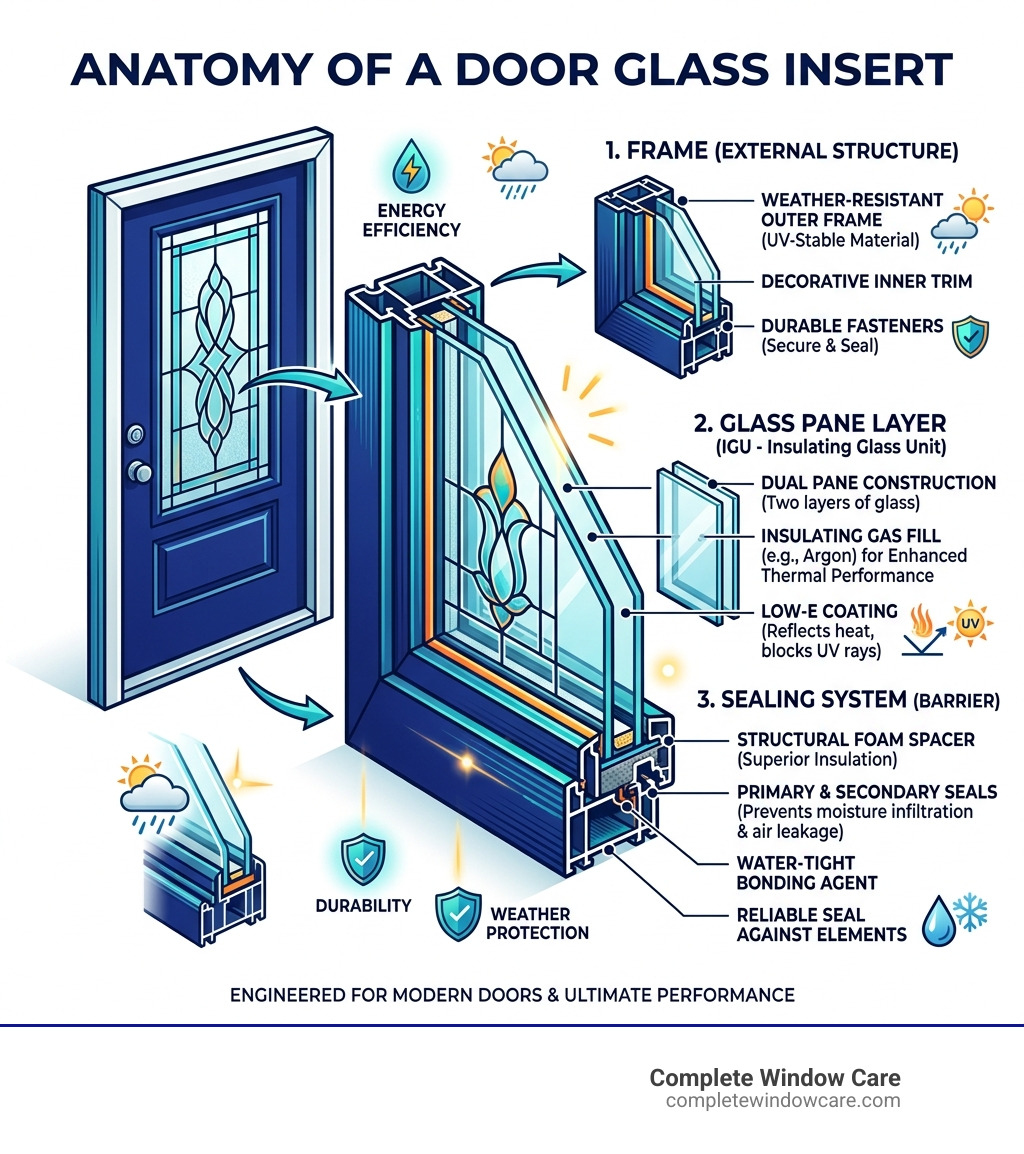
When we talk about replacement glass for doors, we aren’t just talking about a single pane of glass. Modern door glass inserts are engineered units designed for safety, insulation, and style. In the Pikes Peak Region, where we deal with everything from intense summer sun to freezing winter nights, understanding the technical side of your glass is essential.
The Science of Safety and Insulation
The most critical factor in any door glass is safety. By law and industry standard, all glass in or near a door must be tempered. Tempered safety glass is heat-treated so that if it breaks, it crumbles into small, dull cubes rather than sharp, dangerous shards.
Beyond safety, it is smart to look at what is happening inside the insert itself. When choosing the right door glass, double-pane options are often a strong pick. They use two layers of glass with a sealed space between them, which helps with insulation. If you want better energy performance, some upgraded inserts also include Argon gas between the panes to slow heat transfer even more.
Low-E coating is another smart upgrade for door glass. This thin, nearly invisible layer helps reflect infrared and ultraviolet light. In plain English, that means less heat coming in during summer and less indoor warmth escaping in winter. It can also help reduce fading on floors, furniture, and rugs while improving overall energy efficiency.

Decorative and Privacy Door Glass Inserts
If you want to refresh your entryway with new door glass, you do not have to settle for a fully clear panel. While clear glass can be great for keeping an eye on kids or pets outside, many homeowners prefer something that brings in natural light and adds a little more privacy.
- Privacy Ratings: Most manufacturers use a scale from 1 (completely transparent) to 10 (completely opaque). Decorative glass often sits around a 7 or 8.
- Frosted and Textured Glass: Options like “Rain,” “Glue Chip,” or “Hammered” glass allow light to flood your entryway while obscuring the view from the street.
- Wrought Iron Designs: These inserts pair heavy-duty decorative iron with a textured glass backing, offering a high-security look with a Mediterranean or traditional flair.
- Internal Blinds: These are a favorite in our local area. The blinds are sealed between two panes of glass, meaning they never get dusty and can’t be bent by curious pets.
- Venting Glass: Perfect for side or back doors, these inserts include a screen and a sliding glass panel, allowing you to get a breeze without opening the whole door.
How to Choose and Measure Your New Door Glass
Choosing the right replacement glass for doors requires more than just picking a pretty pattern. You need to ensure the unit is compatible with your specific door type. Most inserts are designed for standard 1-3/4 inch thick steel or fiberglass doors.
As you compare your door glass replacement options, think about where your entry door faces. A west-facing door may benefit from stronger UV protection and better sound control. In many cases, a well-made double-pane insert can help reduce noise from traffic, wind, and other outdoor distractions.
Common Sizes for replacement glass for doors
Standardization is your friend here. While custom sizes exist, most residential doors use one of a few common “lite” configurations.
| Insert Type | Standard Glass Size (approx.) | Common Use |
|---|---|---|
| Half-Lite | 22″ x 36″ | Traditional front doors |
| Full-Lite | 22″ x 64″ or 20″ x 64″ | Patio doors / modern entries |
| 3/4 Lite | 22″ x 48″ | Craftsman style doors |
| Sidelite | 7″ x 64″ or 8″ x 64″ | Vertical panels next to the door |
| Oval | 16″ x 40″ | Decorative traditional doors |
For example, a 20 in. x 64 in. replacement glass panel is a common full-view size that fits many modern 32-inch wide doors.
Measuring for a Perfect Fit
Before you order replacement glass for doors, get exact measurements first. There are three key dimensions to check, and it is smart to measure twice so you can order with confidence.
- Glass Thickness: Most modern insulated units are 1 inch thick. Older single-pane glass might be much thinner.
- The Cut-Out: This is the actual hole in your door. If you already have glass, measure the distance from the outside edge of the frame to the other outside edge.
- Visible Glass: Measure just the part you can see through.
When thinking about what to check before replacing door glass, the frame makes the insert larger overall. For a 22×36 glass insert, the door cut-out is usually about 23×37 inches.
Step-by-Step Guide to Installing replacement glass for doors
If you’re handy with a screwdriver, installing a replacement insert is a manageable weekend project. However, safety is paramount. These glass units are heavy (a full-view insert can weigh 35-50 lbs) and usually require two people.
Before you start, gather your tools and review this door glass replacement guide:
- Safety glasses and heavy-duty gloves
- A power drill or manual screwdriver
- A putty knife or oscillating tool (to break old paint seals)
- High-quality exterior caulk (if the kit isn’t pre-sealed)
- Sawhorses or a flat work surface
DIY Installation of replacement glass for doors
Whether you’re adding a clear full-view panel or a more decorative insert, the basic installation steps are usually very similar. Many homeowners choose to replace their door glass before summer so they can make the most of brighter days and extra natural light.
- Prep the Door: It is much easier to do this if you take the door off its hinges and lay it flat on sawhorses.
- Remove the Old Unit: Unscrew the interior frame. In older doors, these screws might be hidden behind plastic plugs or layers of paint. Carefully pop the interior frame off, then lift the door up to leave the old glass sitting on the sawhorses.
- Clean the Opening: Scrape away old caulk, dirt, or debris from the door’s cut-out.
- Set the New Insert: Lay the new exterior frame and glass unit on the sawhorses. Lower the door onto the unit, ensuring it is centered.
- Secure the Interior: Place the interior frame over the glass and start the screws by hand to avoid cross-threading. Tighten them in a “star pattern” (like lug nuts on a tire) to ensure even pressure.
- Finish: Pop in the screw hole plugs provided in your kit.
Common Mistakes to Avoid
Over the years, we’ve seen a lot of DIY door glass projects go sideways. In many cases, cracked or foggy glass traces back to bad measurements, poor sealing, or installation mistakes.
- Overtightening Screws: This is the #1 mistake. If you tighten the frame too much, you can warp the plastic or even cause the glass to crack under pressure. Tighten until the frame is snug against the door, but no further.
- Ignoring the Seal: If your door is exposed to the elements, a bead of caulk around the exterior frame is vital. Without it, water can seep into the door core, causing rot or rust.
- Incorrect Measurement: Never assume your door is “standard.” Always measure. A 1/4-inch difference can mean the difference between a secure fit and a drafty mess.
Maximizing Your Investment: Costs and Maintenance
Investing in replacement glass for doors is about more than curb appeal. Choosing the right insert can also improve comfort and efficiency. If you want to see how new glass can help with drafts and cold spots, this guide breaks it down. Modern insulated glass can help reduce heat loss and ease the load on your HVAC system.
The True Cost of Replacement
While a basic clear insert might cost $150, custom decorative glass or units with internal blinds can reach $500 to $800. However, compared to the $2,000+ price tag of a high-quality pre-hung entry door, replacing the glass is an incredible value. Most manufacturers offer a 20-year warranty on the glass seal, protecting your investment for decades.
Maintenance for Longevity
Once your new glass is in place, a little upkeep goes a long way. Knowing when door glass may need attention can help you avoid bigger repairs later, but regular maintenance is even better.
- Cleaning: Use non-abrasive cleaners. Ammonia-based cleaners can damage some Low-E coatings if applied directly to the coated side, so stick to mild soap and water or vinegar solutions.
- Track Lubrication: For sliding doors, keep the bottom track clear of Colorado grit and gravel. A quick vacuum and a spray of silicone lubricant once a year will keep it sliding smoothly.
- Seal Inspection: Once a year, check the caulk around the frame. If it’s cracking or peeling, scrape it out and apply a fresh bead to prevent moisture from getting between the glass and the door.
Frequently Asked Questions about Door Glass
Can I replace just the glass without buying a new door?
Absolutely! This is exactly what we specialize in at Complete Window Care. As long as your door frame is structurally sound (not rotted or severely rusted), you can swap out the glass insert. This is a much more cost-effective way to upgrade your home’s look and efficiency.
Is tempered glass required for all exterior door inserts?
Yes. Building codes in Colorado Springs (and nationwide) require safety glazing in all doors. This is a non-negotiable safety feature designed to prevent serious injury in the event of an accident.
How do I know if my door glass seal is broken?
The most obvious sign is “fogging” or condensation between the two panes of glass that you can’t wipe away. This means the desiccant inside the spacer is saturated, and the insulating gas has escaped. Not only does this look bad, but it also means your glass has lost its energy efficiency.
Conclusion
Upgrading your replacement glass for doors is a powerful way to boost your curb appeal and improve your home’s comfort without the massive expense of a full door replacement. From the modern efficiency of Low-E coatings to the timeless beauty of decorative patterns, the options are nearly endless.
At Complete Window Care, we pride ourselves on providing the Pikes Peak Region with honest, expert advice and cost-effective solutions. Whether you need a simple repair or a full entryway transformation, we’re here to help.
Ready to see the difference new glass can make? More info about door glass services is just a click away, or you can visit us in Colorado Springs to discuss your project!