
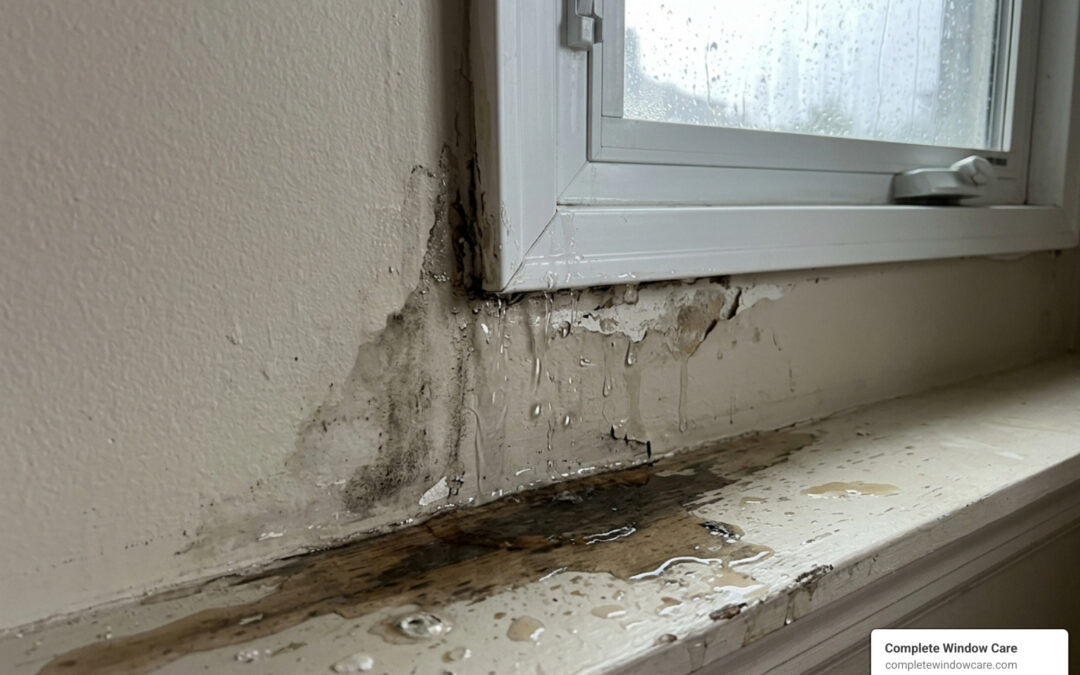
A Leaking Window Is More Serious Than You Think
A leak around window fix is something most homeowners need at some point — and the good news is that many fixes are simple and affordable.
Here’s a quick overview of how to fix a leaking window:
- Identify the source — Check for cracked caulk, worn weatherstripping, clogged weep holes, or flashing issues
- Remove old sealant — Use a putty knife or scraper to clear out damaged caulk
- Clean the surface — Wipe the area with rubbing alcohol so the new sealant bonds properly
- Apply new caulk — Use exterior-grade silicone or polyurethane caulk around the frame
- Replace weatherstripping — Swap out worn strips to stop air and water from sneaking in
- Test your fix — Use a garden hose to simulate rain and confirm the leak is sealed
- Call a pro — If the leak persists or you see mold, warped frames, or wood rot, get a professional inspection
But here’s the thing: a dripping window isn’t just annoying. Left alone, even a small leak can quietly rot your window frame, feed mold growth inside your walls, and push your energy bills up by as much as 25–30%. In Colorado Springs, where hail storms and freeze-thaw cycles are a regular reality, windows take a beating — and small problems tend to get expensive fast.
The leak might be coming from failed caulk. Or worn weatherstripping. Or it might not even be the window at all — water has a way of traveling from the roof or gutters and showing up at your windowsill. Knowing the difference matters before you start any repair.
I’m Michael Smith, owner of Complete Window Care and a certified AAMA Installation Masters instructor with over 18 years of hands-on experience diagnosing and resolving water infiltration issues — including every type of leak around window fix you’re likely to encounter. In this guide, I’ll walk you through how to find the source of your leak, fix it correctly the first time, and know when it’s smarter to call in a pro.

Identifying the Source of Your Window Leak
Before you grab a caulk gun, you need to play detective. Water is sneaky; it follows the path of least resistance, which means where you see the water isn’t always where it’s getting in. In the Pikes Peak Region, our intense sun and rapid temperature swings can cause materials to expand and contract, creating gaps you might not notice at first glance.
Visual Inspection and Telltale Signs
Start by looking for telltale signs of a leaky window. Are you seeing peeling paint or bubbling wallpaper around the frame? Is the wooden windowsill soft to the touch or showing dark stains? These are classic red flags. Sometimes the signs are even more subtle, like a faint musty smell or a feeling of dampness in the room after a heavy rain.
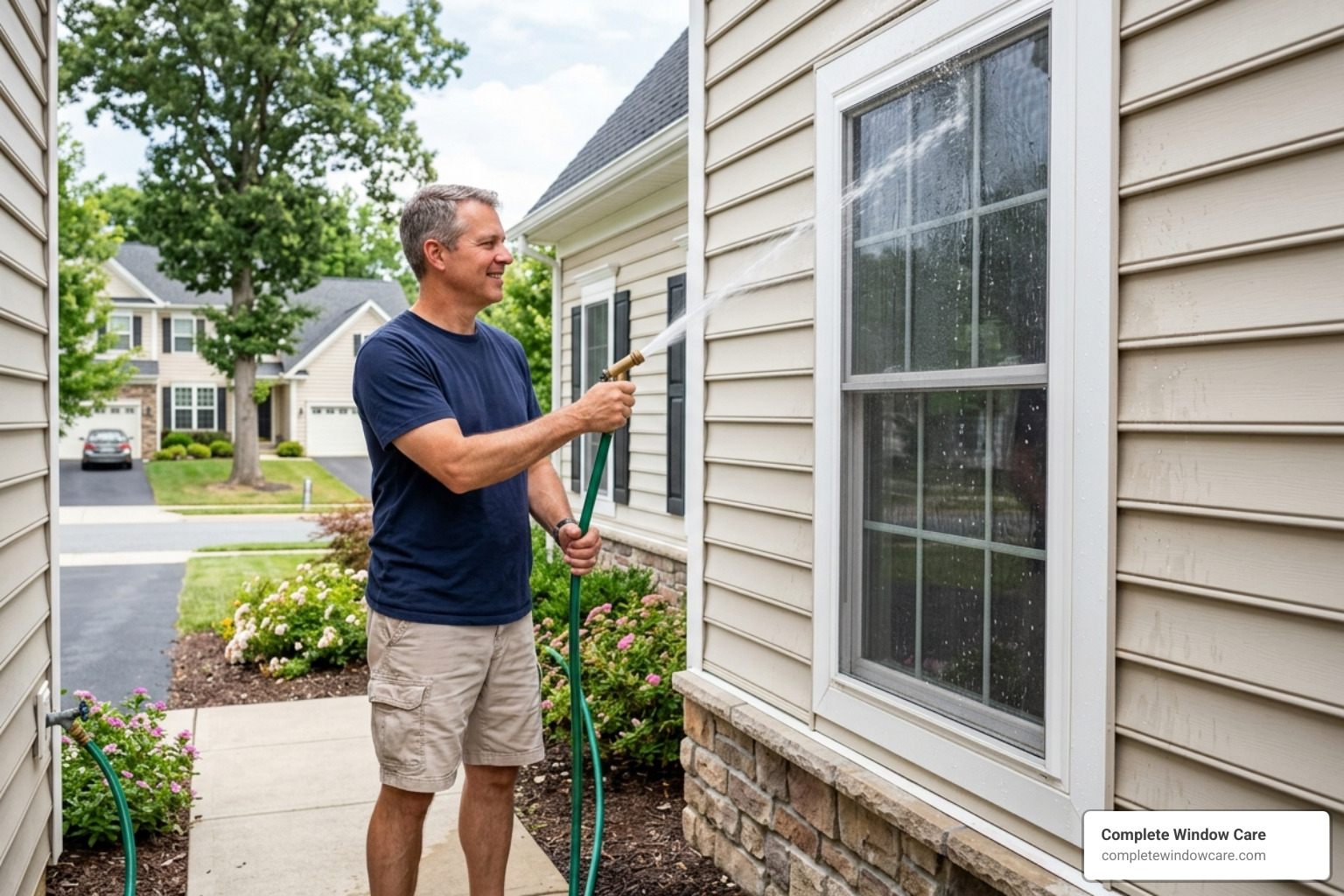
The Hose Test
If you aren’t sure where the water is coming from, wait for a dry day and perform a hose test. Have one person stand outside with a garden hose while you stay inside. Start at the bottom of the window and slowly move upward, spraying the edges. If water starts trickling in, you’ve found your culprit. This is much more effective than waiting for the next storm to diagnose the issue.
Condensation vs. Leak
It is vital to distinguish between a structural leak and simple condensation. If you see “fog” or moisture between two panes of glass that you can’t wipe away, that’s a broken seal in the Insulated Glass Unit (IGU). While this ruins your energy efficiency, it’s a different problem than water actively dripping into your home from the frame. Knowing how to tell if you have a broken window seal can save you from trying to “caulk” a problem that actually requires glass replacement.
| Feature | Window Frame Leak | IGU Seal Failure |
|---|---|---|
| Location | Edges of frame, drywall, or sill | Between the glass panes |
| Primary Sign | Dripping water, puddles, rot | Fogging, condensation, “milky” glass |
| Cause | Failed caulk, bad flashing, or clogs | Aging sealant around the glass unit |
| Fix | Recaulking or flashing repair | Glass replacement or IGU repair |
Step-by-Step Leak Around Window Fix
Once you’ve confirmed the leak is coming from the perimeter of the window, it’s time to get to work. Most frame leaks are caused by deteriorated sealant. Over time, the sun’s UV rays in high-altitude Colorado Springs bake the caulk until it becomes brittle and cracks.
For a comprehensive approach, follow a clear step-by-step process for fixing a leaky window frame. Do the job right the first time to avoid the “patchwork” trap that can lead to more expensive repairs later.
Choosing the Right Materials
Don’t just grab the cheapest tube of “all-purpose” caulk at the hardware store. For a long-lasting leak around window fix, you need:
- 100% Silicone Sealant: Best for exterior glass-to-frame seals. It stays flexible and won’t shrink.
- Polyurethane Caulk: Excellent for where the window frame meets your siding or brick. It’s incredibly durable and paintable.
- Rubbing Alcohol: Essential for cleaning the surface. If the surface isn’t sterile, the new caulk won’t bond, and you’ll be back at square one in six months.
Applying a DIY Leak Around Window Fix with Caulk
- Old Caulk Removal: Use a putty knife or a specialized caulk removal tool to strip away every bit of the old, failing sealant. If you apply new caulk over old caulk, it will fail.
- Surface Preparation: Wipe the area down with rubbing alcohol. This removes oils and dust, ensuring a “surgical” bond.
- The Steady Bead: Cut the nozzle of your caulk gun at a 45-degree angle. Apply a steady, continuous bead. Avoid “stop and start” motions, which create weak points where water can enter.
- Smoothing: Use a caulking tool or a wet finger to smooth the bead immediately. This “seats” the caulk into the gap.
- Curing Time: Most exterior sealants need at least 24 hours to cure before they are fully waterproof. Check the weather forecast before you start!
For more details on why these steps are necessary, check out our deep dive on why your window leaks and how to fix it.
Replacing Weatherstripping as a Leak Around Window Fix
Sometimes the leak isn’t in the “fixed” part of the window, but where the sash moves. If you feel a draft or see water seeping through the bottom of a sliding or hung window, your weatherstripping has likely flattened out or rotted.
- Foam Tape: Easy to apply but has a shorter lifespan.
- V-Strip (Tension Seal): Great for the sides of double-hung windows.
- Compression Seals: The gold standard for casement and awning windows.
Replacing these components not only stops water but is a major factor in fog condensation and how to fix window seal leaks. By keeping the warm air in and the cold air out, you reduce the temperature differential that causes moisture to collect on your glass.
Preventing Future Damage Through Maintenance
In home improvement, an ounce of prevention is worth a gallon of water in your living room. Maintenance is the best way to ensure you don’t have to deal with a leak around window fix during a midnight thunderstorm.
The Secret of Weep Holes
Many homeowners see little rectangular holes at the bottom of their vinyl window frames and think, “That looks like a gap! I should caulk it.” Do not do this! These are weep holes. They are designed to let water that gets into the tracks drain out to the exterior.
If these become clogged with dirt, pine needles, or dead bugs, the water backs up and overflows into your house. Use a small wire or a can of compressed air to keep these channels clear.
The Financial Impact
Maintaining your windows isn’t just about comfort; it’s about your wallet. Did you know that energy use could rise by as much as 25%–30% due to leaky windows? In the winter, your heater works overtime to compensate for the “invisible” holes in your building envelope. We’ve written extensively about how leaky windows could be raising your utility bills, and the numbers are often eye-opening for Colorado Springs residents.
Checklist for Biannual Inspections
We recommend a quick walk-around every spring and fall:
- Clean the tracks: Vacuum out debris and wipe with a damp cloth.
- Check the gutters: Overflowing gutters often dump water directly onto window headers, overwhelming the flashing.
- Inspect the flashing: Ensure the metal or plastic drip cap above the window is still angled downward and tucked under the siding.
When to Call a Professional for Window Repair
While a tube of caulk can fix a lot of problems, some issues are beyond a DIY weekend project. If you’ve tried the basic fixes and the water is still coming in, you might have a structural issue.
Signs You Need an Expert
- Warped Frames: If the window is physically difficult to open or close, the frame may have shifted due to foundation settling or severe water damage.
- Visible Mold: If you see black spots on the drywall or behind the trim, the leak has likely been happening for a long time. Mold poses health risks and requires professional remediation.
- Hail Damage: Colorado Springs is famous for “hail season.” Large stones can crack the vinyl frames or dent the flashing, creating entry points that aren’t easily visible.
- Wood Rot: If your screwdriver sinks into the wooden frame like it’s butter, the structural integrity is compromised.
Professional window leak inspection services use moisture meters and thermal imaging to find “hidden” leaks that haven’t even reached the surface yet. Understanding the importance of timely window leak repair to prevent costly damage is the difference between a $200 repair and a $2,000 wall reconstruction.
Frequently Asked Questions about Window Leaks
Can a leaky window cause mold or structural damage?
Absolutely. Water that sits inside a wall cavity is a breeding ground for mold, which can begin growing within 24 to 48 hours. Beyond health concerns, persistent moisture causes wood to rot and metal fasteners to rust. Over time, this can weaken the very studs holding your window in place.
Why do my windows leak only when it rains hard?
This usually indicates a “volume” problem. Small leaks might not show up during a light drizzle, but heavy rain creates more water than your current (perhaps partially clogged) drainage system can handle. It can also be caused by “wind-driven rain,” where the wind pressure literally pushes water through tiny gaps in the sealant or under the flashing.
Should I repair or replace a chronically leaking window?
At Complete Window Care, our philosophy is to favor cost-effective repairs over full replacements whenever possible. If the frame is sound and the glass is intact, most leaks can be fixed by replacing the seals, hardware, or flashing. However, if the window is over 20 years old and the frames are rotting or severely warped, a replacement might be the more economical long-term choice.
Conclusion
A leak around window fix doesn’t have to be a source of stress. By staying proactive with your maintenance—cleaning those tracks, checking the caulk, and keeping the weep holes clear—you can protect your home and keep your energy bills in check.
If you’re in the Colorado Springs or Pikes Peak Region and you’re dealing with a stubborn leak, foggy glass, or a window that just won’t behave, we’re here to help. We specialize in finding the “why” behind the leak and providing a solution that lasts. Don’t wait for the next big storm to see if your DIY fix held up.
For more information or to schedule an inspection, check out our home window repair services and let us help you keep the Colorado weather exactly where it belongs: outside.