
Deciding on Window Pane Repair Replacement: Glass vs. Full Frame
Window pane repair replacement is something most Colorado Springs homeowners will face at least once — whether it’s a baseball through a single pane, hail damage, or that stubborn foggy film between double-pane glass that just won’t go away.
Here’s the quick answer most people need:
| Situation | Best Action |
|---|---|
| Single pane cracked or broken | Replace the glass only — DIY or professional |
| Double-pane glass foggy or condensation inside | Replace the sealed IGU unit — professional recommended |
| Frame is rotted, warped, or damaged | Full window replacement needed |
| Frame is sound, only glass is damaged | Glass-only replacement saves 40–50% vs. full replacement |
| Emergency broken window | Board up first, then schedule repair |
Replacing just the glass — not the whole window — is almost always the smarter, cheaper move when your frame is still in good shape. A standard single-pane repair runs $50–$80 in materials. A double-pane insulated unit installed by a pro typically costs $150–$350, compared to $400–$1,000+ for a full window replacement.
I’m Michael Smith, owner of Complete Window Care and an AAMA Installation Masters certified instructor with over 18 years of hands-on experience in window pane repair replacement across Colorado Springs and the Front Range. In that time, I’ve helped hundreds of homeowners save money by repairing just the glass — not tearing out perfectly good frames. Let’s walk through exactly how to handle this repair the right way.
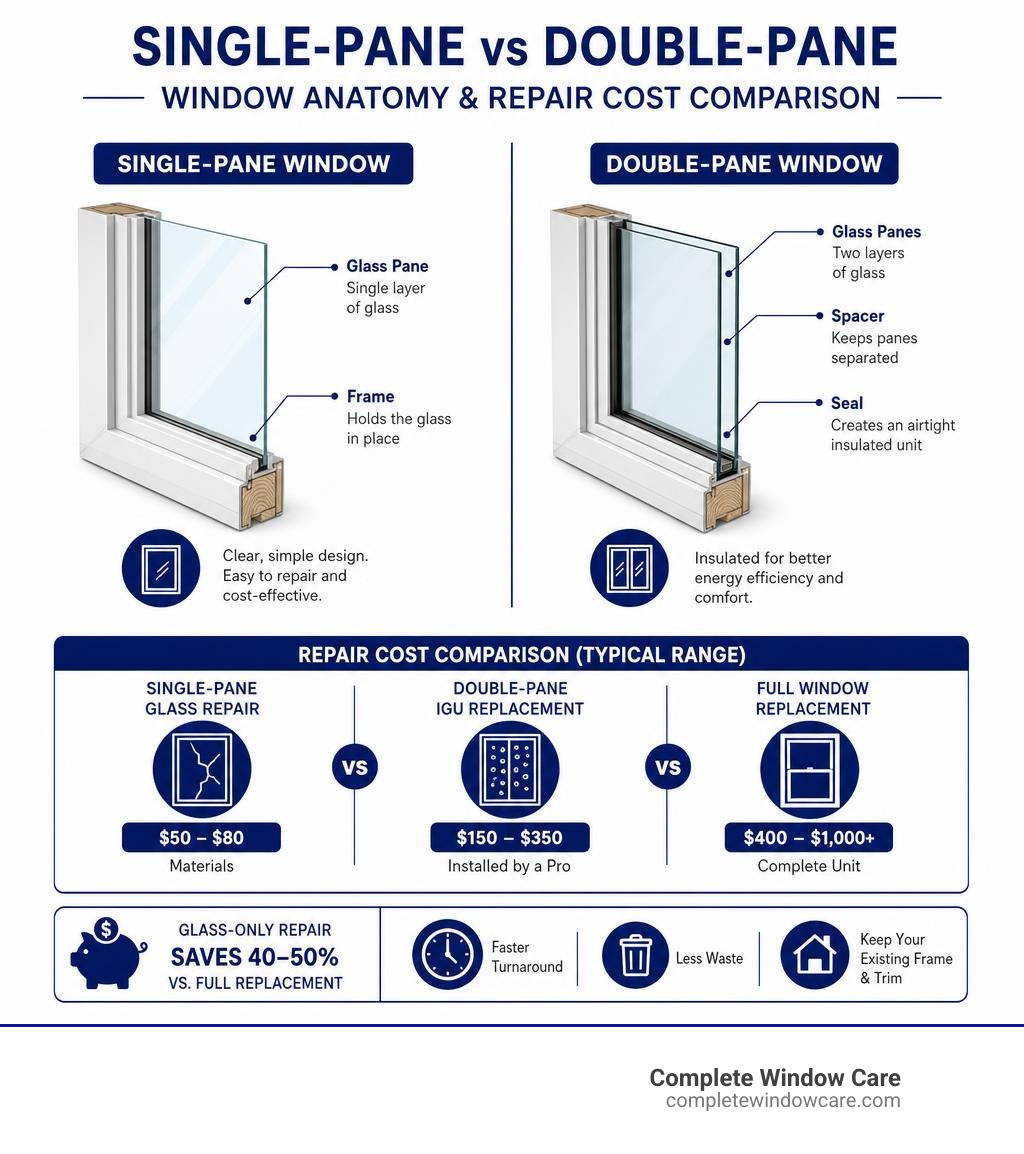
When a window breaks or fails, many national window sales companies will try to convince you that you need a complete, full-frame window replacement. But let’s be honest: tearing out your drywall, siding, and trim just to fix a cracked piece of glass is like buying a brand-new car because you got a flat tire.
If your window frames are structurally sound, opting for a glass-only replacement is the most practical, sustainable, and budget-friendly route.
| Feature | Glass-Only Replacement | Full Window Replacement |
|---|---|---|
| Typical Cost | $150 – $350 (Double-pane IGU) | $400 – $1,000+ per window |
| Average Time | 1 – 2 hours | 1 – 2 days (plus construction mess) |
| Frame Condition | Must be structurally sound | Required if frame is rotted/warped |
| Aesthetic Preservation | Retains original trim, siding, and style | Changes interior/exterior trim |
Choosing glass-only repair typically saves you 40 to 50 percent compared to purchasing and installing a complete new window unit. This is especially true for historic homes in older neighborhoods like the Broadmoor or Old Colorado City, where preserving the original wood window frames is crucial to maintaining the home’s character.
To help you weigh your options, you can read our deep-dive on glass-only vs. whole window replacement to determine which path makes the most sense for your home.
Identifying Single-Pane vs. Double-Pane (IGU) Windows
Before you buy materials or call for an estimate, you need to know exactly what kind of glass you are dealing with.
- Single-pane windows consist of a single sheet of glass held in place by putty (glazing compound) or thin wooden/vinyl strips. These are common in Colorado Springs homes built before the 1970s.
- Double-pane windows, also known as Insulated Glass Units (IGUs), feature two sheets of glass separated by a sealed spacer bar.
If you aren’t sure which one you have, try the reflection test. Hold a pen light or the flashlight from your phone up to the window. If you see one set of reflections, it’s single-pane. If you see two distinct, slightly offset reflections of the light, you have a double-pane unit. Understanding your window’s construction is the first step toward spotting the subtle signs of window deterioration before they turn into major structural headaches.
Recognizing Failed Window Seals and Foggy Glass
If your double-pane window looks perpetually dirty, foggy, or as if it’s raining inside the glass, you are dealing with a failed seal.
When the hermetic seal around the perimeter of an IGU breaks down, moist air creeps into the gap. Over time, the temperature swings of our Colorado climate cause this moisture to condense. If left untreated, the minerals in the water will permanently etch the glass, leaving unsightly white deposits that cannot be cleaned off.
Once an IGU seal fails, the thermal efficiency of the window drops significantly, and the only permanent fix is to replace the entire sealed glass unit.
Preparing for DIY Window Pane Replacement
If you are a handy DIYer, replacing a single-pane window is a highly rewarding weekend project. However, safety must come first. Before you touch a single shard of glass, clear your workspace and make sure you have the right safety gear.

Always wear heavy, cut-resistant leather work gloves and safety goggles. If your home was built before 1978, there is a very high probability that the paint on your window frames contains lead. Distributing lead dust during scraping is a major health hazard. Use a lead test kit first, and if lead is present, use wet-scraping techniques and a certified HEPA vacuum to capture all debris. For a complete safety checklist, check out our guide on handling broken glass safely at home.
Essential Tools and Materials for the Job
To tackle a single-pane reglazing project, gather the following tools:
- Heavy leather gloves and safety glasses
- Putty knife (a stiff, 1.5-inch blade works best)
- Glazing compound (such as DAP 33 or traditional oil-based linseed putty)
- Glazing points (small metal triangles that hold the glass in the frame)
- Heat gun or infrared paint stripper (to soften rock-hard old putty)
- Boiled linseed oil or oil-based primer (for wood frames)
- Small paint brush
- Glass cutter (if you plan to cut your own glass)
How to Measure and Order Your Replacement Glass
Getting an accurate measurement is the difference between a seamless installation and a frustrating waste of glass. You want to measure the “Daylight Opening” — the actual visible glass area — but you must also account for the frame’s channels (rabbets).
- Measure the width and height of the opening inside the frame channels to the nearest 1/16 of an inch.
- Subtract exactly 1/8 inch (or 1/16 inch in each direction) from your final measurements. This expansion tolerance prevents the glass from cracking when the wooden frame swells during humid summer months or contracts in freezing winter temperatures.
- Determine the thickness. Small panes (under 24×30 inches) typically use single-strength glass (3/32-inch thick). Larger panes require double-strength glass (1/8-inch thick).
Choosing the Right Glass for Energy Efficiency and Safety
When ordering your replacement glass, consider upgrading its performance:
- Low-E Coating: A microscopically thin metal oxide layer that reflects heat. In the winter, it keeps heat inside; in the summer, it blocks solar heat gain.
- Tempered Glass: Safety glass that crumbles into dull, harmless pebbles when broken instead of sharp, jagged shards. Building codes require tempered glass in bathrooms, near doors, and close to the floor.
- Laminated Glass: Two sheets of glass bonded to a plastic interlayer. It provides incredible security and sound dampening.
- Capillary Tubes: If you are ordering a double-pane IGU online to be shipped to Colorado Springs, make sure it is manufactured with capillary tubes. Because our city sits at over 6,000 feet of altitude, the atmospheric pressure is much lower than at sea-level factories. Capillary tubes allow the pressure inside the sealed unit to equalize during transit so the glass doesn’t bow or shatter. Once the unit arrives, the tube is pulled and sealed with silicone before installation.
Step-by-Step Guide to Replacing Window Panes
Let’s explore the physical work of replacing a broken single-pane window. If possible, remove the window sash from the frame and lay it flat on a work table. It is much easier (and safer) to work horizontally than vertically.
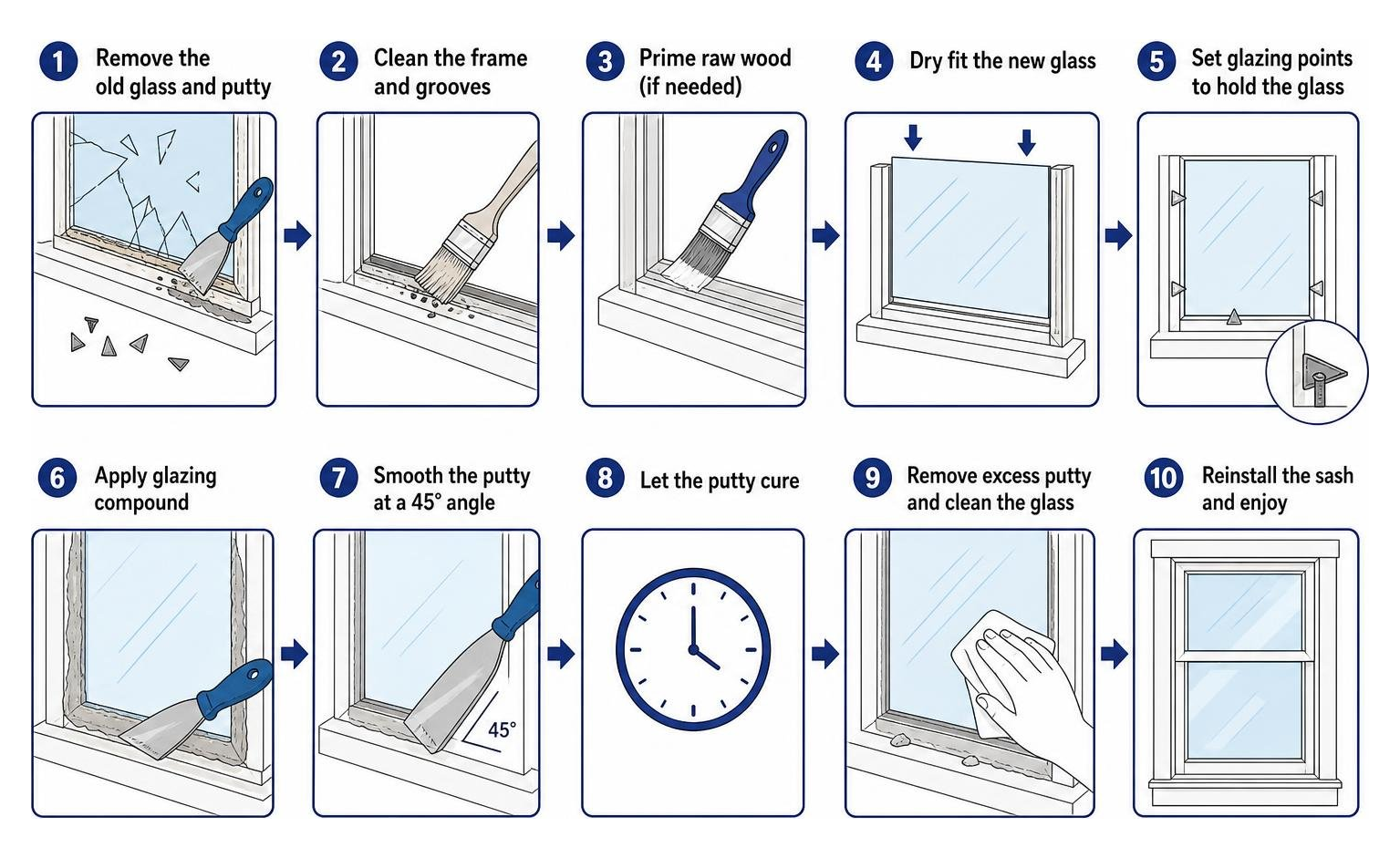
Before you begin glazing, you must prepare the frame properly. If you are working with an older wooden sash, you can read our specialized guide on replacing a window pane in a wood frame to ensure you don’t damage the historic wood.
Step-by-Step DIY Window Pane Repair Replacement for Single-Pane Windows
Step 1: Remove the Old Glass and Putty
Apply painter’s tape or duct tape in an “X” shape over the cracked glass to prevent shards from falling out unexpectedly. Carefully pry out the broken glass pieces using pliers—never use your bare hands.
Next, use your heat gun on a low-to-medium setting to soften the old, rock-hard glazing putty. Move the heat gun continuously to avoid scorching the wood frame. Once softened, scrape the old putty away with your putty knife until you reach bare wood. Pull out the old metal glazing points with needle-nose pliers.
Step 2: Prime the Wood
Sand the wooden frame channels (rabbets) until they are clean. Apply a coat of oil-based primer or brush on boiled linseed oil. Do not skip this step! Bare, dry wood will instantly suck the oils right out of your new glazing compound, causing it to dry out, crack, and fail within a year.
Step 3: Bed the Glass
Apply a very thin, pencil-thick bead of glazing compound along the back of the frame channel. Press your new glass pane firmly into this bed of putty. You should see a small amount of putty squeeze out the back side — this creates a watertight seal between the glass and the wood.
Step 4: Install Glazing Points
Press metal glazing points flat against the glass and slide them into the wood frame every 6 to 8 inches. Use the flat tip of your putty knife to push them in. Do not use a hammer, or you risk shattering your brand-new glass!
Step 5: Apply and Tool the Glazing Putty
Knead a handful of glazing compound in your hands until it is warm and pliable. Roll it into long, pencil-thick ropes and press them into the frame angle. Hold your putty knife at a 45-degree angle and draw it smoothly along the putty bead to create a flat, water-shedding bevel.
Step 6: Painting
Let the putty dry for 3 to 7 days until it forms a firm “skin.” Once cured, paint the putty with high-quality exterior paint. Be sure to overlap the paint slightly onto the glass by about 1/16 of an inch to seal the putty-to-glass joint.
Working with Wood, Vinyl, and Aluminum Frames
The replacement process varies significantly depending on your frame material:
- Wood Frames: Require traditional glazing compound, oil-based primers, and metal glazing points. They require the most finesse but offer a classic, long-lasting finish (often lasting 30+ years if maintained).
- Vinyl Frames: Modern vinyl windows do not use putty. Instead, they use snap-in vinyl glazing beads (stops) on the interior or exterior. To replace the glass, you carefully pry these strips out with a flat-head screwdriver or putty knife, slice through the double-sided foam glazing tape holding the IGU, swap the glass, apply new tape, and snap the strips back in.
- Aluminum Frames: Usually rely on rubber gaskets or silicone caulk. You remove the metal or vinyl retaining strips, clean away the old silicone, apply a fresh bead of high-quality silicone caulk, press the new glass in, and reinstall the strips.
When to Choose Professional Window Pane Repair Replacement
While single-pane reglazing is highly DIY-friendly, certain situations demand professional expertise:
- Double-Pane IGU Replacement: You cannot build or seal a double-pane unit at home. They must be custom-fabricated in a clean-room factory, filled with insulating gas (like argon), and sealed hermetically.
- High-Altitude Adjustments: Because we live in the Pikes Peak region, any double-pane unit must be properly equalized to prevent glass distortion or seal implosion.
- Large or Heavy Glass: Sliding glass doors, large picture windows, and upper-story windows are incredibly dangerous to handle without specialized suction cups and safety rigging.
- Tempered Safety Glass Requirements: A professional ensures your glass meets local building codes and includes the required safety etching.
Attempting to tackle these complex installations yourself often leads to costly errors. Take a look at our guide on common window glass installation mistakes to see why many homeowners ultimately choose to leave these high-stakes projects to the pros.
Frequently Asked Questions about Window Pane Repair
Can I replace just one pane of a double-pane window?
No, you cannot. A double-pane window is a single, factory-sealed unit (IGU). The spacer bar and the two panes of glass are hermetically sealed together with desiccant inside to absorb moisture. Attempting to cut the seal to replace only one broken pane is highly dangerous, will ruin both pieces of glass, and destroys the insulating properties of the window. The entire IGU must be replaced as a single unit.
How much does professional window glass replacement cost?
For a standard double-hung window with a failed or broken double-pane unit, expect to pay between $150 and $350 for a professional installation. A single-pane replacement typically costs $70 to $120 depending on size. This is a massive savings compared to a full window replacement, which easily starts at $400 to $1,000+ per window.
How long does window glazing compound take to dry?
Standard oil-based glazing compound (like DAP 33) takes 3 to 7 days to “skin over” (develop a firm outer layer) before it can be painted. It takes 2 to 4 weeks to cure completely. Latex-based glazing compounds dry much faster (often within 24 hours) but are generally less durable over the long term compared to classic oil-based putties.
Conclusion
Dealing with broken or foggy glass doesn’t have to mean spending thousands of dollars on full window replacements. By choosing glass-only repair, you can restore your home’s security, visual clarity, and energy efficiency at a fraction of the cost.
Whether you want to try your hand at reglazing an antique wood window yourself, or you need a professional to custom-fabricate and install high-altitude double-pane IGUs, we are here to help. At Complete Window Care, we specialize in saving your original window frames and keeping your hard-earned money in your pocket.
If you live in Colorado Springs or the Pikes Peak Region and have a window that needs attention, reach out to us today for a free, honest consultation on professional window glass replacement in Colorado Springs. We’ll help you find the most practical, cost-effective solution for your home!