

Why Knowing How to Replace Screen in Aluminum Frame Saves You Time and Money
Replacing a screen in an aluminum frame is a straightforward DIY repair that most homeowners can complete in under an hour with a few basic tools.
Here’s the quick version of how it’s done:
- Remove the frame and lay it flat on a work surface
- Pry out the old spline using a screwdriver or awl
- Lift out the damaged mesh and clean the groove
- Lay new mesh over the frame with at least 1/8″ overlap on all sides
- Cut the mesh corners at a 45-degree angle
- Press the mesh into the groove using the convex end of a spline roller
- Press the spline into the groove using the concave end of the roller
- Trim away any excess mesh
That’s the core process. The rest of this guide covers it in detail — including which mesh type to choose, how to handle tricky corners, and when it makes sense to call a pro instead.
Aluminum screens are one of the most common things that get damaged in Colorado Springs homes — whether from a curious pet, a hailstorm, or just years of wear. The good news is that a torn screen doesn’t mean you need a whole new window. In most cases, replacing just the mesh inside the existing frame is all it takes to restore insect protection, airflow, and the look of your home.
I’m Michael Smith, owner of Complete Window Care, and with over 18 years of hands-on experience diagnosing and repairing windows and screens across Colorado Springs, I’ve helped hundreds of homeowners tackle exactly this kind of repair — including how to replace screen in aluminum frame the right way the first time. Let’s walk through everything you need to know.
Essential Tools and Materials to Replace Screen in Aluminum Frame
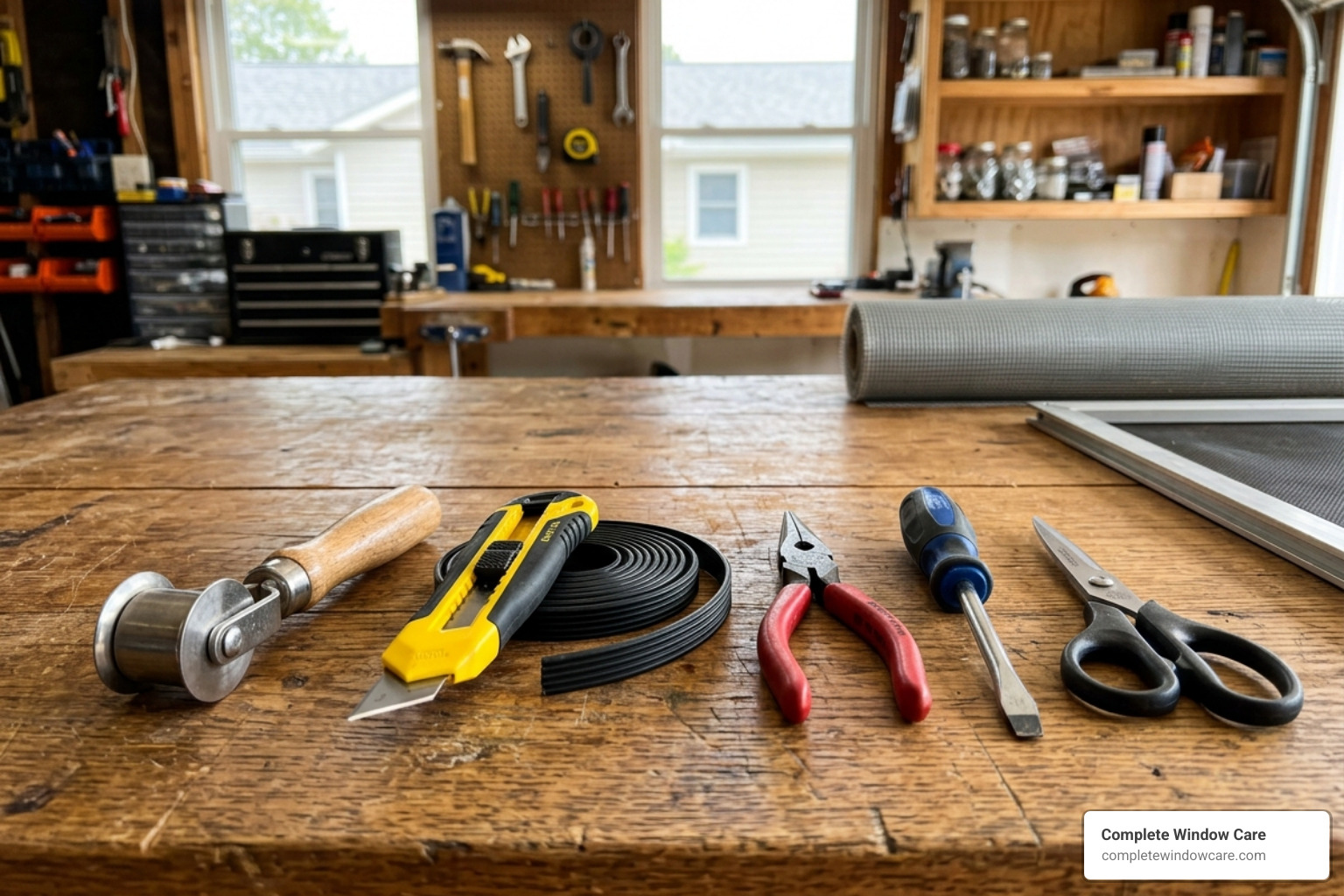
Before we dive into the manual labor, we need to make sure your “surgical table” is prepped. You don’t need a massive workshop to replace screen in aluminum frame setups, but having the right specialized tools makes the difference between a professional-looking, drum-tight screen and a saggy mess that looks like a wet blanket.
The Toolkit
- Splining Roller: This is the most important tool. It usually has two ends: a convex (pointed) wheel and a concave (grooved) wheel.
- Utility Knife or Sharp Scissors: You’ll need these to trim the mesh. A fresh blade in your utility knife is a must to avoid snagging the new material.
- Flat-head Screwdriver or Awl: This is used to pry up the old, likely brittle, spline from the frame’s groove.
- Needle-nose Pliers: Sometimes the old spline breaks into small pieces; pliers help you fish those stubborn bits out of the corners.
- A Large, Flat Work Surface: A sturdy table or even a clean garage floor works. If you’re working on a delicate surface, lay down some scrap boards to keep everything level.
The Materials
- Replacement Mesh: You can choose from fiberglass, aluminum, or specialty pet mesh. Make sure your new roll is at least 2 inches wider and longer than the frame opening.
- Vinyl Spline: This is the “rubber rope” that holds the mesh in the frame. If your old spline is cracked or stiff, it’s time for a fresh roll. Spline typically comes in diameters ranging from 0.125 to 0.250 inches.
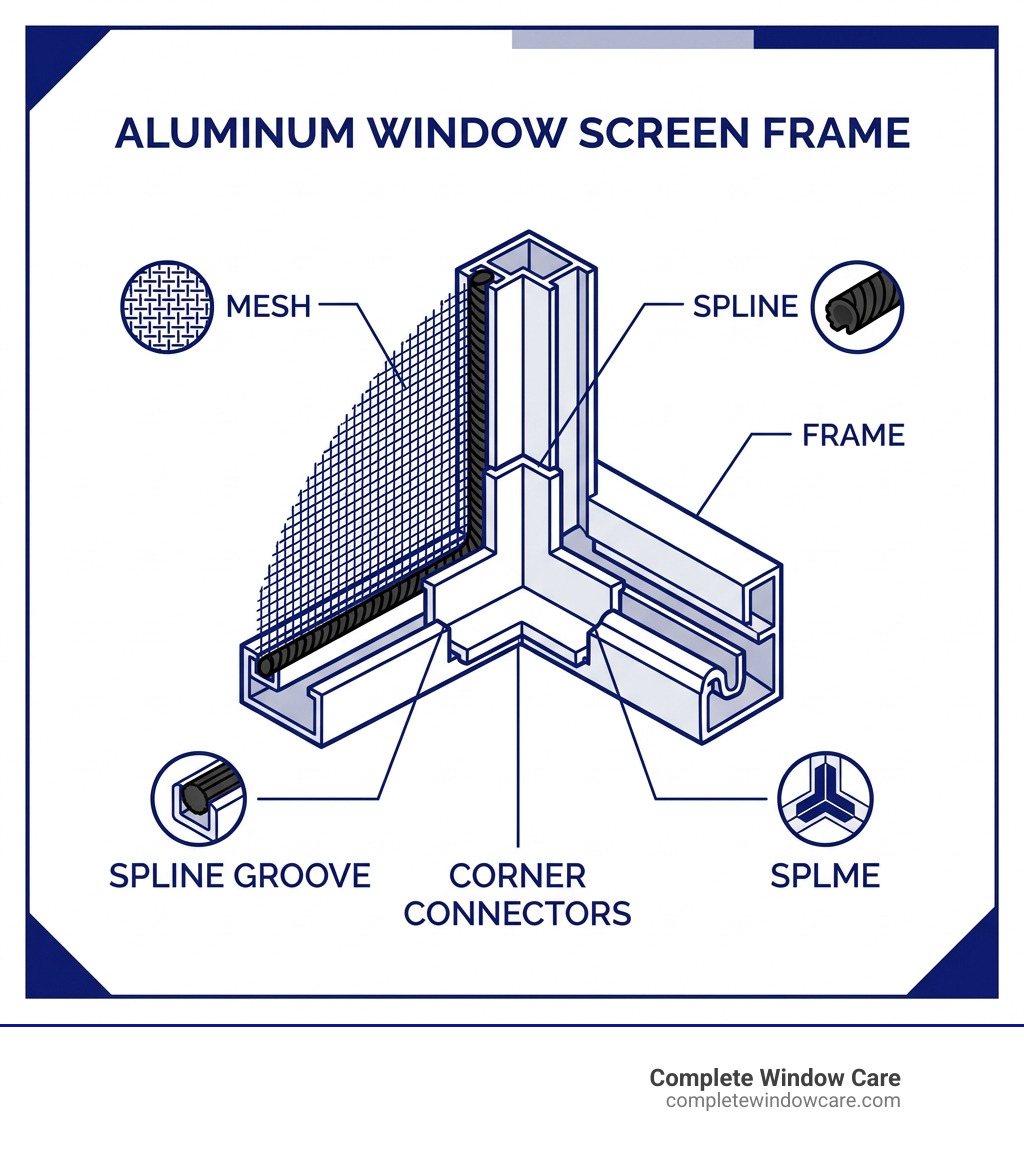
- Replacement Corners (Optional): If your frame falls apart when you remove it, you might need new plastic corner inserts.
Understanding the signs you need a screen repair is the first step. If you see visible holes, significant sagging, or the spline is popping out on its own, it’s time to gather these tools.
Step-by-Step Guide to Professional Results
Now, let’s get to work. The goal here is “tension.” A loose screen is an invitation for bugs to crawl through gaps, and quite frankly, it’s an eyesore. Sags and wrinkles are about as attractive on window screens as they are on people!
1. Frame Removal and Workspace Prep
First, carefully remove the screen from your window or door. In Colorado Springs, many of our aluminum frames are held in by tension springs or plunger bolts. Once it’s out, lay it flat on your work surface. If the frame is particularly dirty, give it a quick wipe-down now so you don’t track grit into your new mesh.
2. Spline Extraction
Locate the end of the spline (usually in a corner). Use your flat-head screwdriver or awl to gently pry the end up. Once you have a grip, you can usually pull the rest out by hand. If the spline is old, it might snap—that’s where your pliers come in handy. After the spline is gone, the old mesh should lift right out.
3. Cleaning the Groove
This is a step many DIYers skip, but it’s vital. Use a stiff brush or the tip of your screwdriver to scrape out any dirt, dead bugs, or leftover mesh fragments from the spline channel. A clean groove ensures the new spline seats deeply and stays there. Proper maintenance helps you maintain and repair window screens for the long haul.
Preparing the Frame to Replace Screen in Aluminum Frame Mesh
Before you roll out the new mesh, take a moment to inspect the “bones” of your screen.
- Debris Removal: Ensure the frame is 100% free of grit. Even a tiny pebble can cause the spline roller to jump and slice your brand-new mesh.
- Frame Inspection: Look for severe bends. Aluminum is durable, but it can warp. If the frame is slightly bowed, you can often gently straighten it by hand on a flat surface.
- Corner Check: The plastic corners are the weakest point. If they are brittle or cracked, the frame won’t hold tension. This is the best time to decide when to replace a window screen frame entirely versus just re-screening.
If the frame itself is sound, you have several repair options for torn screens that don’t involve a trip to the landfill.
Final Steps to Replace Screen in Aluminum Frame Successfully
This is the “make or break” part of the project. Follow these steps to ensure a tight, professional finish:
- Position the Mesh: Lay the new mesh over the frame. Ensure it overlaps the spline groove by at least 1/8 to 1/4 inch on all sides.
- The 45-Degree Corner Cut: Use your scissors to make a small diagonal cut in the mesh at each corner, stopping just before the groove. This prevents the mesh from bunching up as you roll the corners.
- The Convex Roll (Pre-setting): Use the convex (pointed) wheel of your splining roller to gently “pre-roll” the mesh into the groove. This creates a path for the spline and helps seat the mesh.
- The Concave Roll (Spline Insertion): Place your spline at a corner. Use the concave (grooved) wheel to drive the spline into the channel. Pro Tip: Do not cut the spline at each corner. Try to install it in one continuous piece around the entire perimeter for maximum hold.
- Maintain Tension: As you roll, use your other hand to gently pull the mesh taut away from the direction you are rolling. Don’t pull too hard, or you might bow the aluminum frame inward (creating an “hourglass” shape).
- Trimming the Excess: Once the spline is in all four sides, use your utility knife to trim the extra mesh. Run the blade along the outside edge of the spline groove, angled slightly away from the spline to avoid accidental nicks.
If you’re wondering, “Is window screen repair difficult?” the answer is no—but it does require patience.
Choosing the Right Mesh and Hardware for Your Project
Not all mesh is created equal. Depending on your needs in Colorado Springs—whether it’s blocking the intense Pikes Peak sun or keeping the cat from shredding the patio door—your choice of material matters.
| Mesh Type | Benefits | Best For |
|---|---|---|
| Fiberglass | Flexible, easy to install, doesn’t dent. | Standard windows, budget-friendly repairs. |
| Aluminum | Extremely durable, rust-resistant, classic look. | Long-lasting protection, traditional homes. |
| Pet Screen | 7x stronger than standard mesh; tear-resistant. | Households with dogs or cats who claw at screens. |
| Solar Screen | Blocks up to 65-90% of UV rays and heat. | West-facing windows to lower cooling costs. |
| No-See-Um | Extra-fine weave. | Keeping out tiny gnats and midges. |
Choosing the right material is a big part of knowing how to replace an aluminum screen on a screen door. For pet owners, we highly recommend looking into screen solutions for pet damage to avoid doing this repair every single month!
Understanding Screen Hardware and Installation
When you replace screen in aluminum frame units, you might notice small metal or plastic bits attached to the frame. These are essential for keeping the screen in the window.
- Tension Springs: These flat metal pieces sit at the top of the frame to push it down into the track.
- Pull Tabs: These help you grip the screen for easy removal.
- Plunger Bolts: Spring-loaded pins that lock the screen into holes in the window frame.
- Friction Hangers: Used primarily on older double-hung windows.
If your hardware is missing or broken, we can help with common window screen repairs to ensure your screen actually stays where it belongs.
DIY vs. Professional Screen Replacement
We love a good DIY project, and screen repair is one of the most accessible. However, there are times when “doing it yourself” might lead to more headaches.
The Case for DIY:
- Cost-Effectiveness: You only pay for materials (roughly $15-$30 per screen).
- Speed: Once you get the hang of it, you can finish a screen in 10-15 minutes.
- Skill Building: It’s a great way to learn home maintenance.
The Case for Professional Service:
- Fit Accuracy: At Complete Window Care, we can manufacture custom screens within 1/16″ of your dimensions.
- Complex Frames: If your frame is bent, missing hardware, or requires specialty shapes, a pro can handle it without the trial and error.
- Volume: If you have 15 screens damaged by a Colorado hail storm, doing them all yourself can take up your entire weekend.
- Guaranteed Tension: We use professional-grade rollers and jigs to ensure 100% flat, drum-tight results every time.
Check out our comparison of professional vs DIY screen repair to see which path is right for you. There are many benefits of professional screen repair services, especially regarding the longevity of the repair.
Frequently Asked Questions about Aluminum Screen Repair
How do I determine the correct spline size for my aluminum frame?
The best way is to take a small piece of your old spline to the hardware store. If that’s not possible, measure the width of the groove. Your spline should be slightly larger than the groove width to ensure a snug fit. Common sizes are 0.125″, 0.140″, and 0.160″.
Can I use fiberglass mesh in an aluminum frame?
Yes! In fact, most modern aluminum frames come with fiberglass mesh because it’s easier to install and doesn’t crease like aluminum mesh does. Just ensure you use the correct spline size, as fiberglass is thinner than metal mesh.
What should I do if my aluminum frame is bent or the corners are broken?
If the bend is slight, you can straighten it. However, if the frame is “kinked” or the plastic corners have snapped, the frame will lose its structural integrity. In these cases, it’s usually better to replace the entire frame.
Conclusion
Whether you decide to replace screen in aluminum frame yourself or have our team at Complete Window Care handle the heavy lifting, keeping your screens in top shape is essential for a comfortable home. In Colorado Springs, our screens take a beating from the wind, sun, and hail, but a little maintenance goes a long way.
If you find yourself with a pile of torn screens and not enough time to tackle them, we’re here to help. We specialize in cost-effective repairs that save you from the high price of full window replacements. From the Pikes Peak Region to all corners of Colorado Springs, we’ve got you covered.
For more tips, read our guide on window screen replacement or, if you’re ready for a perfect fit, you can order custom replacement screens directly from us.