
When Your Double Pane Window Has a Broken Seal
A double pane window broken seal is one of the most common window problems homeowners face, and one of the most misunderstood. Here’s what you need to know right away:
Quick Answer: Double Pane Window Broken Seal
| Question | Short Answer |
|---|---|
| What is it? | The airtight seal around the insulated glass unit (IGU) has failed, letting humid air in |
| Main sign | Fog or condensation trapped between the panes that won’t wipe off |
| Can it be repaired? | The IGU needs to be replaced; the seal itself cannot be resealed |
| Cost range | Varies by window size, glass type, and installation needs |
| DIY fix? | No. Defogging kits are temporary and don’t restore thermal performance |
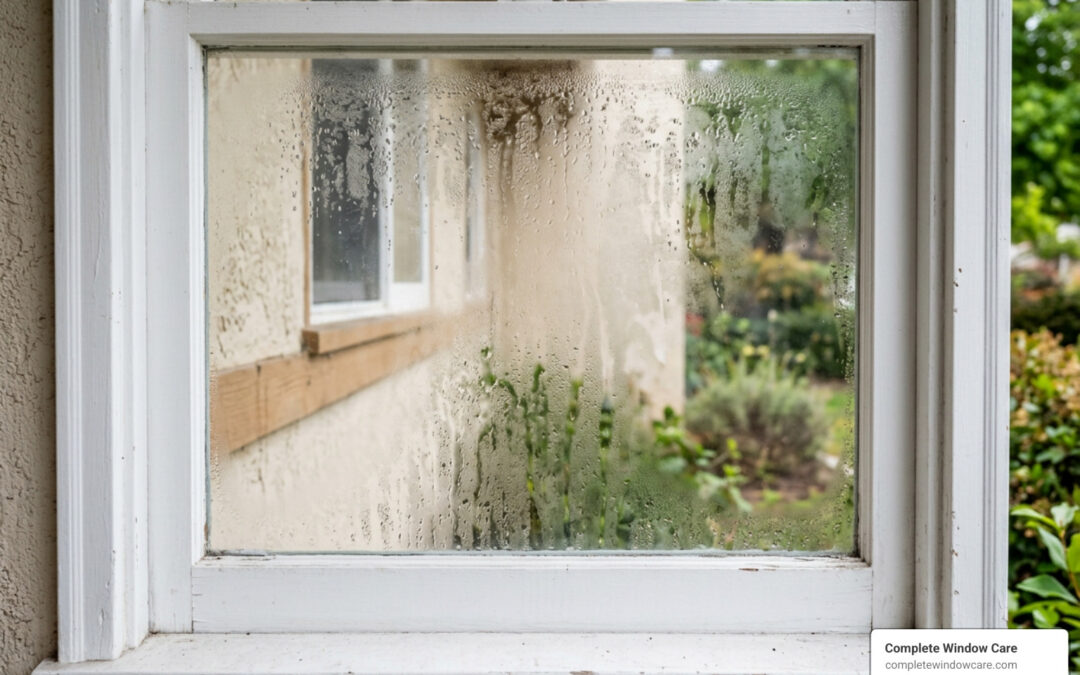
You may have noticed it yourself: a window that suddenly looks foggy, hazy, or smeared, no matter how many times you clean it. That’s because the moisture isn’t on the glass. It’s trapped inside, between the two panes, where no cloth can reach.
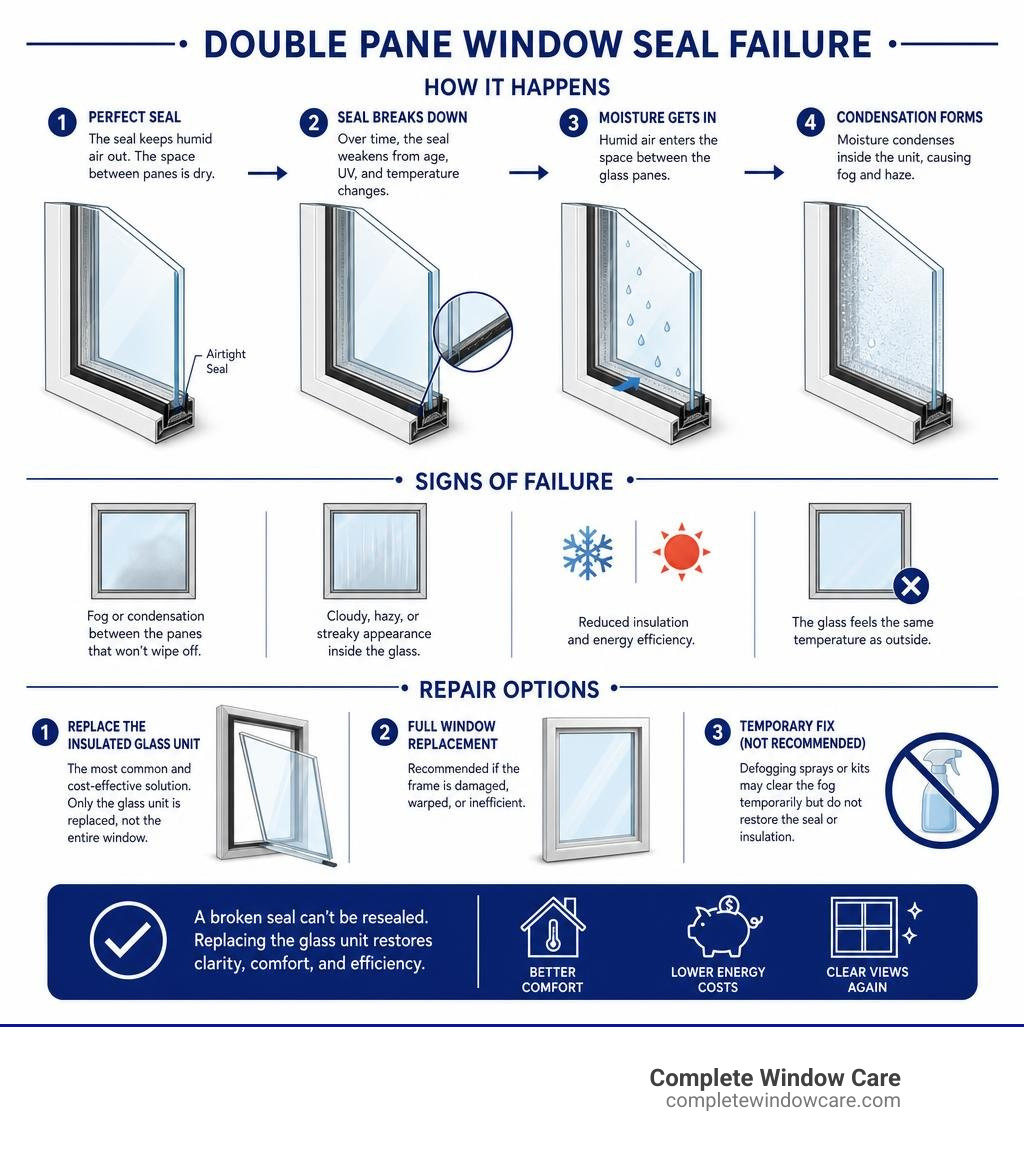
This happens when the rubber seal around the edge of the glass unit breaks down. Once that seal fails, humid air sneaks in, condenses, and gets locked inside the cavity. The result is a cloudy window that never clears, and a window that’s quietly losing its ability to insulate your home.
The good news? In most cases, you don’t need to replace the entire window. You just need to replace the glass unit inside the frame.
At Complete Window Care, our experienced team diagnoses and fixes double pane window broken seal problems across Colorado Springs and the Front Range. In this guide, we’ll walk you through exactly what’s happening inside your window, what your options are, and how to make the most cost-effective decision for your home.
Understanding a Double Pane Window Broken Seal
To understand why a seal breaks, it helps to take a look inside a modern double pane window, known in the industry as an Insulated Glass Unit (IGU). An IGU consists of two parallel glass sheets separated by a perimeter spacer bar and permanently bonded together with robust elastic sealants, typically polyisobutylene primary seals backed by silicone or polyurethane secondary seals.
When manufactured, the airtight space between the two glass panes is flushed and filled with dense noble gases, usually argon or krypton, which slow down conductive heat transfer. This gas fill is key to maintaining high energy efficiency.
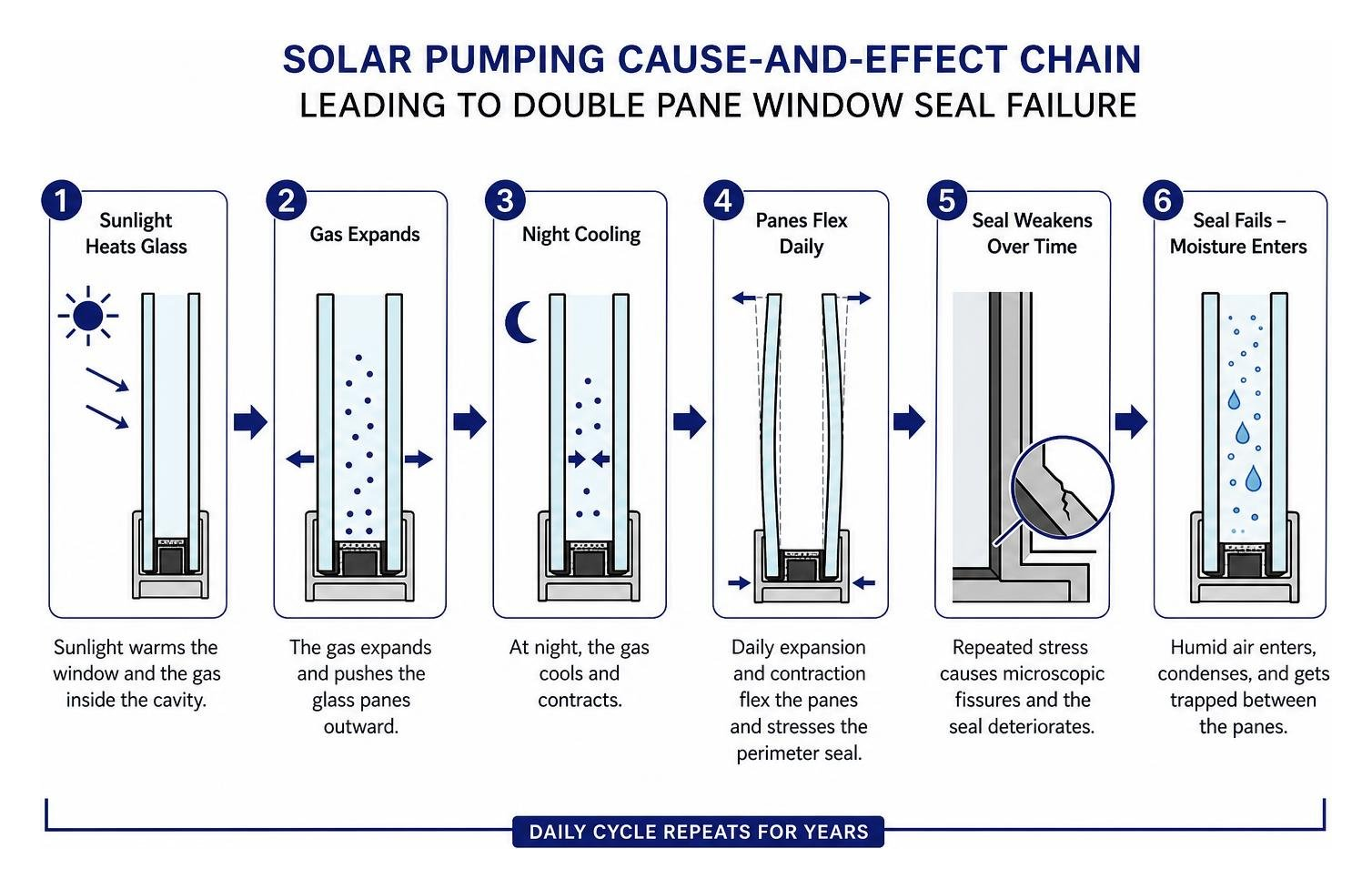
So how does a double pane window broken seal occur? The biggest driver is a physical process known as solar pumping.
Every day, direct sunlight strikes your window glass, heating the trapped gas inside the cavity. As the gas warms, it expands, pushing the glass panes slightly outward. At night, as the temperature drops, the gas cools and contracts, pulling the glass inward. This continuous daily expanding and flexing puts constant physical stress on the perimeter elastic seal.
Over time, this mechanical cycling weakens the seal until microscopic fissures form. Southern and western window exposures endure the highest thermal spikes, meaning south-facing and west-facing windows frequently suffer seal failure years ahead of north-facing units.
Other culprits include natural sealant aging, since most window seals naturally break down over time, standing water pooling along unvented lower window sills, and settlement stress from the house framing. Homeowners who want a service overview can learn more about professional window seal repair options from Complete Window Care, while related maintenance details are covered in our article on why glass gets foggy.
Identifying the Signs of a Double Pane Window Broken Seal
Detecting a broken window seal isn’t always obvious during its earliest stages, but as environmental moisture enters, several distinct symptoms emerge:
- Persistent Trapped Moisture and Fog: This is the telltale signature. Water drops, film, or haze appear between the glass panes. You wipe the interior surface, then walk outside to wipe the exterior, but the hazy smudge remains untouched right in the middle.
- Optical View Distortion: When the inert argon gas leaks out, the internal pressure drops. In some cases, atmospheric pressure outside pushes the glass panes inward until they collapse slightly toward each other. When you look through the glass at an angle, outdoor objects look bent, warped, or wavy, like a carnival mirror.
- White Mineral Deposits (Etching): As humid air cycles inside the unit, water evaporates repeatedly during dry afternoons. Minerals and chemical residues dissolved in the moisture settle on the interior glass faces, leaving permanent, milky white spots or streaks that cannot be scrubbed away.
- Drafts and Cold Spots: You might notice a chilly draft sitting next to the window on cold winter mornings, as the loss of dense insulating gas lowers the glass unit’s insulating power.
For a deeper dive into recognizing these early warning signs, see our blog post on recognizing window seal failure.
Cracked vs. Fogged IGU: Key Differences
Homeowners often confuse a cracked double pane window with a fogged double pane window, but the structural reality and safety impacts are quite different.
- Cracked IGU: Indicates physical glass fracture caused by impact, such as hail, rocks, or stray baseballs, or extreme thermal gradient stress, such as direct sunlight hitting partially shaded glass. A crack violates the physical barrier of the window, creating sharp hazards, water leak paths into your walls, and instant security vulnerabilities.
- Fogged IGU: The glass itself remains completely intact, but the perimeter elastic seal has lost its airtight bond. The danger here isn’t shattered glass or rainwater pouring onto your floor. It’s reduced thermal efficiency, loss of clear view, and eventual permanent mineral staining on the internal glass faces.
While both problems ultimately require changing out the glass unit, understanding the distinction helps prioritize urgency.
Repair Options: IGU Replacement vs. Full Window Replacement
When faced with a double pane window broken seal, many homeowners assume they have to tear out the entire window, frame, trim, casing, and all. Fortunately, that is rarely necessary.
If your window frame, whether vinyl, aluminum, clad, or wood, remains structurally sound, plumb, and operates smoothly, you can opt for an IGU replacement (also known as glass-only replacement). A technician simply removes the retaining stops, takes out the failed glass unit, cleans the frame rebate, and inserts a brand-new, factory-sealed IGU with fresh Low-E coatings and argon gas.
For homeowners comparing repair choices, window glass replacement in Colorado Springs is often the practical service when the frame is still solid. If you’re deciding between glass-only work and a whole new unit, our blog comparison of glass-only vs. whole-window replacement explains when each option makes sense.
Here is a quick snapshot of how repair and replacement strategies stack up:
| Option | What Gets Replaced | Relative Cost | Thermal Restoration | Typical Lifespan | Best Used When |
|---|---|---|---|---|---|
| IGU Replacement | Glass unit only; original frame is preserved | Usually lower than full replacement | Restored to original spec | 15–25 years | Frame is in great shape, but glass is fogged or broken |
| Full Window Replacement | Entire frame, sash, glass, and exterior trim | Usually higher because more materials and labor are involved | Restored or upgraded | 20–30 years | Frame is rotted, warped, leaky, or non-functional |
| Defogging Service | Nothing; small holes drilled to release moisture | Usually the lowest upfront option | Not restored, because the gas fill is permanently lost | Temporary | Cosmetic temporary fix before selling or renovating |
Why Defogging is Not a Permanent Double Pane Window Broken Seal Solution
You may have seen advertised “defogging” services or DIY drill kits promising a cheap fix for a double pane window broken seal. It’s important to understand what defogging actually does and what it cannot do.
The defogging process involves drilling small micro-holes directly into the glass pane, injecting a liquid desiccant or cleaning solvent, rinsing the interior cavity, and installing a tiny one-way vent valve.
While this might temporarily clear the visual fog, it does not fix the broken seal.
Because the perimeter seal remains compromised, the insulating argon gas is completely gone and cannot be replenished. The window’s original thermal resistance is permanently lowered, and environmental humidity will inevitably return once the chemical desiccant wears out. Defogging is strictly a temporary cosmetic band-aid. For a lasting fix, our article on solving fog and seal leaks explains why moisture usually returns unless the failed IGU is replaced.
When to Replace the Frame vs. Glass Only
While IGU glass replacement is our preferred recommendation because it saves homeowners time and money, there are specific scenarios where replacing the whole window assembly is the better choice:
- Wood Rot and Decay: If moisture penetration has rotted the underlying wood sill or jambs, the frame can no longer support a new heavy glass unit securely.
- Severely Warped Vinyl or Aluminum: If house settling or improper original installation has twisted the window frame out of square, a new rectangular glass unit will not seat properly or operate smoothly.
- Operating Mechanism Failure: If double-hung balancers, casement hand cranks, or hinges are snapped and replacement parts are obsolete, replacing the entire window updates both functionality and energy performance.
If you aren’t sure what condition your sashes are in, our blog on spotting clear replacement signs can help you decide whether the issue is limited to the glass or points to a larger frame problem.
Costs, Warranties, and Energy Savings
Addressing a double pane window broken seal is an investment that yields immediate dividends in home comfort and lower utility bills.
According to data from the U.S. Department of Energy, heat gain and loss through windows accounts for 25 to 30 percent of residential heating and cooling energy use. A fully functioning double-pane Low-E window filled with argon gas features a U-factor between 0.25 and 0.35.
When the seal breaks and argon leaks out, replaced by ambient moist air, the insulating capability drops significantly, raising the U-factor toward a less efficient range and reducing comfort near the glass.
Pricing depends on the size of the glass unit, whether tempered or specialty glass is required, the window style, access conditions, and whether the frame also needs repair. In general, IGU replacement is more cost-effective than full window replacement when the existing frame is sound, while full replacement is reserved for windows with frame damage, severe warping, leaks, or failed operating hardware.
Before paying out of pocket, always review your original window manufacturer’s warranty. Many quality window manufacturers offer sealed glass unit warranties, and the coverage period varies by brand, product line, and installation details. If your failure falls within the warranty window, the manufacturer may supply a replacement IGU, leaving you responsible for local installation labor.
To learn more about maximizing your return on investment, our article on how window repairs cut energy bills explains how glass issues affect comfort and HVAC performance.
How to Prevent Window Seal Failure
While window seals will naturally degrade over decades of thermal stress, taking proper maintenance precautions will maximize their lifespan and prevent premature seal breakdown:
- Never Pressure Wash Windows: High-pressure water spray from power washers can force water past glazing gaskets, blowing out the primary butyl seal and trapping water inside the frame rebate where it rots the seal from the outside in.
- Avoid Harsh Chemical Solvents and Heat Guns: When stripping paint or cleaning exterior sashes, keep chemical solvents, paint thinners, and high-heat guns away from glass edges. Solvents dissolve rubberized sealants, and direct heat causes extreme local expansion that cracks glass.
- Be Cautious with Aftermarket Window Films: Applying dark, aftermarket heat-reflective tinting films onto standard double pane windows can absorb excessive solar radiation, dramatically raising internal gas cavity temperatures. This intense thermal heat often causes seal failure and almost always voids your window manufacturer’s original warranty.
- Maintain Frame Weep Holes and Exterior Sealants: Inspect the bottom track of your exterior window frames annually. Ensure weep holes are clear of dirt, dead bugs, and debris so rainwater drains freely away from the lower glass seal instead of pooling against it.
Here is a quick reference checklist for keeping your window seals intact:
- Inspect exterior caulk beads around window perimeters every autumn.
- Clean glass surfaces using mild pH-neutral soap and a soft microfiber towel.
- Apply cleaning sprays onto your cloth rather than spraying directly onto the glass perimeter edges.
- Clear dust, leaves, and debris out of sash tracks and sill drain holes before the rainy season.
Frequently Asked Questions
How long do double pane window seals typically last?
Well-manufactured IGUs installed in residential settings typically last between 15 and 25 years under normal conditions. However, windows subjected to intense direct sunlight, such as south and west exposures, extreme mountain thermal swings, or improper installation with clogged weep holes may experience seal failure sooner.
Can I fix a broken double pane window seal myself?
In short, no. Once an IGU perimeter seal is broken, it cannot be resealed DIY in the field. Double-pane units are manufactured using specialized vacuum-press machinery, internal desiccant spacer bars, and precision-injected argon gas fills under controlled factory conditions. Attempting to disassemble a double-pane unit at home will shatter the glass or leave permanent moisture trapped inside. Replacing the unit with a professionally fabricated replacement IGU is the safe, lasting solution.
Does a broken window seal increase energy bills?
Yes. When the airtight seal breaks, the dense insulating argon gas escapes and is replaced by moist ambient air. This loss lowers the window’s thermal resistance, allowing winter heat to escape and summer heat to infiltrate your home. According to the U.S. Department of Energy, window heat transfer accounts for up to 30% of residential climate control energy costs, meaning multiple failed seals across a home can cause noticeable increases in monthly HVAC bills.
Conclusion
A double pane window broken seal doesn’t mean you need to spend thousands of dollars on full window frame replacements across your entire house. By replacing just the Insulated Glass Unit (IGU), you can permanently eliminate trapped fog, restore crystal-clear views, and regain your home’s original energy efficiency, all at a fraction of the cost of full replacement.
At Complete Window Care, our philosophy is simple: we prioritize cost-effective glass repairs and IGU replacements over unnecessary whole-window teardowns. Serving homeowners across Colorado Springs and the Pikes Peak Region, our experienced team provides precision measurements, expert glass installations, and honest evaluations.
If foggy, cloudy, or smeared windows are spoiling your view, don’t settle for temporary defogging gimmicks or expensive whole-frame overhauls. Contact our professional window glass replacement technicians to schedule your glass inspection and get a clear quote!