
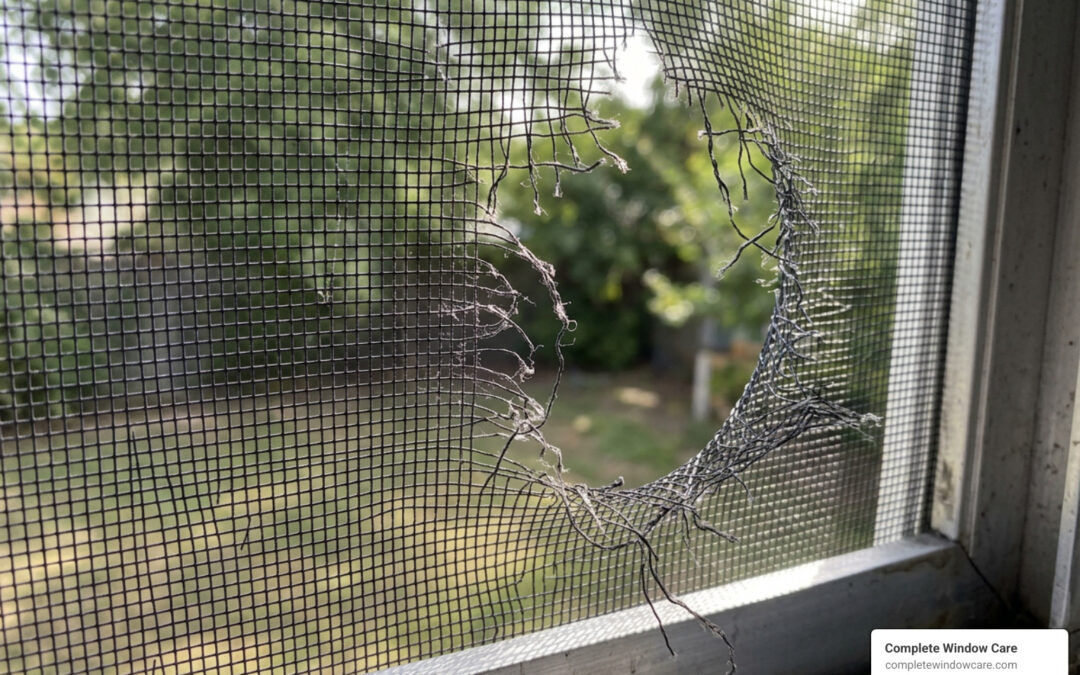
A Window Screen Hole Is Easier to Fix Than You Think
A window screen hole is one of those small home problems that gets worse fast, and every bug in the neighborhood seems to find it before you do.
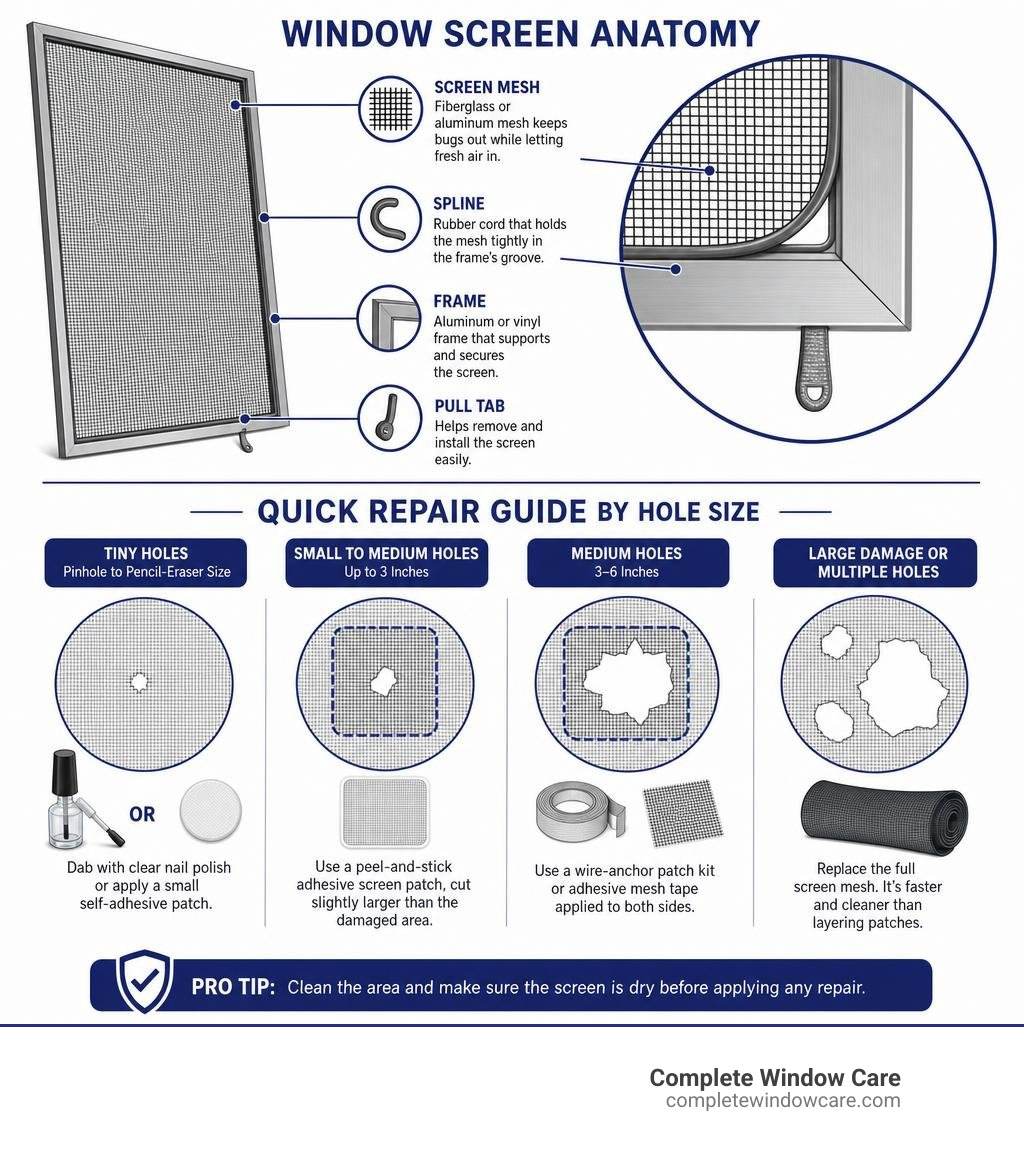
Here’s the quick answer on how to fix a window screen hole:
- Tiny holes (pinhole to pencil-eraser size): Dab with clear nail polish or apply a small self-adhesive patch.
- Small to medium holes (up to 3 inches): Use a peel-and-stick adhesive screen patch, cut slightly larger than the damaged area.
- Medium holes (3 to 6 inches): Use a wire-anchor patch kit or adhesive mesh tape applied to both sides.
- Large damage or multiple holes: Replace the full screen mesh. It’s faster and cleaner than layering patches.
Beyond bugs, a damaged screen also lets in dust, debris, and outside noise. A small rip in the mesh can spread quickly if left alone, especially in Colorado Springs, where wind, hail, and temperature swings put screens under constant stress.
The good news? Most window screen repairs take under 30 minutes with basic materials from a local hardware store.
At Complete Window Care, our experienced team diagnoses and repairs window screen hole damage across Colorado Springs and the Front Range. We have seen everything from tiny pet-claw punctures to full mesh blowouts from hailstorms, and we will walk you through exactly how to handle each one.
Common Causes of a Window Screen Hole
Understanding what caused your screen damage is the first step toward making sure your repair actually lasts. If we don’t address the root cause, you will likely find yourself patching another window screen hole in a few short months.
In our years servicing homes throughout the Pikes Peak Region, we have found that screen damage generally falls into three main categories: pest entry, physical accidents, and environmental wear. If your mesh seems to degrade quickly, our blog on why window screens keep ripping explains the underlying mechanics of mesh failure in more detail.
Pet Claws and Wildlife Damage
Our beloved dogs and cats are easily the most common culprits behind torn screens. Whether it is a dog excitedly pawing at a patio screen door when you get home, or a cat climbing up a window screen to get a better look at a neighborhood bird, claw punctures can shred standard fiberglass mesh in seconds.
Local wildlife also plays a significant role in the Pikes Peak Region. Squirrels, raccoons, and birds frequently snag screen mesh while looking for food or nesting materials. For recurring pet damage, Complete Window Care offers screen repair options built around pet-caused damage to help keep your home secure without replacing the entire window assembly.
Weather Wear and Frame Warping
Colorado Springs is famous for its erratic weather. High wind storms blowing off the mountains can whip debris against your windows, causing sudden punctures. The extreme temperature fluctuations we experience between sunny afternoons and freezing nights also put mechanical stress on your window assemblies.
Over time, wood window frames can shrink, while vinyl or aluminum frames can warp. This shifting distorts the screen frame, loosening the joints and causing the screen mesh to sag. Once a screen loses its tension, it becomes far more susceptible to catching on wind-borne debris, resulting in tears along the edges. Our blog on common causes of window screen issues can help you spot whether the frame, mesh, or spline is the real source of the problem.
Repair vs. Replacement: Assessing Your Screen Damage
Before running to the hardware store for patching supplies, we need to determine if a simple patch is a viable long-term solution or if you need a full rescreening.
To make this decision easy, we recommend checking three main factors:
- Frame Stability: Is the frame perfectly straight and sturdy? If the frame is bent, warped, or has loose corners, patching the mesh will not fix the underlying issue.
- Mesh Flexibility: Press gently on the screen mesh. Does it feel flexible and resilient, or is it brittle and dry-rotted? If the mesh feels brittle or has turned a shiny, faded color, it is past its lifespan and will continue to rip.
- Damage Location and Size: Is the damage limited to one or two small spots under 6 inches, or is it a long tear right along the spline channel?
| Feature / Scenario | DIY screen patching | Full screen replacement |
|---|---|---|
| Hole Size | Best for holes under 3 to 6 inches | Required for holes over 6 inches or multiple rips |
| Mesh Condition | Surrounding mesh must be strong and flexible | Best if old mesh is brittle, faded, or shiny |
| Aesthetics | Visible patch; functional but not seamless | Flawless, brand-new look |
| Average Cost | Low material cost | Higher material or professional service cost |
| Time Investment | 5 to 15 minutes | 20 to 30 minutes |
When to Patch a Window Screen Hole
Patching is highly effective when the surrounding mesh is completely healthy, and the damage is localized to one or two minor spots. For example, if a stray branch poked a single 2-inch hole in an otherwise perfect screen, a patch is an excellent, cost-effective choice.
Using pre-cut adhesive patches or screen repair tape allows you to seal the barrier quickly, keeping pests out and saving you the time of a full rebuild. When the damage is larger, brittle, or repeated across several windows, our team can help with professional window screen repair services that prioritize practical repairs before replacement.
When Full Screen Replacement is Necessary
If your screen has multiple large tears, has pulled completely away from the frame, or is dry-rotted from years of intense Colorado sunshine, patching is a waste of time. Attempting to patch old, brittle mesh often creates new tears because the weakened fibers cannot handle the tension of a new patch.
In these cases, removing the old spline and rolling entirely new mesh into the frame is the only reliable option. Complete Window Care can also help with window screen replacement when repair is not enough, especially when damaged mesh, loose spline, and frame issues all show up together.
DIY Methods for Patching Damaged Window Screens
If you have assessed your screen and decided that a patch is the way to go, it is time to assemble your toolkit. Having the right tools on hand makes the job incredibly simple and ensures a neat, durable finish.
To repair a window screen hole at home, you will need the following core materials:
- Scissors or a sharp utility knife (for trimming the damaged area)
- Rubbing alcohol and a microfiber cloth (for cleaning the screen surface)
- A screen repair kit or patch matching your screen material (fiberglass or aluminum)
- A hair dryer (optional, but highly recommended for activating adhesive on self-adhesive patches)
How to Repair a Window Screen Hole Step-by-Step
No matter which patching method you choose, proper surface preparation is the single most important factor for a lasting repair. Applying adhesive to a dirty, dusty screen is the number one reason DIY patches fail after the first rainstorm.
Follow these universal steps to prepare your screen:
- Remove the screen frame: While you can patch a screen while it is still in the window, you will get a much cleaner, tighter result by laying the frame flat on a solid work surface.
- Clean the area: Dampen a cloth with rubbing alcohol and gently wipe both sides of the screen around the hole. This removes built-up dust, pollen, and outdoor oils so the adhesive can bond directly to the mesh. Let it dry completely.
- Trim the damaged fibers: Use your utility knife or sharp scissors to trim away any loose, frayed threads around the hole. Cut the damaged area into a neat square or rectangle. This prevents the tear from unraveling further under the patch.
If you discover that the damage is connected to loose spline, bent frames, or recurring tears, our service team can evaluate the full screen assembly and recommend the most cost-effective repair path. For homeowners who want more do-it-yourself context, our blog on solutions for common window screen repairs explains how different screen problems tend to show up.
Method 1: Using Self-Adhesive Screen Patches
Self-adhesive patches are the easiest and most popular way to fix fiberglass screens.
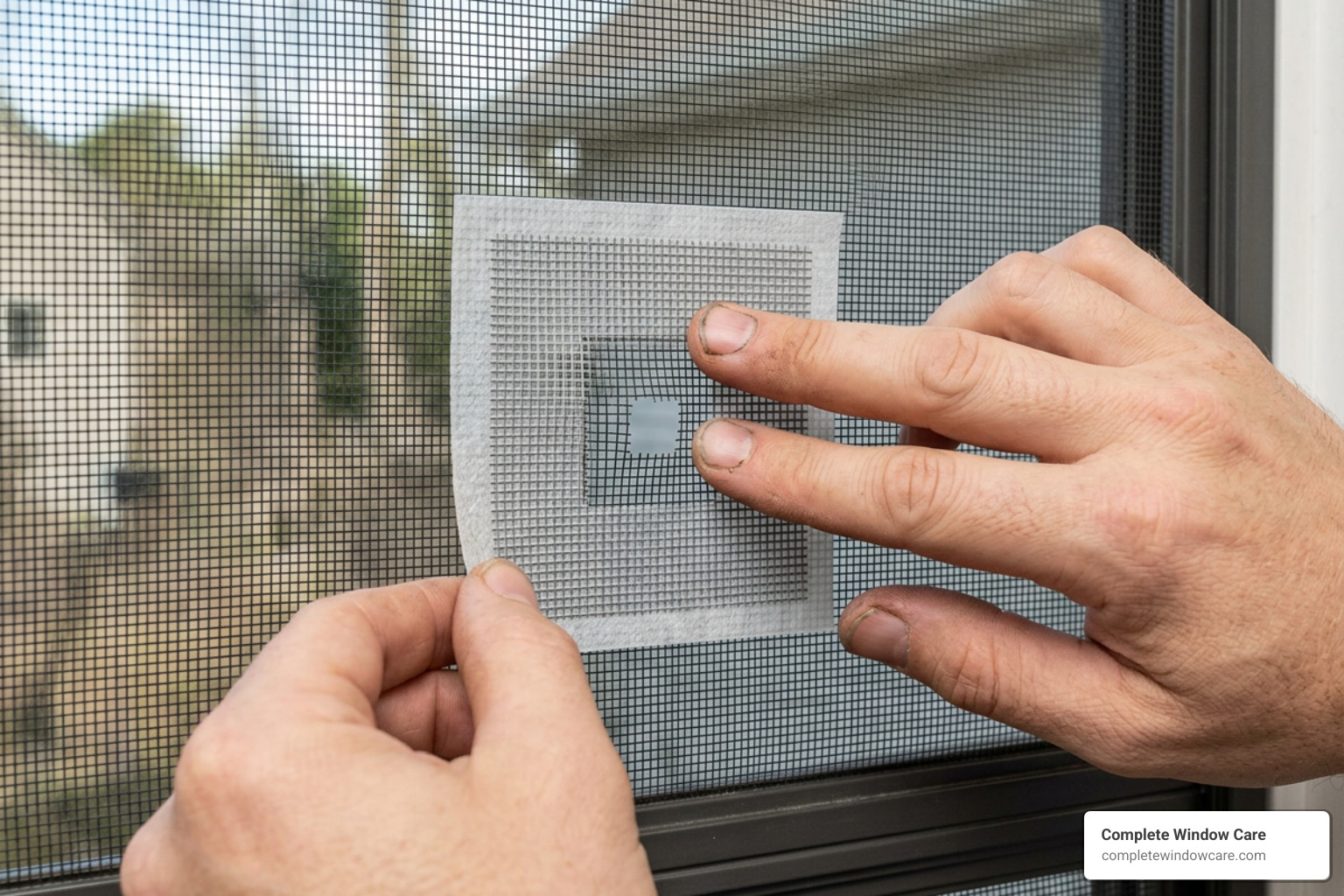
- Cut the patch to size: Measure the trimmed hole and cut your adhesive patch or repair tape so it extends at least half an inch beyond the edges of the hole on all sides. Rounding the corners of your patch with scissors helps prevent the edges from peeling up over time.
- Apply the patch: Peel off the backing paper. Carefully align the patch over the hole, matching the grid pattern of the patch with the grid of your screen as closely as possible to make the repair less visible. Press firmly from the center outward to secure the bond.
- Set the adhesive: For maximum durability, use a hair dryer on medium heat for 30 to 45 seconds while pressing a clean cloth against the opposite side of the screen. The heat activates the adhesive, fusing the patch securely to the screen fibers.
Method 2: Patching Aluminum Screens with Wire Anchors
Aluminum screen mesh is highly durable but prone to denting and puncturing. Because adhesive does not stick as reliably to metal, the best way to patch an aluminum screen is by using a physical wire-lock patch.
- Prepare the patch: Cut a square of loose aluminum screen mesh that is about 2 inches larger than the hole.
- Unravel the edges: Carefully pull out 3 to 4 horizontal and vertical wires from all four outer edges of your patch. This leaves a central woven square surrounded by loose, protruding wire “prongs” on all sides.
- Bend the prongs: Bend these loose wire ends at a perfect 90-degree angle, creating a series of tiny metal teeth pointing downward.
- Install and lock: Place the patch over the hole, pushing the bent wire teeth directly through the surrounding screen mesh. Once the teeth are pushed through to the other side, lay the screen flat and use a flat-head screwdriver or block of wood to bend the wire prongs flat against the back of the screen. This locks the metal patch tightly in place.
Frequently Asked Questions about Window Screen Repair
How long do DIY screen patches typically last?
A properly applied adhesive patch on a clean fiberglass screen typically lasts 1 to 3 years, depending on how much direct sunlight and moisture it receives. A physical wire-anchor patch on an aluminum screen can last 5 years or more because it does not rely on chemical adhesives that degrade in extreme weather.
However, keep in mind that patches are always semi-permanent. If you want to explore more heavy-duty restoration options, learn more about our repair options for torn window screens.
Can I use nail polish to seal a tiny screen tear?
Yes! If you have a tiny pinhole or a small slit under a quarter-inch, clear nail polish is an excellent quick fix.
Simply push the displaced fiberglass fibers back into their original grid position using a toothpick, apply a small drop of clear nail polish to seal the fibers together, and let it dry. Apply a second coat on the opposite side for extra strength. This creates a nearly invisible, waterproof bond that stops the tear from spreading.
What is the best screen material for homes with pets?
If you have dogs or cats, standard fiberglass is not strong enough. We highly recommend upgrading to pet-resistant screen mesh, which is made from heavy-duty, vinyl-coated polyester.
Pet screen is roughly seven times stronger than standard fiberglass and easily resists scratching, clawing, and pushing without tearing or warping. While it is slightly thicker and reduces visibility by about 10%, it will save you from endless cycles of screen repair.
Conclusion
Taking care of a window screen hole early is the best way to keep your home comfortable, insect-free, and energy-efficient. With a few basic tools and 15 minutes of your weekend, you can easily patch minor damage and extend the life of your screens.
Of course, DIY repairs have their limits. If you are dealing with severely warped frames, brittle mesh on multiple large windows, or you simply want a flawless, professional finish without the hassle, Complete Window Care is here to help. We specialize in cost-effective repairs over full replacements, serving homeowners throughout Colorado Springs and the Pikes Peak Region.
Skip the frustration and let our experienced team handle it for you. Contact our professional window screen repair technicians to schedule your free estimate!