
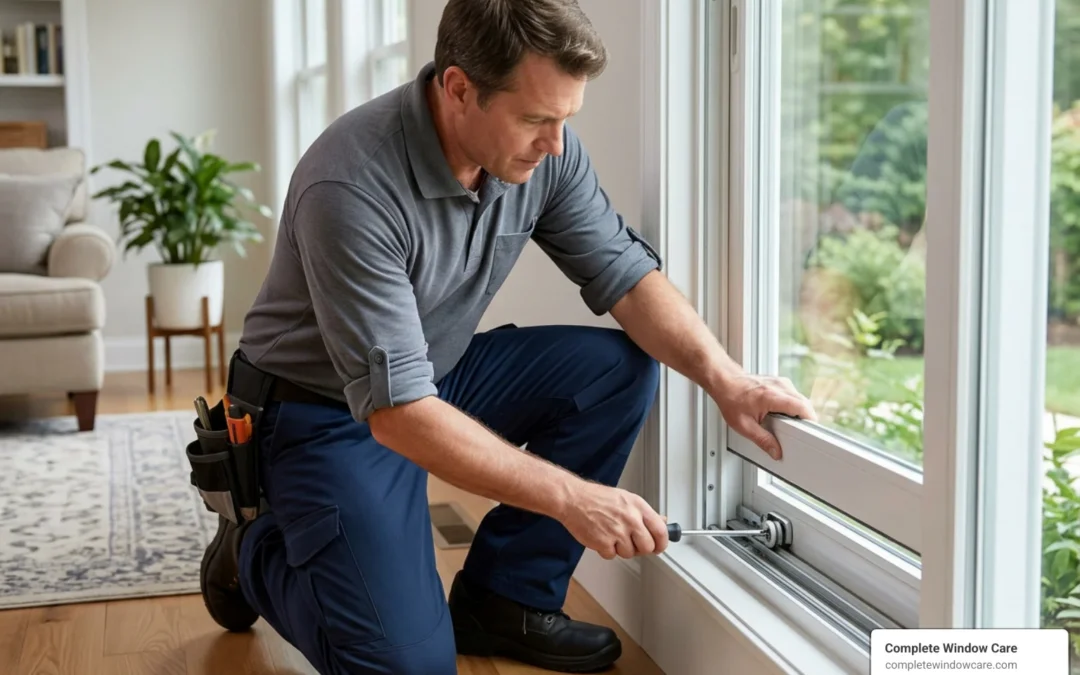
When a window slips out of its guide tracks, it usually lets you know right away. You might notice the crooked glass tilting sideways as you try to shut it, or hear an unsettling grinding noise every time the glass moves. Catching these symptoms early prevents minor track friction from turning into shattered glass or burnt-out electric motors.
Several underlying mechanical issues cause windows to deviate from their path:
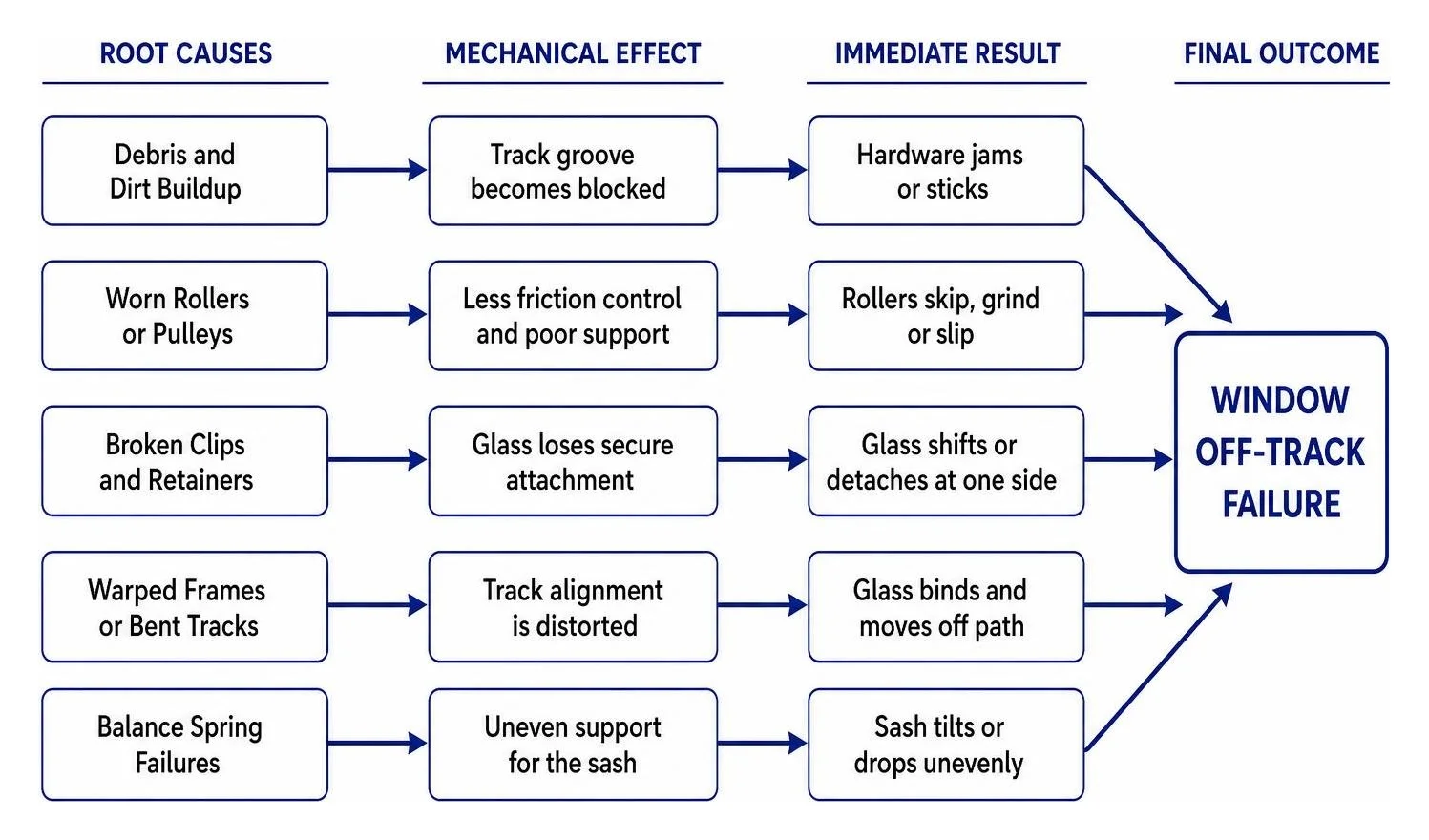
- Debris and dirt buildup: Dust, pet hair, small stones, and foreign objects, such as pencils or toys, jam the track groove and derail sliding hardware.
- Worn rollers or pulleys: Plastic guide wheels degrade and crack after years of UV exposure and repeated friction, making smooth gliding impossible.
- Broken clips and retainers: Vehicle window glass is secured to lift mechanisms using plastic retainer clips that turn brittle and snap over time.
- Warped frames or bent tracks: Wood sashes swell with moisture, vinyl frames warp under high thermal loads, and metal tracks bend from accidental impacts.
- Balance spring failures: Vertical double-hung windows rely on balance shoes and springs. When these snap or disengage from their take-out clips, the sash drops unevenly.
Diagnosing the issue starts with a visual and tactile check. Open the window slowly and inspect the track channels using a flashlight. Do you see bent metal lips, cracked plastic wheels, or missing guide clips? If you are dealing with vertical home windows, check if one side stays raised while the other sags. For sliding doors and horizontal windows, inspect the lower roller assembly for flat spots or seized bearings.
Identifying Home vs. Automotive Track Failure
While both systems rely on linear tracks to guide glass, home windows and car windows operate on entirely different mechanical principles.
Home sliding units use gravity to sit inside a lower metal or vinyl track channel, gliding along plastic wheels. Vertical double-hung windows rely on balance springs anchored inside the side jambs. If your home window refuses to budge or wobbles within the frame, the fix usually requires realigning the sash, clearing the tracks, or swapping worn bottom rollers.
Car windows, on the other hand, sit inside an internal door cavity, suspended by an electric power window regulator, often a scissor-lift or steel cable system. When a car window fails, you will often hear the whirring of the motor continuing to run while the glass sits completely motionless or falls sideways into the door frame.
Understanding DIY vs. Professional Window Off Track Repair
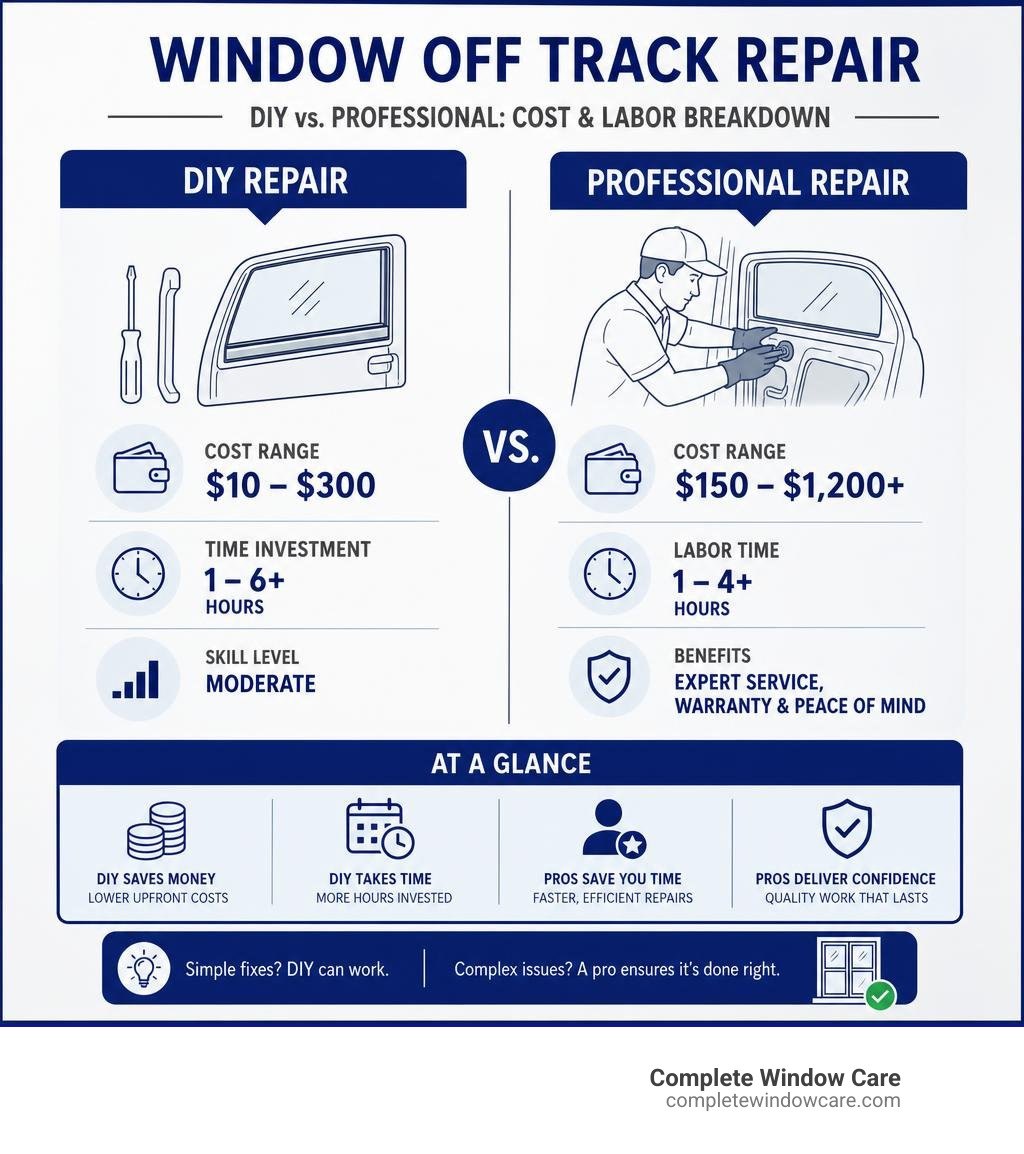
Tackling a window off track repair yourself can save money on basic labor, but it helps to know your limits before you end up with broken glass or a damaged door panel.
For home windows, minor adjustments, such as cleaning grime from tracks, straightening a bent aluminum rail, or popping a vinyl sash back into its track, are straightforward DIY tasks. However, if your home window has warped frame timber, failed balance shoes under high tension, or double-pane insulated glass seals that have failed, calling for professional home window repair is the safest route.
Automotive window repairs require pulling apart interior door panels, unclipping electrical wiring, and navigating narrow metal door cavities. While replacing a simple plastic clip is doable with basic hand tools, working near side-impact airbag harnesses or replacing complex motor-and-cable assemblies can quickly get overwhelming.
Step-by-Step Home Window Off Track Repair
If your horizontal sliding home window or patio door has derailed, follow these simple steps to put it back in working order:
Tools and materials required:
- Flathead and Phillips screwdrivers
- Pliers or a rubber mallet with a wood scrap block
- Shop vacuum and stiff nylon brush
- Mild dish soap, water, and microfiber towels
- Pure silicone lubricant spray, avoiding oil-based products
- Replacement roller assemblies or balance take-out clips, if damaged
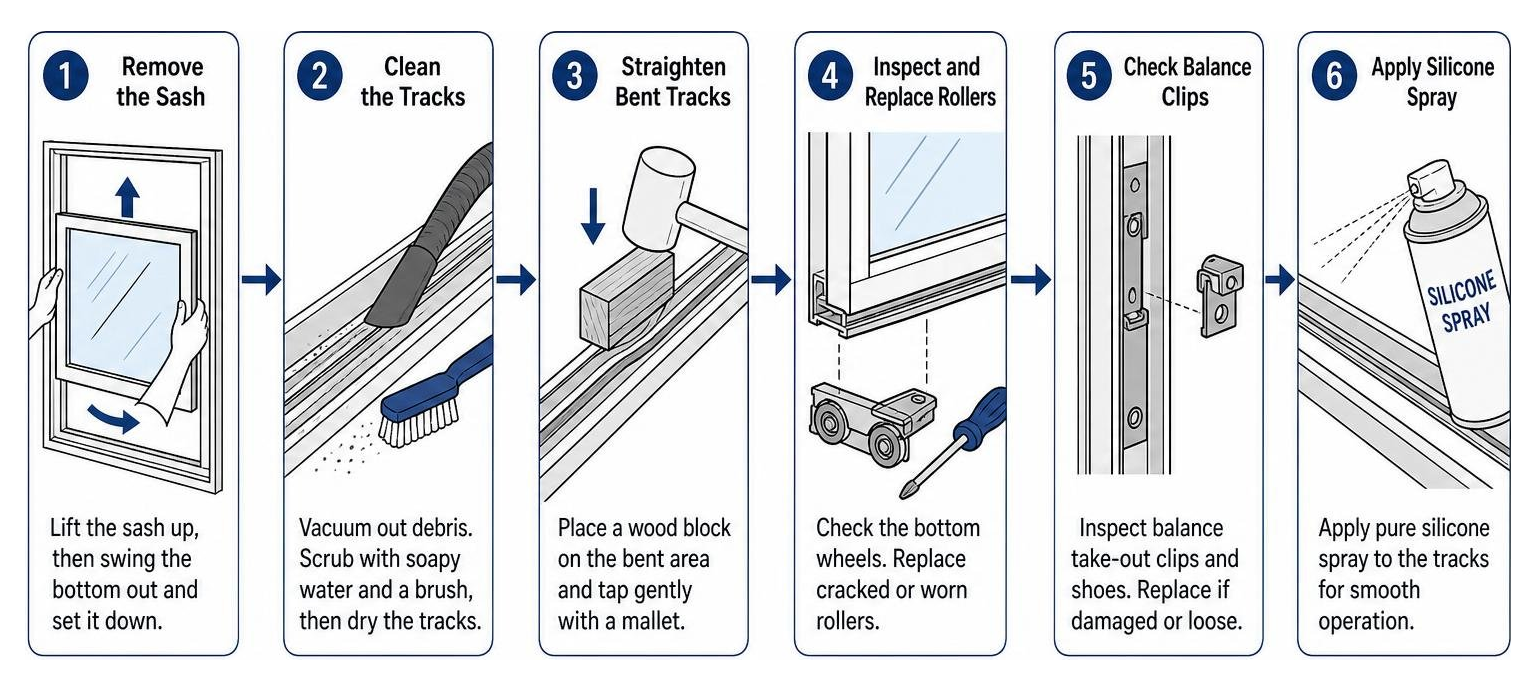
- Safely remove the sash: Lift the sliding sash straight up into the top track channel to clear the bottom lip, then swing the bottom out toward you and set the sash down flat on a soft surface.
- Deep-clean the tracks: Vacuum out all loose dirt, grit, and bugs. Scrub built-up grime using warm soapy water and a nylon brush, then wipe the tracks completely dry.
- Inspect and straighten bent tracks: If you discover a bent aluminum or vinyl track rail, place a small scrap block of wood against the bent section and tap it gently with a rubber mallet until aligned.
- Inspect and replace rollers: Turn the sash over to inspect the bottom wheels. If they are cracked or flattened, unscrew the housing bracket and replace them with matching wheels.
- Check balance take-out clips for double-hung units: For vertical windows, inspect the metal or plastic balance take-out clips on the side jambs. Ensure the balance shoe has not snapped or popped out of position; damaged clips or balance rods can be the reason your window will not stay open.
- Reinstall and lubricate: Angle the top of the sash back into the upper track, align the bottom wheels over the raised lower track rail, and gently push into place. Spray a light coat of silicone lubricant along the track for smooth sliding.
Car Window Off Track Repair and Panel Removal
Fixing a car window that has slipped its track involves accessing the inner mechanics of the door.
- Disconnect power and prepare: Disconnect your car’s negative battery terminal to eliminate electrical risks and prevent accidental airbag deployment.
- Remove the door panel: Undo hidden trim screws near the door handle and armrest. Use a plastic non-marring trim tool to pop off the door panel clips, then disconnect electrical switch connectors.
- Peel the vapor barrier: Carefully pull back the clear plastic vapor barrier sheet without tearing it so you can preserve its weather seal.
- Inspect clips and cable: Look down into the door cavity. If the plastic glass retainer clips are broken, detach them from the bottom edge of the glass. If the regulator cable is frayed or snapped, the whole regulator assembly must be replaced.
- Reattach glass to retainer: If clips detached because the adhesive failed, clean the glass edge thoroughly with isopropyl alcohol. Apply high-strength epoxy putty or automotive adhesive into the glass clamp, reinsert the glass securely, and clamp it into place.
- Realign track and test: Guide the glass back into its side rubber run channels. Reconnect the switch temporarily, restore battery power, and run the window up and down to verify smooth travel before snapping the trim panel back on.
Repair Costs, Maintenance, and Hiring Local Pros
The overall cost of a window off track repair depends on whether you are working on a residential home window or a vehicle, as well as the extent of mechanical damage. While basic DIY track adjustments cost very little, hiring a professional ensures long-term safety and warranty coverage.
For residential windows, Complete Window Care can often restore smooth operation through targeted track, sash, balance, and roller repairs instead of pushing a full replacement. Homeowners in Colorado Springs and the Pikes Peak Region can turn to the team for trusted window repair services when the sash is jammed, the frame is misaligned, or repeated DIY adjustments are not solving the problem.
Track maintenance also becomes easier when you understand the warning signs behind the issue. If your window keeps sticking, rattling, or refusing to close squarely, learning about common window problems and sliding door alignment issues can help you explain the symptoms clearly before a technician’s visit.
Best Lubricants and Track Maintenance
Regular track maintenance is the easiest way to prevent off-track windows. However, using the wrong lubricant can attract dust and turn into a sticky sludge that ruins plastic rollers.
- What to use:
- Dry silicone spray: Ideal for residential vinyl and aluminum window tracks, as well as car rubber run channels. It dries clear, slick, and repels dirt.
- White lithium grease: Excellent for heavy metal-on-metal sliding door tracks, scissor-lift regulator hinges, and gears.
- What to avoid:
- Standard WD-40 or penetrating oils: These leave a wet, oily residue that attracts dust, sand, and hair. Over time, this mixture thickens into a gum-like paste that wears down plastic wheels and jams mechanisms.
- Maintain weep holes: Ensure the small drainage slots located on the outdoor base of your home window frames are kept free of dirt and leaves. Blocked weep holes retain rain water, causing wooden frames to swell and metal tracks to rust out.
Frequently Asked Questions
Can I temporarily fix a fallen window to roll it up?
Yes. If your vehicle window has dropped into the door panel while you are away from home, you can manually lift it. Have a helper press their palms against both sides of the glass to lift it upward while you push the window switch up. Once the glass reaches the top frame seal, lock it in place by running long strips of painter’s tape over the top of the door frame and onto both sides of the glass. Avoid using duct tape, which leaves behind tough adhesive residue and can strip clear-coat paint.
How do I fix a rattling double-hung window?
Rattles in double-hung wood or vinyl windows happen when the sash shrinks or weatherstripping wears out, leaving a loose fit inside the side channels. You can eliminate rattles without removing the window by applying self-adhesive spring-bronze or polymer V-seal weatherstripping along the sash edges. You can also adjust loose lock keepers or tighten the side jamb track screws to snug the frame against the window sash.
When should I replace a regulator versus repairing track clips?
If your car window motor whirs continuously when pressing the switch but the glass stays still, the regulator cable has likely snapped or derailed from its internal spool. In that case, replacing the entire regulator assembly is required. However, if you hear a single pop and the window slants sideways while the motor stops cold under load, the issue is often just a snapped plastic retainer clip or a dry rubber run channel. Inspect the internal components first: replace clips if the metal tracks and cables are intact, but replace the full regulator if cables are frayed or pulleys are cracked.
Conclusion
A misaligned window is a real hassle, but tackling a window off track repair early keeps minor track friction from turning into costly structural repairs or broken glass. Whether you’re clearing out jammed dirt, replacing worn sliding wheels, or setting a dropped glass panel back into place, taking care of your window tracks keeps everything operating smoothly year-round.
If you’re dealing with stubborn frame misalignments, broken balances, or persistent track jams across Colorado Springs and the Pikes Peak Region, the team at Complete Window Care is here to help. We prioritize cost-effective repairs over expensive full window replacements to save you money. Contact our professional window repair technicians today and get your windows gliding like new!