

When Your Screen Door Stops Gliding, Here’s What to Do
If you’re looking for a screen roller repair service, here’s a quick answer:
What to do when your screen door rollers fail:
- Stop forcing the door — dragging it damages the track and frame
- Check the rollers — look for cracked wheels, rust, or debris buildup
- Call a local screen roller repair specialist for an on-site inspection and estimate
- Expect repairs in 1–3 hours for most standard sliding screen door roller issues
- Ask about same-day or next-day availability — many local services offer it
A sticky, grinding, or derailing screen door is one of those problems that sneaks up on you. One day it slides fine. The next, you’re wrestling it open every time you want fresh air on the back patio. For most Colorado Springs homeowners, the culprit is worn or damaged screen door rollers — small but critical components that carry the full weight of your sliding screen door.
The good news? Most roller problems don’t require a full door replacement. A professional repair is usually faster, cheaper, and far less disruptive than homeowners expect.
I’m Michael Smith, owner of Complete Window Care and an AAMA-certified window and door specialist with over 18 years of hands-on experience — including diagnosing and resolving countless screen door roller issues across Colorado Springs and the Front Range. My team at Complete Window Care brings the same honest, repair-first approach to screen roller repair service that we apply to every window and door job we take on. Read on to learn exactly what’s likely wrong with your screen door and how to get it fixed the right way.
Why a Screen Roller Repair Service Matters for Sliding Screen Doors
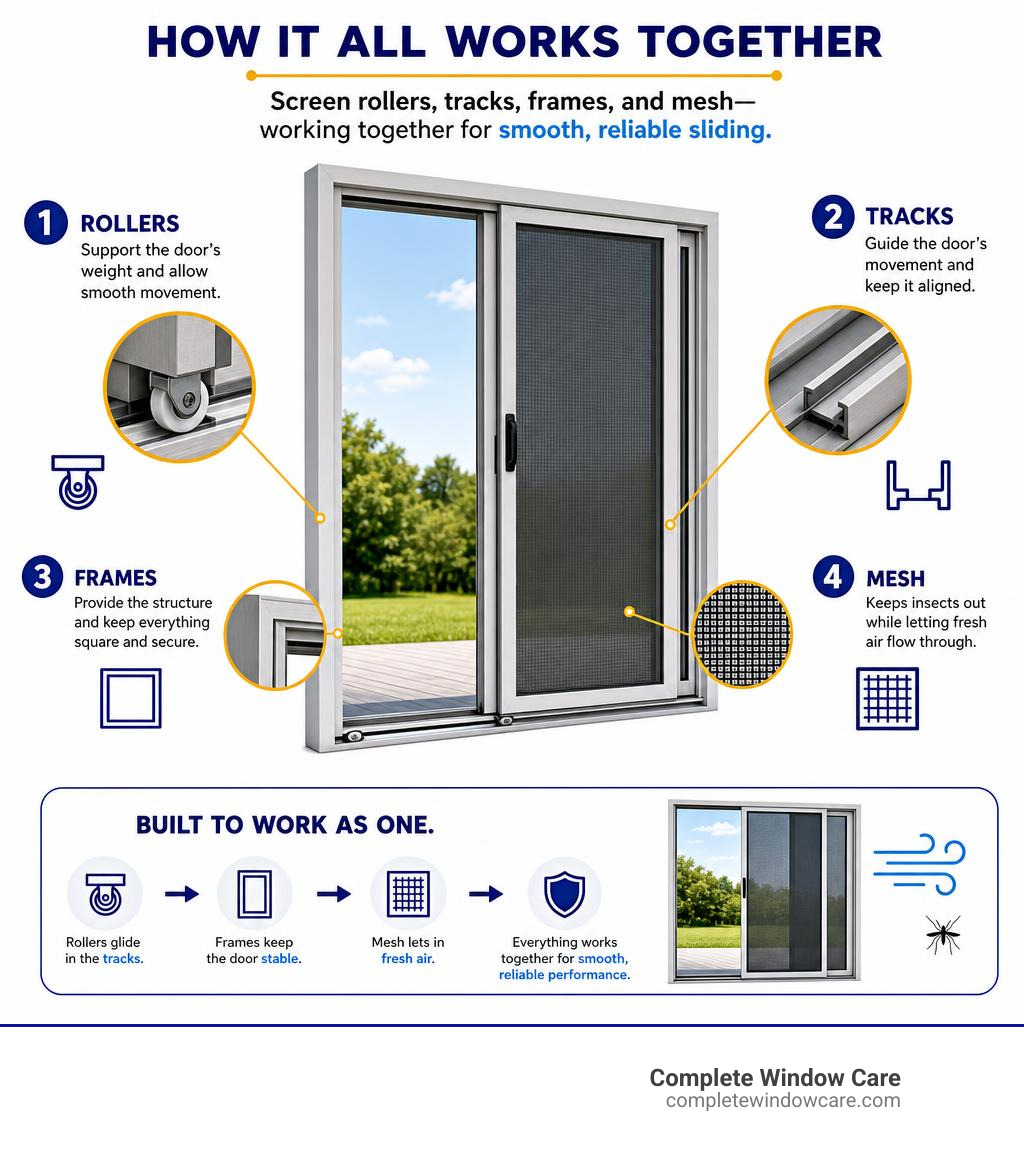
A sliding screen door seems simple until it stops working. Then it becomes the loudest, stickiest, most dramatic part of the house. The rollers are usually the reason.
Screen door rollers support the door, keep it aligned in the track, and allow the frame to glide instead of scrape. When the rollers are adjusted correctly, the latch lines up, the bottom rail clears the track, and the screen panel closes tightly enough to help keep insects outside where they belong.
A professional screen roller repair service matters because roller failure is rarely just a wheel problem. It can affect:
- Door alignment
- Track condition
- Frame stability
- Latch fit
- Screen mesh tension
- Gaps around the door
- Daily usability
- Long-term door life
For Colorado Springs homes, this is especially important because screen doors deal with dust, wind, sun exposure, temperature swings, and seasonal debris. A roller that is only slightly worn in spring can become a dragging, track-chewing problem by summer.
What Screen Roller Repair Actually Fixes
Screen roller repair focuses on the moving hardware at the bottom, and sometimes the top, of a sliding screen door. Depending on the door style, the roller assembly may include a wheel, axle, bearing, spring-loaded housing, height adjustment screw, or cartridge-style insert.
Professional repair can address:
- Worn wheels that have flattened or cracked
- Broken axles that prevent the wheel from turning
- Bent roller housings
- Seized bearings
- Loose or stripped adjustment screws
- Misaligned screen frames
- Bottom rail drag
- Dirty or obstructed tracks
- Rollers sitting too high or too low
- Door gaps caused by uneven height
The same basic principle applies to many roller systems: restore smooth rotation, proper support, and correct alignment. Industrial roller repair resources, such as these general roller repair principles, show how important roller condition is to performance. In a home, the parts are smaller, but the idea is the same: if the roller cannot turn correctly, the whole system suffers.
Why Ignoring Bad Rollers Gets Expensive
A bad screen roller is not just annoying. It can create damage that costs more than the roller repair itself.
When rollers stop rolling, the door starts dragging. Dragging can gouge the track, bend the frame, strain the handle, and pull the screen mesh out of square. The latch may stop lining up because the door is sitting too low or tilted. Gaps can appear along the side or bottom, giving insects an open invitation to your home. Mosquitoes do not need much encouragement.
Ignoring roller trouble can lead to:
- Scratched or gouged tracks
- Twisted screen door frames
- Torn mesh from repeated dragging
- Latch misalignment
- Handle damage from forcing the door
- Larger gaps around the screen panel
- Premature full screen door replacement
We are big believers in cost-effective repairs before full replacements. That same repair-first mindset applies to screens, frames, and rollers. If you are building a home maintenance plan, our guide on why window screen repair belongs on your maintenance checklist is a helpful companion read.
Signs Your Screen Door Roller Needs Repair or Replacement
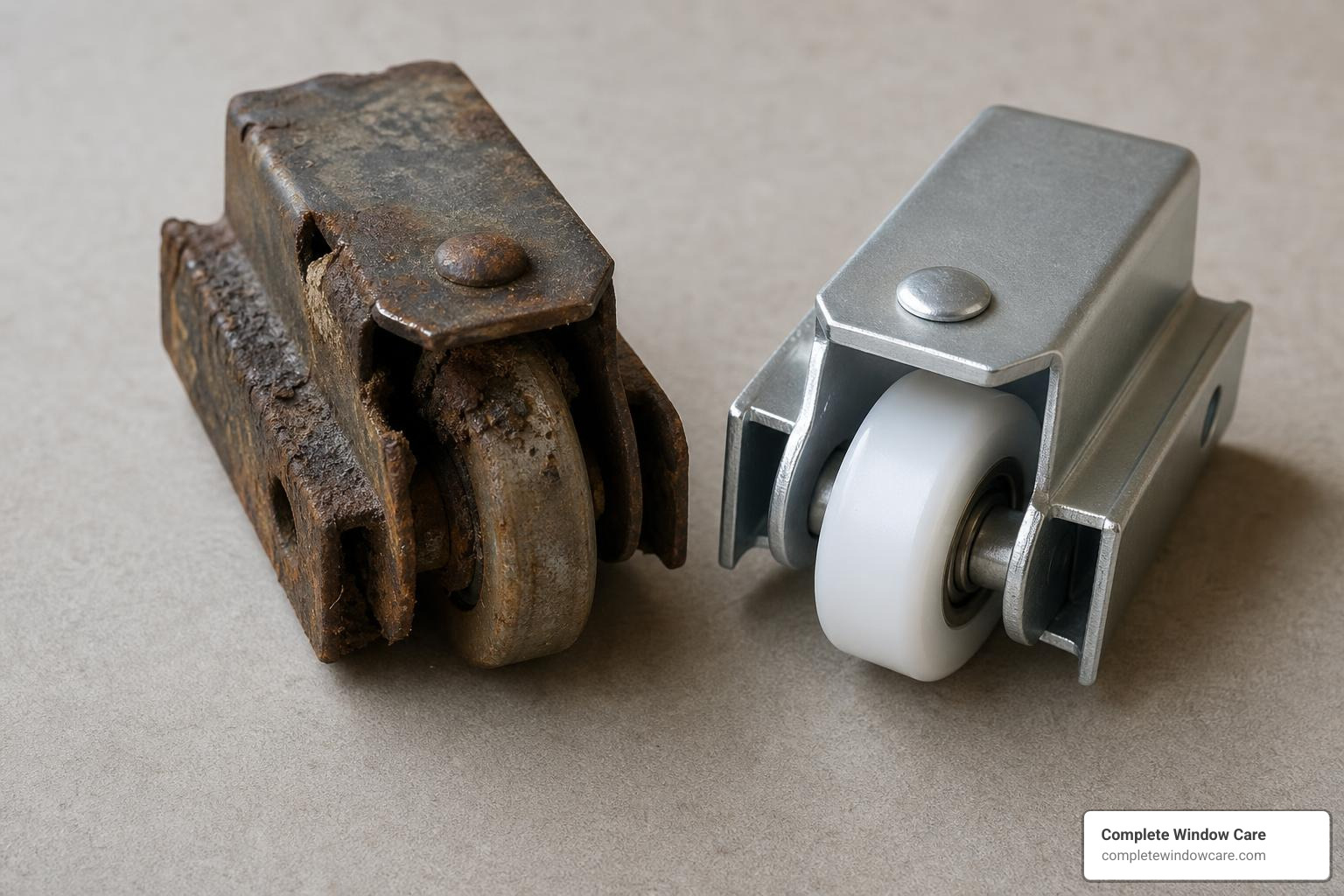
Most roller problems announce themselves before the door completely fails. The trick is knowing what those signs mean.
Your screen door roller may need repair or replacement if you notice:
- The door sticks or takes two hands to move
- You hear grinding, scraping, squeaking, or clicking
- The door jumps off the track
- The bottom rail drags
- The door closes crooked
- The latch no longer lines up
- One side of the door sits lower than the other
- The wheel looks cracked, flat, rusty, or missing
- The track has heavy dirt, sand, pet hair, or grit
- The door slides smoothly in one spot but binds in another
A little debris in the track is normal. A door that sounds like it is auditioning for a horror movie is not.
When a Screen Roller Repair Service Is the Right Call
A professional screen roller repair service is the right call when the problem keeps coming back or when the door is difficult to use safely.
Call for help if:
- The door is hard to slide even after cleaning the track
- The door repeatedly derails
- You hear metal scraping on metal
- The roller adjustment screws no longer help
- The roller housing is cracked or bent
- Hardware is rusted or corroded
- The screen door is used daily
- The door is exposed to weather, sun, or blowing dust
- You are unsure whether the problem is the roller, frame, or track
Daily-use doors deserve special attention. Patio screen doors, back deck screens, and doors used by kids or pets often wear faster because they open and close constantly.
Repair vs. Roller Replacement Warning Signs
Not every roller issue requires a new part. Sometimes the rollers can be adjusted, cleaned, or freed from debris. Other times, replacement is the better option.
A repair or adjustment may be enough when:
- The wheel still turns smoothly
- The roller assembly is intact
- The height adjustment screw works
- The track is dirty but not damaged
- The frame is square
- The door only needs minor alignment
Replacement is usually better when:
- The wheel is cracked, chipped, or flattened
- The bearing is seized
- The axle is broken
- The housing is bent
- The adjustment screw is stripped
- The roller keeps slipping out of position
- Rust or corrosion has weakened the part
We also check the screen mesh. If a dragging door has stretched, torn, or pulled the mesh loose, roller repair may need to be paired with rescreening. For a broader overview of screen problems and fixes, see Window Screen Repair 101.
How Professional Screen Roller Repair Works From Inspection to Final Glide Test
Professional roller repair is not just “pop in a wheel and hope for the best.” A good repair should identify why the door failed, correct the hardware issue, and confirm that the door glides, closes, and latches properly.
The process usually includes:
- On-site inspection
- Screen door removal
- Roller access and evaluation
- Part matching
- Track cleaning
- Roller repair or replacement
- Height adjustment
- Alignment test
- Latch fit check
- Final glide test and walkthrough
That final glide test matters. A screen door should move smoothly without dragging, rattling, or jumping the track.
How a Screen Roller Repair Service Diagnoses the Problem
During diagnosis, we look at the entire sliding screen door system. The roller may be the obvious issue, but it is not always the only issue.
We check:
- Whether each roller turns freely
- Whether the roller bearing has failed
- Whether the wheel is worn unevenly
- Whether the track is dirty, bent, or obstructed
- Whether the screen frame is square
- Whether the bottom rail has enough clearance
- Whether screws are loose, stripped, or over-tightened
- Whether the handle and latch line up
- Whether the door is leaning or sagging
Roller systems depend on smooth rotation and proper bearing support. While residential screen rollers are much smaller than industrial components, the same mechanical concept applies: if bearings, shafts, or contact surfaces fail, movement becomes rough. General roller bearing repair concepts help illustrate why worn rotating parts should be corrected before they create wider system damage.
Typical Repair Steps Homeowners Can Expect
Here is what a standard appointment often looks like:
- We inspect the screen door while it is still in the opening.
- We test how it slides, closes, and latches.
- We remove the sliding screen door carefully.
- We inspect the bottom and top rollers.
- We clean debris from the bottom track.
- We check for bent track edges or obstructions.
- We replace worn roller assemblies when needed.
- We reinstall the screen door.
- We adjust roller height so the door sits level.
- We test the glide several times.
- We verify latch alignment.
- We clean up the work area and explain what we found.
If the screen mesh or frame is damaged, we will explain whether a separate screen repair is recommended. Our goal is not to sell you a new door unless the existing door truly cannot be repaired well.
How Long Screen Roller Repair Usually Takes
Most standard sliding screen door roller repairs can be completed in a single visit. In many cases, common roller issues take about 1-3 hours, depending on the condition of the door, track, and hardware.
Timing depends on:
- Roller style and availability
- Number of rollers being replaced
- Whether the track needs cleaning or correction
- Whether the frame is bent
- Whether latch adjustment is needed
- Whether mesh or spline damage is also present
- Whether the door is a custom size or older model
If the repair requires unusual parts, custom screen work, or more involved screen fabrication, it may take longer. Some more complex screen repair projects can require several business days, especially when parts must be matched or ordered. We always aim to make scheduling as convenient as possible for homeowners in Colorado Springs and the Pikes Peak Region.
Professional Screen Roller Repair vs. DIY Fixes
Some screen door issues are safe for homeowners to try. Others are better left to a professional, especially when the door is heavy, the frame is fragile, or the roller style is hard to match.
| Factor | Professional repair | DIY roller replacement |
|---|---|---|
| Tools | We bring the right tools and parts | You may need screwdrivers, pliers, replacement rollers, lubricant, and measuring tools |
| Time | Often completed efficiently in one visit | Can take longer if parts do not match |
| Diagnosis | Roller, track, frame, and latch are checked together | Easy to focus only on the wheel |
| Part compatibility | Better chance of matching the correct roller | Wrong roller size can cause poor fit |
| Track damage risk | Lower with proper removal and adjustment | Higher if the door is forced or misaligned |
| Adjustment quality | Precise height and latch alignment | Trial and error is common |
| Long-term performance | Usually more reliable | Depends on skill, parts, and door condition |
| Support | Workmanship and warranty questions can be addressed | You are on your own if the fix fails |
Why Professional Repair Usually Delivers Better Results
Professional repair usually delivers better results because sliding screen doors are more sensitive than they look. A tiny height difference can make the door bind, latch poorly, or pop out of the track.
A professional knows how to choose and adjust:
- Nylon rollers for quiet, lightweight movement
- Steel rollers where strength is appropriate
- Ball-bearing rollers for smoother performance
- Stainless or corrosion-resistant components when weather exposure is a concern
- Correct roller diameter and housing style
- Proper height and side-to-side alignment
We also look at the full door system. A new roller will not solve much if the track is packed with grit, the frame is bowed, or the latch is misaligned. For more on when professional help is worth it, read Professional vs DIY window screen repair compared.
When a DIY Roller Fix May Be Reasonable
A DIY approach may be reasonable if the issue is minor and the door is otherwise in good shape.
You may be able to handle:
- Vacuuming the track
- Removing visible debris
- Tightening a loose screw
- Making a small roller height adjustment
- Applying the correct light lubricant if recommended for your hardware
- Checking for an obvious obstruction
Stop and call a professional if the door gets worse, the frame starts flexing, the roller assembly is cracked, or the door will not sit securely in the track. For general screen care tips, see our guide to maintain and repair window screens.
Sliding Screen Door Roller Types, Materials, and 2026 Cost Factors
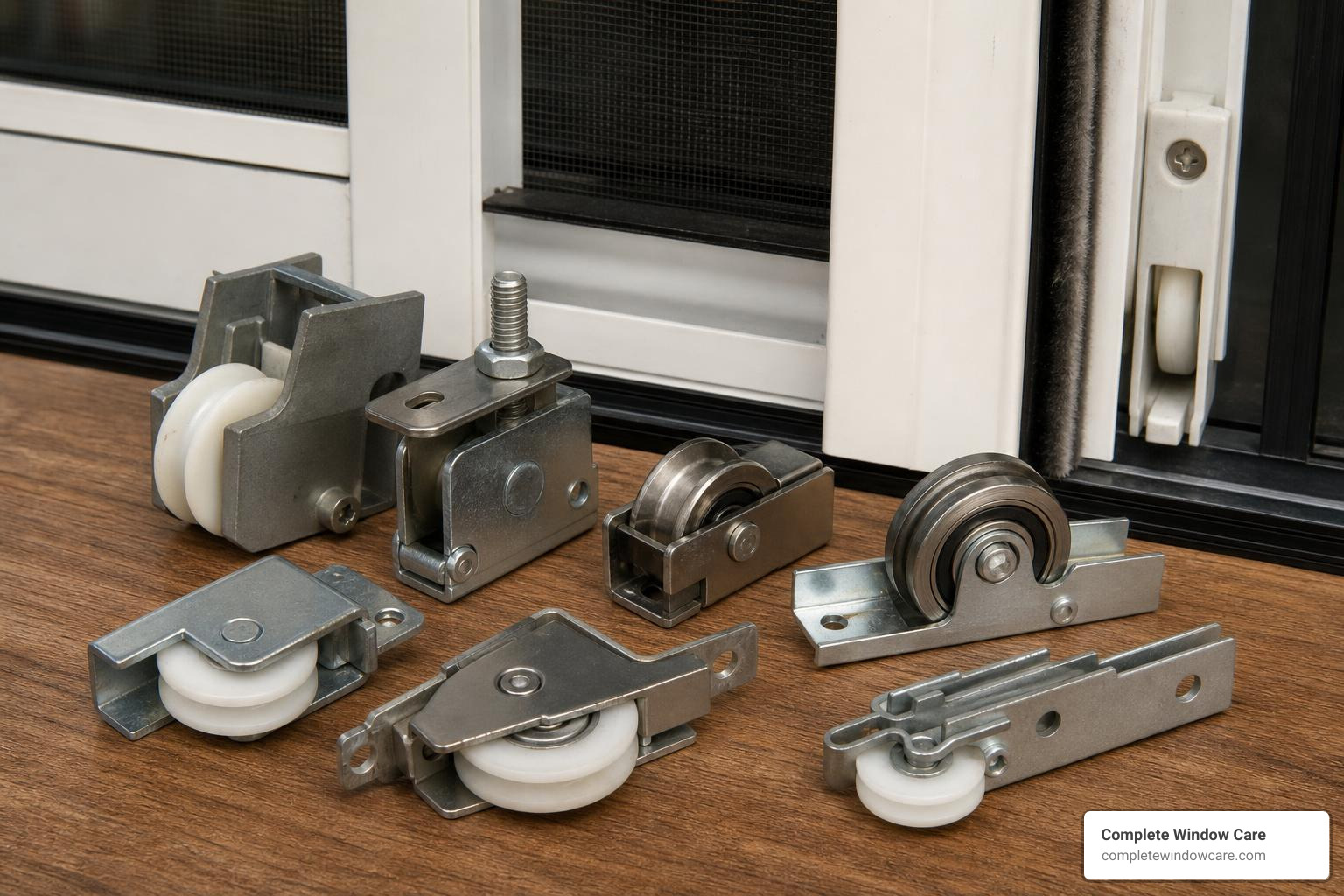
Screen door rollers are not one-size-fits-all. In 2026, many homes still have standard sliding screen doors, but the roller hardware varies by door age, frame style, manufacturer, and exposure level.
Screen Door Roller Issues That Can Be Serviced
We can evaluate and service common roller problems on many residential screen door styles, including:
- Sliding screen doors
- Patio screen doors
- Custom screen frames
- Residential screen doors
- Weather-exposed screen doors
- Frequently used back patio doors
Common serviceable issues include:
- Worn rollers
- Noisy rollers
- Misaligned rollers
- Stuck rollers
- Damaged roller housings
- Loose adjustment screws
- Dragging bottom rails
- Door gaps caused by poor roller height
If the door frame is severely bent or the screen panel is too damaged, replacement may be more practical. But we always check repair options first.
Roller Materials That Affect Durability
The material of the roller affects how it performs and how long it lasts.
Common roller materials and features include:
- Nylon rollers: Quiet and common on many lightweight screen doors. They work well when the track is clean and the door is properly adjusted.
- Steel rollers: Stronger than nylon in many applications, though they may be louder and can wear tracks if misaligned.
- Stainless steel bearings: Helpful for smoother operation and better corrosion resistance.
- Brass components: Found in some hardware styles and valued for corrosion resistance.
- Sealed bearings: Help protect the bearing from dust and grit.
- Corrosion-resistant hardware: Useful for weather-exposed doors.
For Colorado Springs homes, dust and grit are big factors. A high-quality roller can still fail early if the track is never cleaned. Pairing the right roller with regular maintenance gives you the best result.
If your screen door also needs a frame or mesh update, review our screen replacement options.
What Screen Roller Repair Costs in 2026
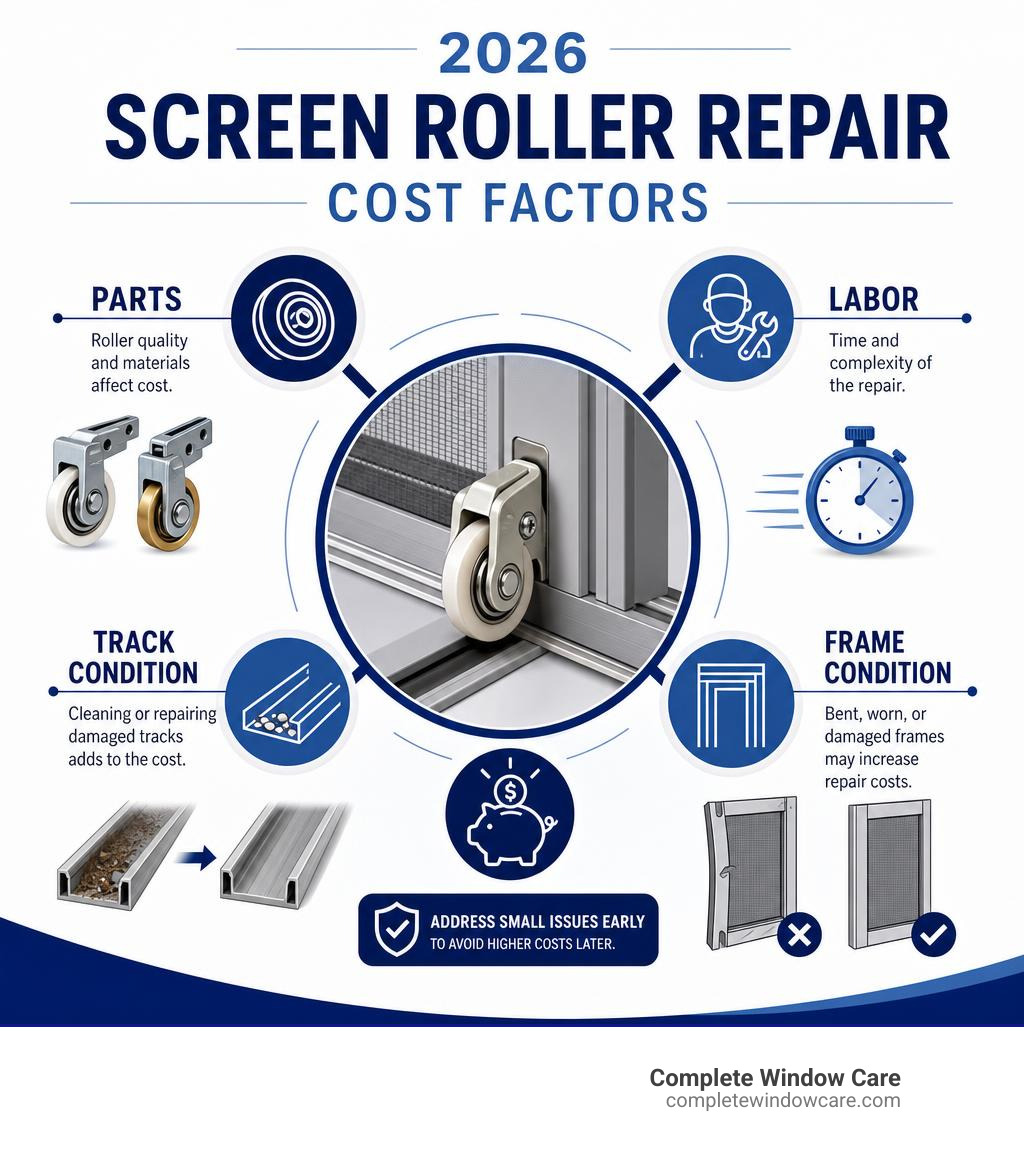
Screen roller repair costs in 2026 vary based on the door and the repair scope. We recommend getting an on-site estimate because the same symptom – a sticky door – can have different causes.
Pricing is affected by:
- Service call or trip charge
- Labor minimum
- Number of rollers
- Roller material and quality
- Door size and weight
- Track cleaning needs
- Track condition
- Frame condition
- Latch adjustment
- Mesh repair or rescreening needs
- Custom or hard-to-match parts
- Local Colorado Springs market pricing
In many cases, roller repair is much less expensive than allowing the damage to worsen until the frame, track, and mesh all need attention. The best value usually comes from fixing the roller issue early, before the door starts grinding itself into a home improvement project with a soundtrack.
Maintenance, Warranties, and Choosing a Local Roller Repair Specialist
A good repair should be followed by simple maintenance. Screen door rollers live close to the ground, which means they collect dust, pollen, pet hair, leaves, and grit. In Colorado Springs, wind can load a track with debris faster than you might expect.
Basic maintenance includes:
- Vacuuming the track
- Wiping the bottom rail
- Removing pebbles and debris
- Checking roller adjustment screws
- Testing latch alignment
- Watching for corrosion
- Avoiding sticky oil buildup
- Using only lubricant appropriate for the door hardware
- Scheduling service when the door starts to drag
How Often to Inspect Screen Door Rollers
We recommend checking your screen door rollers at least twice a year.
A good schedule is:
- Spring: Clean pollen, winter grit, and debris from the track.
- Fall: Clear dust, leaves, and buildup before cold weather.
- After storms: Check for debris or track obstruction.
- For heavy-use doors: Inspect every few months.
- For homes with pets or kids: Check more often because the door gets more use.
- For rental properties: Consider an annual professional inspection.
If your screen door is part of your daily routine, an annual professional check can help catch small problems before they become expensive ones.
What Guarantees and Support to Ask About
Before hiring any screen roller repair specialist, ask what support comes with the work. A reputable service should be willing to explain parts, labor, and expectations clearly.
Ask about:
- Parts warranty
- Labor warranty
- Workmanship coverage
- Satisfaction policy
- Return visit policy
- Upfront estimate
- Whether adjustment is included
- Whether latch alignment is checked
- Whether phone support is available
- Repair-or-replace recommendations
You should not feel rushed or confused. A good technician can explain the problem in plain English. Bonus points if they can do it without making your screen door sound like a spaceship component.
What to Ask Before Booking a Screen Roller Repair Service
When booking a screen roller repair service in Colorado Springs, ask:
- Do you service my area?
- Do you work on sliding screen doors?
- Do you offer mobile or on-site service?
- Can you inspect the rollers, track, frame, and latch?
- Do you carry common replacement rollers?
- What happens if my door needs a custom part?
- Will I receive an estimate before work begins?
- Are warranty terms available?
- Are technicians insured?
- Can you also repair damaged screen mesh or frames?
If you are considering broader screen updates, our guide on what to know before installing new window screens can help you make a smarter decision.
Frequently Asked Questions About Screen Roller Repair Service
Can screen door rollers be repaired, or do they always need replacement?
They do not always need replacement. If the roller is still intact and the wheel turns freely, adjustment or cleaning may solve the issue. Loose screws, debris, or minor misalignment can often be corrected without replacing the roller.
Replacement is usually needed when the wheel is cracked, flat-spotted, rusted, seized, or missing. A broken axle, failed bearing, cracked housing, or stripped adjustment screw is also a strong sign that replacement is the better repair.
How do I know if the problem is the roller, track, or frame?
The symptoms can overlap, which is why a full inspection helps.
It may be the roller if:
- The door drags even on a clean track
- One side sits lower
- The wheel is visibly worn
- You hear grinding near the bottom rail
It may be the track if:
- The door sticks in one specific spot
- You see dirt, grit, or a bent-looking section
- The roller jumps or catches repeatedly
It may be the frame if:
- The door looks bowed or twisted
- The gaps are uneven
- The latch will not align even after adjustment
- The screen mesh looks pulled out of square
A professional diagnosis checks all three: roller, track, and frame.
Is screen roller repair worth it compared with buying a new screen door?
In many cases, yes. Screen roller repair is often worth it because the rollers are small components, while the full screen door may still be usable. If the frame is straight, the mesh is in decent shape, and the track is not severely damaged, repairing or replacing the rollers can restore smooth operation for far less disruption than replacing the entire door.
A new screen door may be better if:
- The frame is badly bent
- The mesh is severely damaged
- The track is heavily damaged
- The door is an odd fit and cannot be adjusted properly
- Multiple components have failed at once
Our approach is to look for the most cost-effective repair first, then recommend replacement only when it truly makes more sense.
Conclusion
A smooth-gliding screen door makes everyday life easier. You get better patio access, better ventilation, fewer pest gaps, less handle strain, and less avoidable damage to the door and track.
If your sliding screen door is sticking, scraping, grinding, or jumping the track, do not force it. A professional screen roller repair service can often restore the door quickly and cost-effectively.
At Complete Window Care, we serve Colorado Springs and the Pikes Peak Region with a repair-first approach to windows, screens, glass, doors, and leak investigations. If your screen door is giving you trouble, we are ready to help you find the practical fix.
Contact us today to schedule professional repair service.