
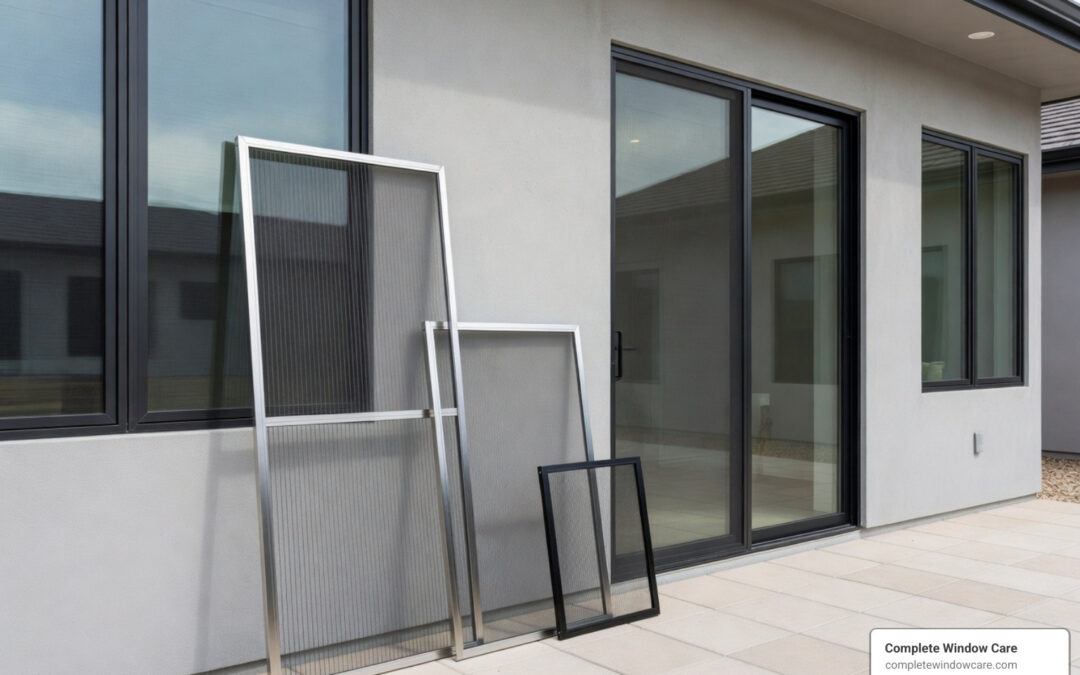
Why a Replacement Window Screen with Frame Matters for Your Home
A replacement window screen with frame is one of the simplest, most cost-effective upgrades you can make to restore comfort, airflow, and curb appeal to your home. Whether a hailstorm punched through your mesh, a pet tore the fabric, or your old frame is simply bent and worn out, getting the right framed replacement makes all the difference.
Here’s a quick overview of your best options:
| Need | Best Screen Type | Typical Price Range |
|---|---|---|
| Standard insect protection | Fiberglass mesh, full frame | $10 – $65 |
| Pet or hail damage | Pet-resistant polyester frame | $30 – $90 |
| Heat and glare reduction | Solar screen with frame | $40 – $100+ |
| Tiny insects (gnats, etc.) | No-see-um mesh, framed | $30 – $80 |
| Maximum clarity and airflow | Invisible/ultra-fine mesh | $55 – $100+ |
| Non-standard window size | Custom pre-framed screen | $55 – $300+ |
The right choice depends on your window type, budget, and what you need the screen to do for you — not just keep bugs out, but potentially block UV rays, resist pets, or improve your view.
I’m Michael Smith, owner of Complete Window Care and a certified AAMA Installation Masters instructor with over 18 years of hands-on experience helping Colorado Springs homeowners find the right replacement window screen with frame for every window type and budget. Let’s walk through everything you need to make a smart purchase decision.
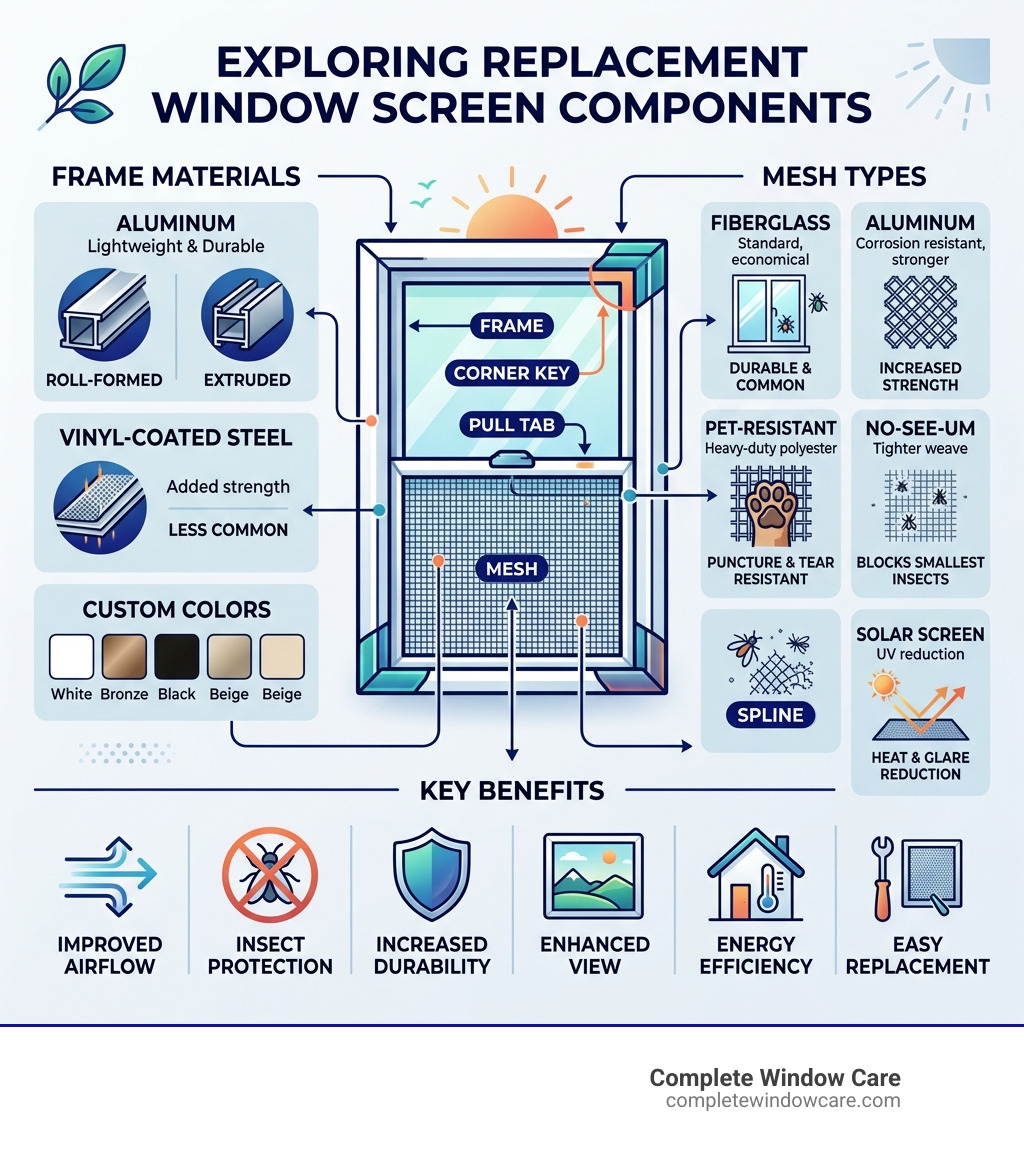
Choosing the Right Replacement Window Screen with Frame
When you start looking for a replacement window screen with frame, the first thing you’ll notice is the sheer variety of mesh materials. In the old days, you basically had “screen” or “no screen.” Today, the technology has advanced to solve specific household problems like high energy bills or overly enthusiastic Labradors.
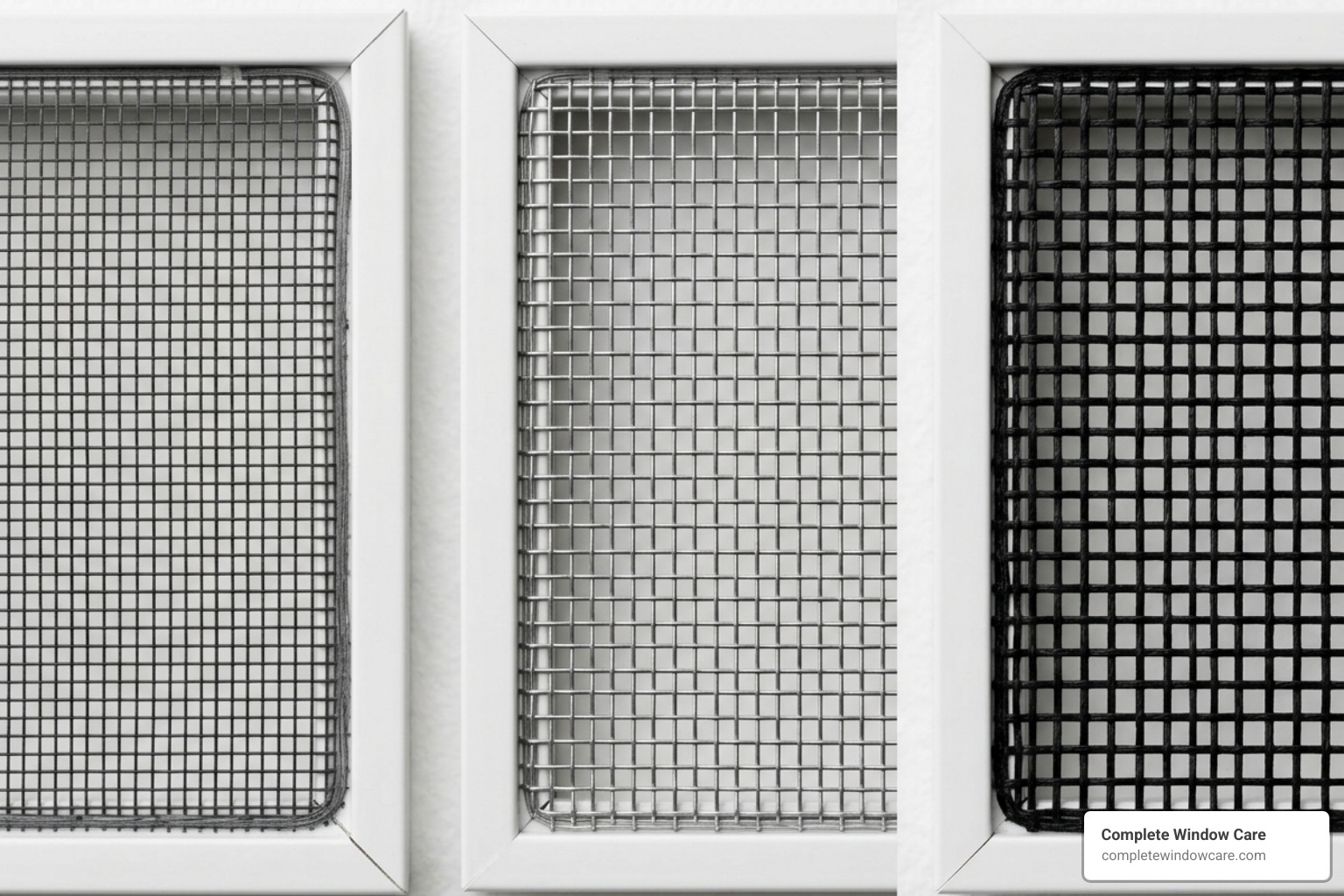
Fiberglass and Aluminum: The Classics
Most standard residential windows come with fiberglass mesh. It’s popular because it’s flexible, doesn’t crease easily, and is generally the most affordable. However, if you live in an area prone to high winds or heavy debris, aluminum mesh offers superior durability. It’s long-lasting and sag-resistant, though it can dent if hit hard (think of a stray baseball).
Specialized Mesh for Specific Needs
For homes in the Pikes Peak region, a standard screen is not always the best fit. No-see-um mesh uses a tighter weave to block tiny insects like gnats and other small pests that can slip through ordinary screens. If you want a more premium upgrade, micro-fine stainless steel mesh can improve outward visibility while still providing reliable insect protection. These specialized options are a smart choice when you want a cleaner view, better comfort, and a screen that matches how you actually use your windows.
If you have pets at home, it’s smart to explore screen repair options for pet damage. Standard fiberglass mesh usually can’t hold up well against scratching claws or excited paws.
Mesh Visibility and Airflow Comparison Table
Choosing the right mesh is a balancing act between how much you want to see and how much air you want to let in.
| Mesh Type | Visibility | Airflow | Durability |
|---|---|---|---|
| Standard Fiberglass | Good | Excellent | Moderate |
| Aluminum | Very Good | Good | High |
| TruScene (Stainless) | Exceptional | Superior | Very High |
| Pet-Resistant | Moderate | Moderate | Extreme |
| Solar Screen | Low (Privacy) | Moderate | High |
Benefits of Solar and Invisible Mesh
In Colorado, the sun can be brutal. Solar insect screens are a game-changer for energy efficiency. These screens are designed to block a significant portion of the sun’s heat before it even hits your glass. Statistics show that standard solar insect screens offer about 65% protection against heat and glare.
If you want even more protection, SunTex solar screens are available with 80% or 90% blockage. This doesn’t just keep you cool; it prevents your furniture and flooring from fading due to UV exposure. On the flip side, if your priority is the view of the mountains, “invisible” or ultra-view meshes use thinner strands and a tighter weave to provide maximum optical clarity while still keeping the bugs out.
Selecting a Replacement Window Screen with Frame for Pets
We see a lot of torn screens in Colorado Springs, and pets are often the culprits. When selecting a replacement window screen with frame for a pet-heavy household, you need heavy-duty polyester mesh. This material is roughly seven times stronger than standard fiberglass. It’s puncture-resistant and designed to withstand scratching and light impact.
When you order these, ensure the frame is reinforced or use a thicker gauge of aluminum to prevent the pet from popping the entire screen out of the window. If you’re dealing with current damage, check out these repair options torn or damaged window screens to see if a full frame replacement is necessary.
Understanding Window Screen Frame Types and Compatibility
The frame is the backbone of your screen. Most modern frames are made of extruded aluminum, which is much sturdier than the older “roll-formed” style. When you’re shopping, you’ll want to match the frame color to your window’s trim—typically White, Bronze, Mill (silver), or Tan.
Knowing when should you replace a window screen frame is key. If the frame is bent, the corners are cracked, or it no longer sits flush in the track, it’s time for a full replacement rather than just a re-screen.
Standard Full and Half Frames
Most double-hung or single-hung windows use either a full screen (covering the whole window) or a half screen (covering only the bottom sash).
- Full Screens: These offer a uniform look and allow you to open both the top and bottom sashes for ventilation.
- Half Screens: These are easier to remove and store, often sliding into a dedicated track.
- No-Hardware Designs: Some modern replacements, like those for specific casement windows, use a tension-fit or a “no-hardware” design that relies on the window track to stay in place.
For some window brands, a proprietary-fit screen may be necessary, built to the original manufacturer’s specifications for proper alignment and a secure fit.
Specialized Frames for Unique Windows
Not every window is a simple rectangle in a track.
- Lip Frames: These have an extra “lip” that hangs over the window edge, common in older wood windows.
- Standoff Frames: These sit slightly away from the window, often used when there is a crank handle or hardware in the way.
- Wicket Doors: These frames include a small sliding door so you can reach through the screen to operate a window crank.
- Tilt and Turn Windows: Common in European-style homes, these require specialized frames that don’t interfere with the window’s unique inward-swinging motion.
If you like DIY projects, you can also buy screen frame kits that come with aluminum frame pieces, corner connectors, and spline for custom assembly.
How to Measure and Install Your Replacement Window Screen with Frame
Measurement is the stage where most people run into trouble. A screen that is 1/8 of an inch too wide simply won’t fit, and one that is 1/8 of an inch too small will let in every fly in the neighborhood.
Measuring for a Replacement Window Screen with Frame
The golden rule is to measure twice and order once. If you still have the old screen, measure the outer edges of the frame (width and height). If the screen is missing, you must measure the window track where the screen is supposed to sit.
- Tolerance: Most custom manufacturers work within a 1/16-inch tolerance.
- Hardware: Don’t forget to account for tension springs or pull tabs. If your window requires springs at the top to hold the screen in, you usually subtract about 1/8 inch from the total height to allow for that compression.
- Depth: Check the thickness of your frame. Standard frames are often 5/16″, 3/8″, or 7/16″ thick.
For a deeper dive into the technical side, read our guide on window screen replacement how to replace your window screens.
Installing Your Replacement Window Screen with Frame
If you’ve ordered a pre-framed screen, installation usually takes about two minutes. You simply fit one side into the track, compress the springs, and pop the other side in.
However, if you are assembling a kit, you’ll need a few DIY tools:
- Hacksaw: To cut the aluminum frame to size.
- Spline Roller: The most important tool—it pushes the rubber “rope” (spline) into the groove to hold the mesh.
- Utility Knife: To trim the excess mesh.
- Square: To ensure your frame corners are exactly 90 degrees.
If this sounds daunting, don’t worry—many homeowners ask is window screen repair difficult, and the answer is usually “no,” provided you have the right patience and a steady hand.
Investment Guide: Costs and Custom Ordering
What should you expect to pay for a replacement window screen with frame? Prices vary wildly based on size and material. A standard, small window screen might cost as little as $25, while a large, custom-sized solar screen with a heavy-duty frame could exceed $150.
Factors Influencing Screen Pricing
- Frame Gauge: Thicker aluminum costs more but lasts longer.
- Mesh Specialty: Stainless steel and high-blockage solar mesh are premium upgrades.
- Hardware: Adding custom pull tabs, plungers, or friction hangers adds a few dollars to each unit.
- Quantity: Many shops (including ours) offer discounts if you are replacing every screen in the house at once.
When deciding between doing it yourself or hiring us, consider the professional vs diy window screen repair time cost and quality compared. While DIY saves on labor, a professional ensures the mesh is perfectly tight without “bowing” the frame.
Where to Buy Custom Framed Screens
You have a few practical options for purchasing:
-
Big Box Stores: Best for common sizes and quick pickup, but custom fit options and specialty mesh choices are usually limited.
-
Manufacturer-Direct: A smart route if you need an exact match for a specific window brand, model, or frame style.
-
Local Glass and Screen Shops: Often the best choice for custom framed screens. A local shop can help with measuring, recommend the right mesh for your needs, and build a screen that fits your window correctly.
Maintenance and Professional Repair Solutions
Once you have your new screens, a little maintenance goes a long way. We recommend popping them out once a year to wash them with mild soap and water. This prevents “screen burn,” where dust and minerals build up and eventually corrode the mesh or stain your glass.
In Colorado Springs, the biggest threat to your screens is weather. We often help neighbors repair window screens after hail damage. If the frame is still straight, we can simply “re-screen” it with new mesh, which is much cheaper than a full replacement. However, if the hail was large enough to dent the aluminum, a full replacement window screen with frame is the only way to ensure a bug-tight seal.
To keep everything in top shape, follow our tips on how to maintain and repair window screens throughout the seasons.
Frequently Asked Questions about Replacement Window Screens
How do I know if I need a full frame replacement or just a re-screen?
If the aluminum frame is bent, crimped, or missing its corner connectors, you need a full frame replacement. If the frame is perfectly straight and sits tight against the window, but the mesh is torn or fuzzy, a simple re-screen will save you money.
What is the most durable frame material for high-wind areas?
Extruded aluminum is the gold standard. It’s thicker and more rigid than roll-formed aluminum. Combined with internal metal corner keys, these frames can withstand the heavy gusts we get coming off the mountains.
Can I upgrade my screen mesh without changing the existing frame?
Absolutely! As long as your frame is in good condition, you can swap out standard fiberglass for pet-resistant mesh or solar mesh. Just keep in mind that thicker meshes like pet screen may require a slightly thinner spline to fit into the frame’s groove.
Conclusion
Finding the right replacement window screen with frame doesn’t have to be a headache. By focusing on a custom fit and choosing the right mesh for your specific needs—whether that’s blocking the hot afternoon sun or keeping the cat from escaping—you’ll significantly improve your home’s comfort and value.
At Complete Window Care, we specialize in helping Colorado Springs residents navigate these choices. We believe in cost-effective maintenance, which is why we always look to see if a repair is possible before recommending a full replacement. If you’re ready to upgrade your view and keep the pests out, we’re here to help.