
When Your Windows Go Foggy: What to Do and Who to Call
If you’re looking for window seal replacement experts, here’s a quick answer on what to look for and when to call:
When to call a window seal replacement expert:
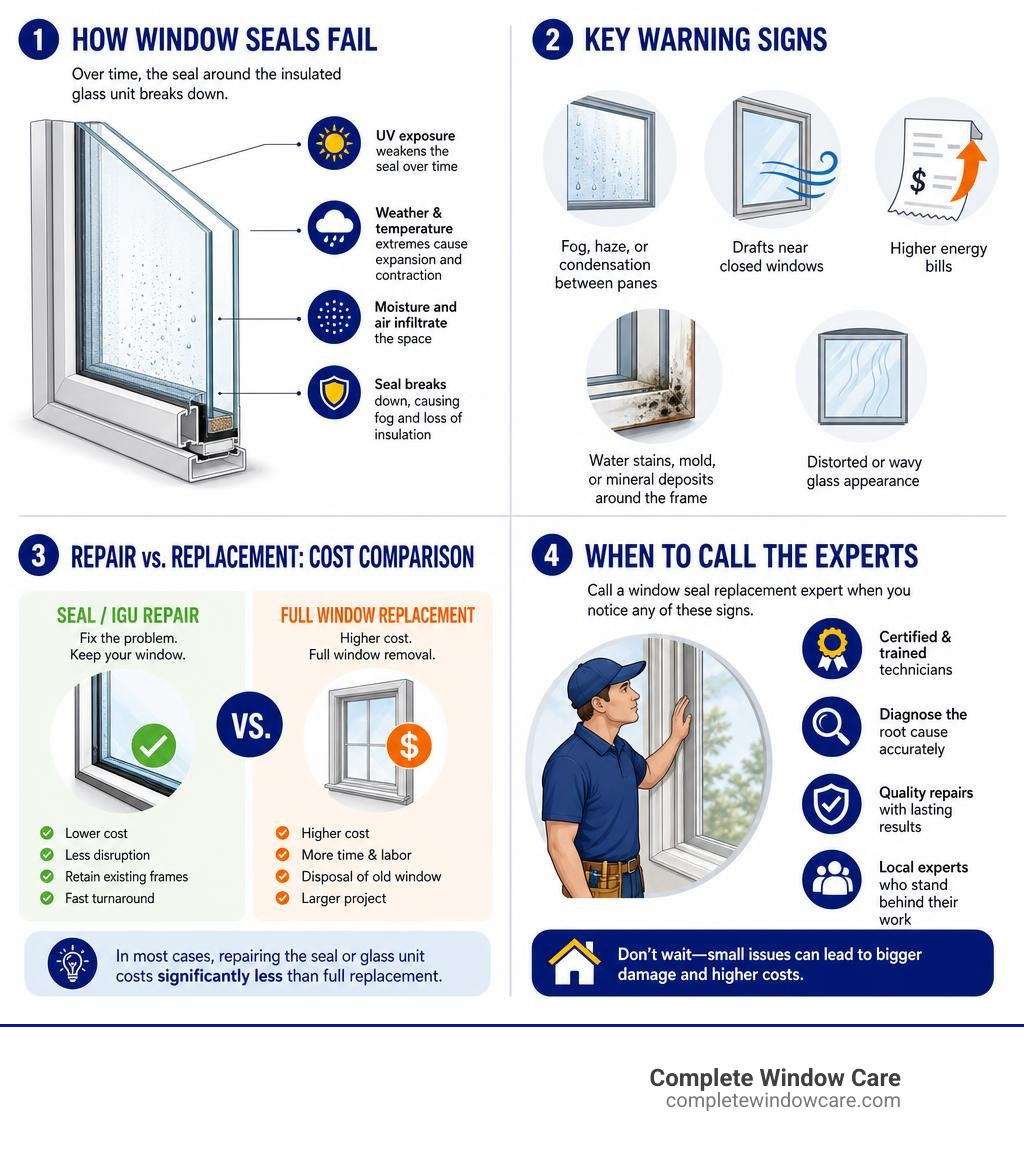
- You see fog, haze, or condensation between the panes of glass
- You feel drafts near closed windows
- Your energy bills have gone up without explanation
- There are water stains, mold, or mineral deposits around the window frame
- The glass looks distorted or wavy on the inside surface
Who qualifies as a window seal replacement expert:
- Certified window technicians with AAMA training or equivalent credentials
- Companies that specialize in insulated glass unit (IGU) repair, not just full window replacement
- Professionals with hands-on experience diagnosing air and water infiltration issues
- Local contractors with verifiable warranties on parts and labor
That foggy film between your window panes isn’t just an eyesore. It’s a sign that the seal holding your insulated glass unit together has failed: and your home is quietly losing heat, cooling, and comfort every single day it goes unfixed.
Windows account for 25–30% of your home’s heating and cooling costs. When seals fail, that figure can jump by 50–100%. For many Colorado Springs homeowners, that means hundreds of dollars walking straight out through the glass each year.
The good news? In most cases, you don’t need to replace the entire window. A qualified professional can replace just the failed seal or the glass unit itself: often at 60–70% less than the cost of full window replacement.
I’m Michael Smith, owner of Complete Window Care and an AAMA Installation Masters Program certified instructor with years of experience diagnosing and fixing window seal failures across Colorado Springs and the Front Range. As one of the region’s trusted window seal replacement experts, I’ve helped hundreds of homeowners avoid unnecessary full replacements and restore their windows to peak performance. In this guide, I’ll walk you through everything you need to know to make the right call for your home.
The Science of Seal Failure: Why Double-Pane Windows Fog
To understand why your windows look like they are permanently wearing a pair of steamy glasses, we have to look at how modern double-pane and triple-pane windows are built.
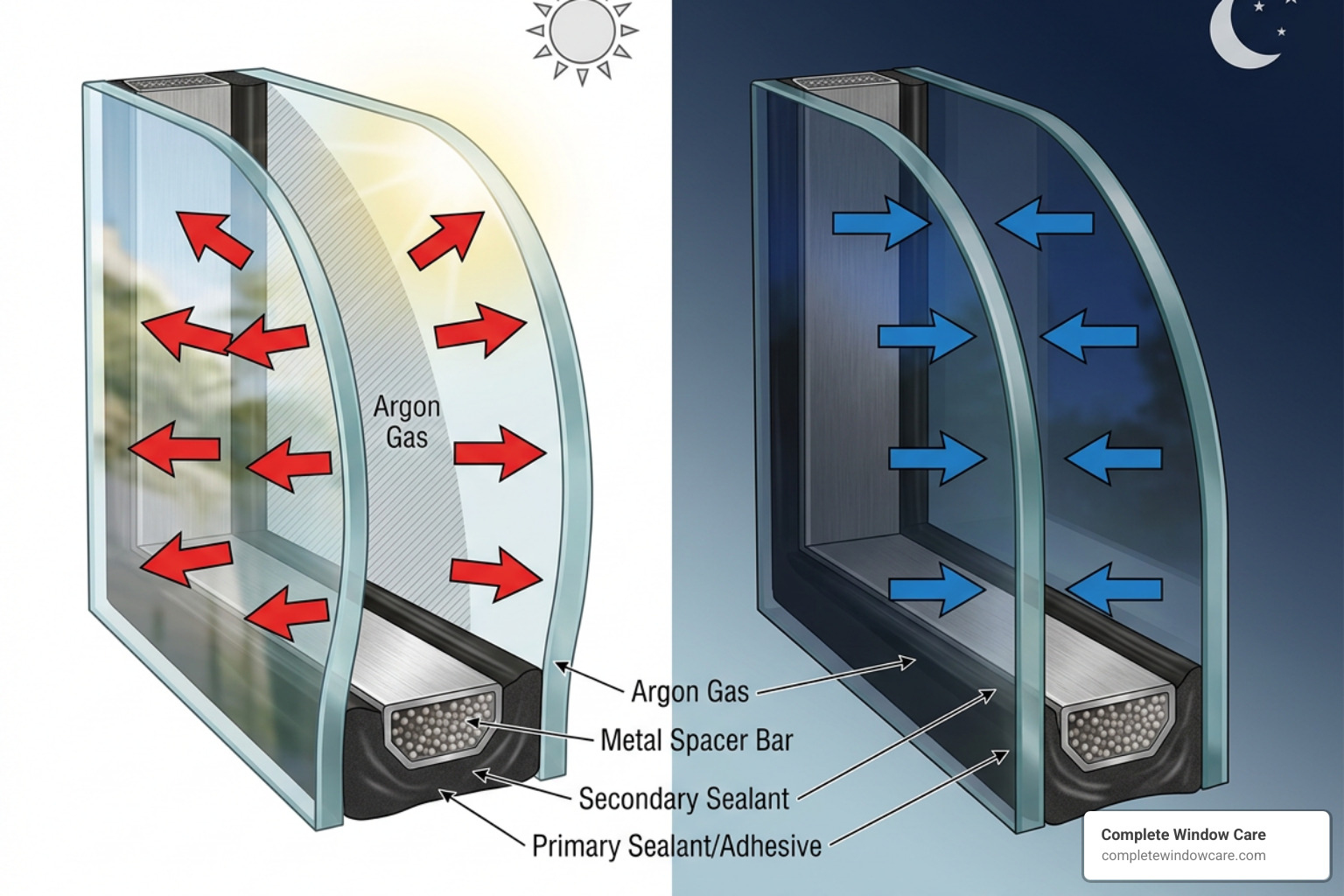
Modern residential windows are not just two pieces of glass dropped into a frame. They are highly engineered systems known as Insulated Glass Units (IGUs). An IGU consists of two or more panes of glass separated by a spacer bar and sealed hermetically around the edges.
Inside this sealed chamber sits an invisible layer of dense, insulating gas: typically argon or krypton. These gases are much heavier than air, which slows down the transfer of heat and cold through the window. This gas barrier is what keeps your cozy indoor air inside and the biting Colorado winter air outside.
So, how does this airtight system fail? The primary culprit is a physical phenomenon known as solar pumping.
Every single day, your windows are subjected to a cycle of heating and cooling:
- Thermal Expansion: During the day, the sun beats down on the glass. The air or gas inside the IGU heats up and expands, causing the glass panes to bow outward slightly. This puts outward pressure on the perimeter seals.
- Thermal Contraction: At night, temperatures drop. The gas inside cools and contracts, pulling the glass panes inward and exerting pulling forces on the seals.
- UV Degradation: Over time, constant exposure to intense solar ultraviolet (UV) radiation breaks down the chemical bonds of the elastic sealants holding the glass together.
- Moisture Intrusion: As the sealant loses its flexibility, tiny micro-fissures develop. The pressurized argon gas escapes, and moisture-laden outside air is sucked into the void. Once moisture gets inside, the desiccants (the moisture-absorbing materials inside the spacer bar) quickly become saturated. When they can no longer hold any more water, condensation begins to form on the inside surfaces of the glass, creating that classic foggy look.
How Window Seal Replacement Experts Diagnose Failed IGUs
When we arrive at a home in the Pikes Peak region, we don’t just glance at a window and tell you to buy a new one. True window seal replacement experts use a systematic diagnostic process to pinpoint the exact nature of the failure.
First, we look for visible condensation between the panes. If you can’t wipe the moisture off from either the inside or the outside of the window, the seal is broken. Over time, this trapped moisture evaporates and leaves behind white, powdery mineral deposits (often called “silica haze”), which permanently etch the glass.
Second, we check for glass distortion. When the insulating gas escapes and a vacuum is created, the center of the glass panes can collapse inward, causing reflections to look warped or funhouse-like.
Third, we utilize advanced tools like thermal imaging cameras and specialized draft detection meters. These tools allow us to “see” heat escaping and identify cold spots where air is leaking through the perimeter. For practical guidance on finding and addressing window drafts and leaks, check out our window repair guide.
Climate Impacts on Seal Lifespans
Living in Colorado Springs is beautiful, but our unique local climate is incredibly tough on building materials. In fact, our geographic conditions make window seal failure a much more frequent headache here than in other parts of the country.
- High Elevation (6,000+ Feet): At higher altitudes, atmospheric pressure is lower. This causes the gas inside factory-sealed IGUs (often manufactured at sea level) to expand more aggressively, putting constant, elevated pressure on the seals from day one.
- Intense UV Radiation: Our thin mountain air offers less protection against solar radiation. The high UV index in Colorado accelerates the breakdown of EPDM rubber and silicone sealants much faster than in coastal or low-elevation regions.
- Extreme Temperature Fluctuations: It is not uncommon in Colorado Springs to experience a 40-degree temperature swing in a single day. This rapid cycling of hot and cold causes severe, rapid solar pumping, which quickly fatigues seal materials.
While window seals can last 15 to 20 years in milder climates, Colorado Springs’ high elevation, intense UV exposure, and rapid temperature swings can shorten their lifespan: especially when windows receive limited maintenance or use lower-quality materials. Choosing high-performance glazing and durable sealing systems can help protect comfort and manage energy costs in demanding conditions, as the U.S. Department of Energy explains.
Why You Need Window Seal Replacement Experts
When homeowners discover a foggy window, their first instinct is often to head to the local hardware store or search online for a DIY fix. However, window restoration is a highly precise trade that requires specialized equipment, calibrated materials, and deep technical knowledge.
Why Hiring Window Seal Replacement Experts Beats DIY
There are plenty of “defogging kits” and DIY quick-fixes sold online. These kits typically involve drilling tiny holes in the glass, spraying a cleaning solution inside to wash away the fog, and plugging the holes with miniature vents.
Here is why those methods fail:
- They don’t replace the insulating gas: Drilling holes permanently vents the window to the outside air. While the glass might look temporarily clearer, the window has completely lost its thermal insulation value.
- High risk of glass breakage: Modern double-pane windows are often made of tempered glass (especially in larger windows or those near doors and floors). Attempting to drill into tempered glass will instantly shatter the entire pane into thousands of tiny pieces.
- Temporary cosmetic results: Without replacing the actual seal or the IGU, moisture will inevitably find its way back in, and the glass will fog up again within a few months.
- Warranty voiding: Attempting a DIY repair on your windows will immediately void any remaining manufacturer warranties on the frame, glass, or hardware.
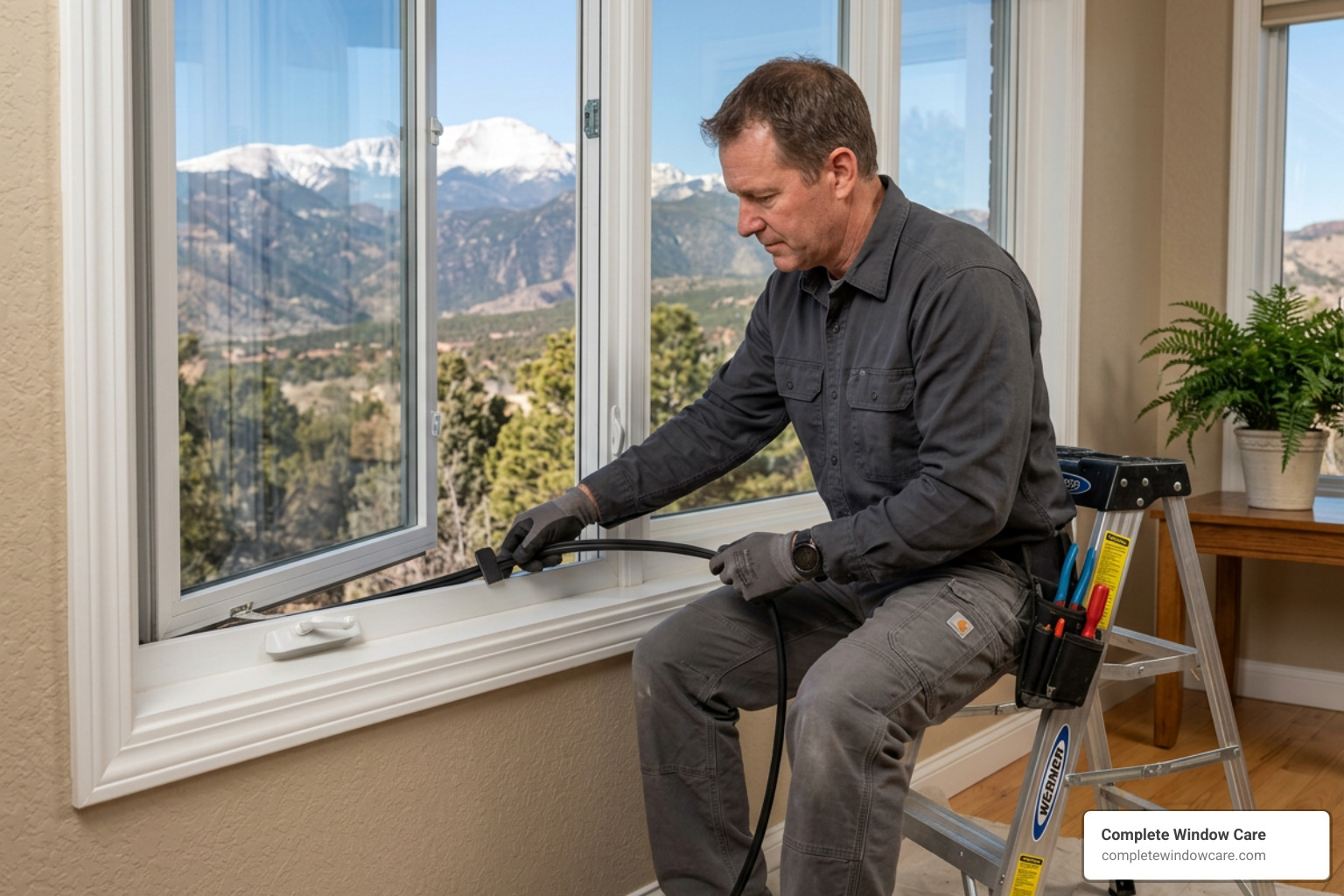
By contrast, professional window seal replacement experts have the tools and training to remove the failed glass unit cleanly, clean the frame sash without damaging the wood or vinyl, and install a brand-new, factory-sealed IGU.
When it comes to the specialized science of vacuum-sealed insulated glass, you need dedicated glass technicians who specialize in IGU replacement.
Material Selection and Longevity
When we replace a failed window seal, we make sure the replacement materials are engineered to withstand our harsh Pikes Peak climate. The choice of sealant material makes all the difference in whether your window lasts 5 years or 20 years:
- Silicone Sealants: Outstanding resistance to UV radiation and extreme temperature swings. Silicone remains highly flexible over decades, making it our top choice for Colorado Springs homes.
- EPDM Rubber (Ethylene Propylene Diene Monomer): Highly durable and resistant to weathering, though it can become slightly less pliable in extreme sub-zero temperatures.
- Thermoplastic Elastomers (TPE): A modern hybrid material that offers excellent sealing properties and durability, commonly used in high-performance warm-edge spacer systems.
- Warm-Edge Spacers: Instead of old-fashioned, highly conductive aluminum spacer bars, we utilize non-metal composite spacers. These minimize heat transfer at the edge of the glass, reducing the cold spots that cause condensation and stress on the outer seals.
Repair vs. Full Replacement: Making the Cost-Effective Choice
One of the most common questions we get is: “Do I have to buy a whole new window just because the seal is broken?”
The short answer is no. In the vast majority of cases, the window frame itself is in perfectly fine condition. Only the glass unit has failed. By replacing just the IGU, you can save thousands of dollars while enjoying the exact same energy efficiency benefits as a brand-new window.
| Feature / Consideration | Professional Seal/IGU Replacement | Full Window Replacement |
|---|---|---|
| Average Cost | $150 – $350 per window | $600 – $1,800+ per window |
| Project Duration | 1 – 2 hours (no construction mess) | 1 – 2 days (requires trim/siding removal) |
| Frame Preservation | Keeps original frame, trim, and paint | Requires tearing out the existing frame |
| Energy Efficiency | Restores 100% of original glass efficiency | Can improve efficiency if upgrading frame materials |
| Aesthetic Match | Perfectly matches existing home windows | May look slightly different than older adjacent windows |
| Typical Cost Savings | 60% to 70% savings over replacement | None (high initial capital investment) |
When Seal Repair is the Best Option
If your window frames are structurally sound — meaning your vinyl isn’t warped, your aluminum isn’t bent, and your wood frames aren’t soft or rotten — seal repair or glass-only replacement is undoubtedly the smartest play.
This is especially true for historic homes in the Pikes Peak region, where preserving the original, high-quality wood frames is essential for maintaining the home’s character and property value. Tearing out historic frames often leads to extensive plaster and trim damage. If you want to dive deeper into how to handle leaking frames and protect your home’s structural integrity, take a look at our troubleshooting guide, Drip Drip Drop: Fixing Your Leaking Window Frame.
When to Consider Full Window Replacement
While we always advocate for the most cost-effective repair, there are times when a full window replacement is the only logical choice:
- Severe Wood Rot or Frame Warping: If moisture has penetrated deep into a wooden frame and caused structural decay, or if a vinyl frame has warped so badly that the window no longer opens or closes properly.
- Outdated Single-Pane Windows: If your home still has old single-pane windows, there is no “seal” to repair. In this scenario, upgrading to modern double-pane or triple-pane windows is a smart investment.
- Extensive Structural Damage: If the wall surrounding the window has settled, shifting the frame out of square.
If full window replacement is the right option, choosing materials that suit Colorado’s climate is essential. Look for products with verified thermal-performance ratings so you can compare how well different windows manage heat transfer and solar gain. The National Fenestration Rating Council provides helpful guidance on what those ratings mean.
Frequently Asked Questions About Window Seals
How much does professional window seal repair cost?
In Colorado Springs, the average cost to repair a failed window seal by replacing the insulated glass unit ranges from $150 to $350 per window, depending on the size of the glass, whether it is tempered, and if it features specialty low-E coatings. Basic seal repairs on drafty frames without replacing the glass can sometimes be performed for under $150. This is a massive savings compared to a full window replacement, which typically starts at $600 and can easily exceed $1,800 for high-end wood or composite frames.
How long do replacement window seals typically last?
A high-quality, professionally installed replacement IGU will typically last 10 to 15 years or more. To maximize this lifespan, we recommend simple maintenance twice a year:
- Clean the tracks and weep holes: Ensure water can drain away from the window frame rather than pooling around the bottom seal.
- Avoid power washing: Never spray high-pressure water directly at your window seals, as this can easily tear the delicate rubber or silicone.
- Inspect caulking: Keep the exterior perimeter caulking fresh to prevent moisture from getting behind the frame.
Can a broken window seal cause water damage?
Yes, absolutely. When a window seal fails, it doesn’t just let air in; it can also allow liquid water to seep into the surrounding wall cavity. Over time, this hidden moisture leads to mold growth, drywall damage, and dry rot in your home’s wood framing. If you suspect your window is actively leaking during rainstorms, our guide to choosing a qualified window leak repair company can help you evaluate local providers.
Conclusion
A foggy window is more than just a minor annoyance; it is a clear sign that your home’s energy efficiency is compromised. Fortunately, you don’t have to break the bank on a full window replacement to get your clear view and low energy bills back.
At Complete Window Care, we are proud to be the premier window seal replacement experts serving Colorado Springs and the Pikes Peak region. Our philosophy is simple: we prioritize cost-effective, high-quality repairs over expensive, unnecessary replacements. We use premium, climate-resilient sealants and custom-measured glass units designed to stand up to our high altitude, intense UV rays, and rapid temperature changes.
Don’t let foggy glass or drafty frames run up your utility bills. Let our experienced local team restore the comfort, beauty, and energy efficiency of your home.