
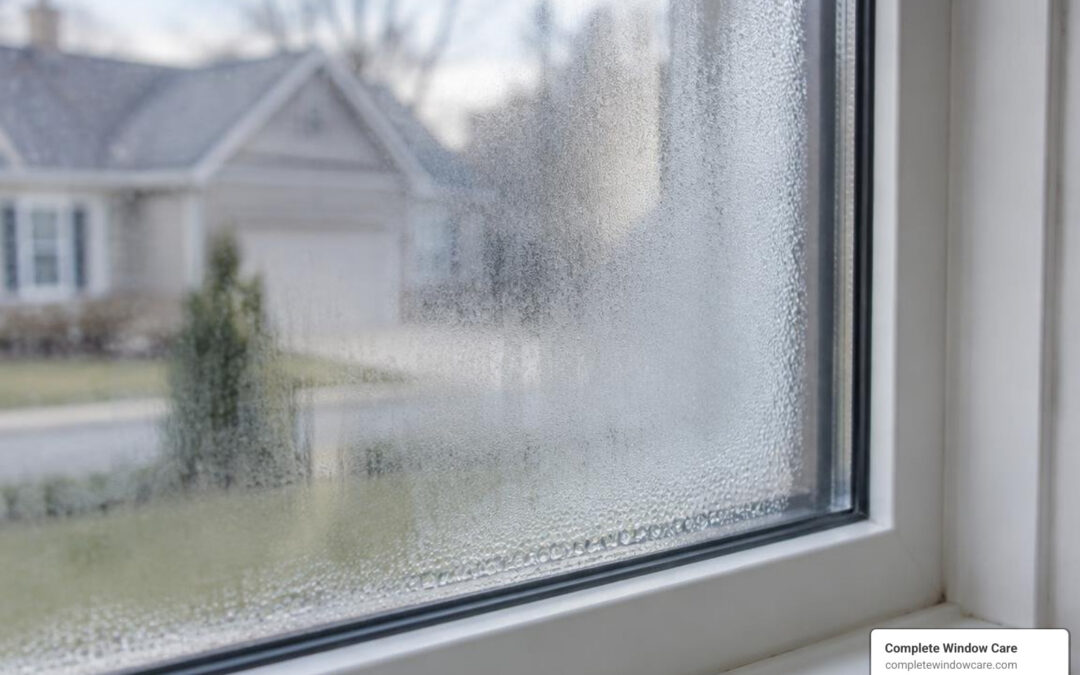
Foggy Windows: Check Your Warranty Before You Repair
Foggy windows may still be under warranty if the moisture is trapped between the panes. When condensation, haze, or white mineral deposits develop inside double-pane or triple-pane glass, the very first step every homeowner should take is testing whether the cloudiness is on an outer surface. Wipe both the interior and exterior sides of the glass with a clean microfiber cloth. If the cloudiness stays completely unchanged, you are dealing with inter-pane seal failure rather than ordinary surface condensation.
Before paying out of pocket for glass restoration or unit replacement, review your purchase paperwork, settlement records, and the manufacturer warranty. A glass-seal warranty generally applies when the insulated glass unit loses its airtight seal and moisture or haze becomes trapped between the panes. Coverage often lasts 10 to 20 years, but the exact term, transfer rules, and remedy depend on the manufacturer and the original installation. If receipts or installation documents are unavailable, inspect the metal or composite spacer bar between the panes. It may display a serial number, production date, or other identifier the manufacturer can use to locate the warranty.
A failed seal often causes this persistent fogging by allowing ambient moisture to penetrate the sealed space. Before committing to a repair, contact the manufacturer to find out what their policy covers and who is authorized to install replacement units. Complete Window Care does not install third-party warranty glass unless the manufacturer or distributor pays for the installation.
The Complete Window Care team in Colorado Springs, CO, helps homeowners diagnose foggy windows and choose practical repair options.

Understanding Foggy Windows and What Causes Them
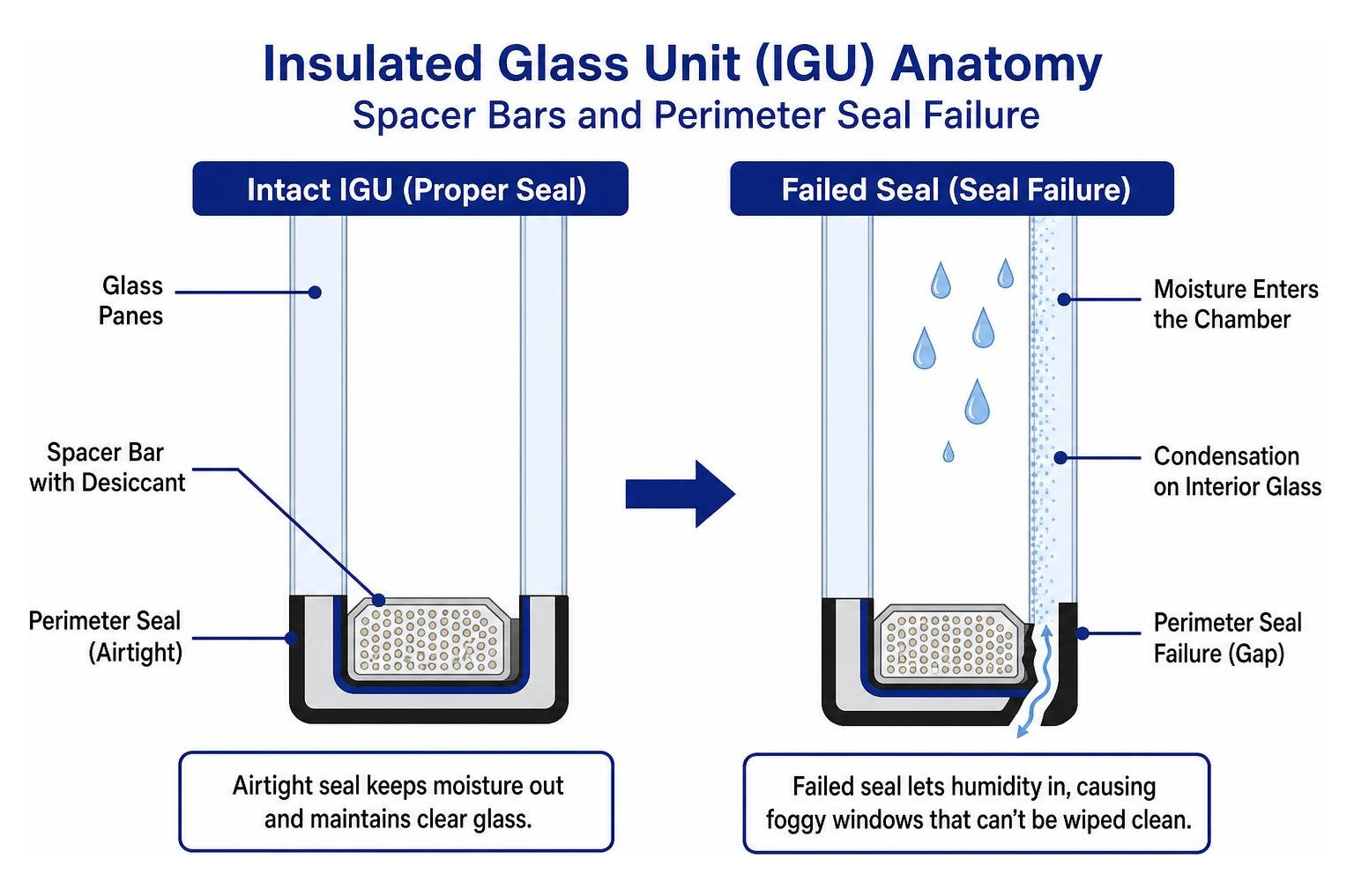
Modern residential architecture relies heavily on insulated glass units, commonly referred to as IGUs, to maintain indoor comfort, regulate conditioned air, and shield interiors from extreme weather conditions. An IGU consists of two or three individual glass panes separated by a specialized spacer bar filled with moisture-absorbing desiccant beads. The perimeter of the assembly is bonded using robust primary and secondary industrial sealants, creating an airtight, hermetically sealed pocket. In higher-performance units, this pocket is injected with dense inert gases like argon or krypton to slow thermal transfer. When that perimeter adhesive bond degrades, homeowners begin noticing why window panes get foggy or cloudy across their living spaces.
Understanding the physical forces behind seal degradation requires looking at a process known in the glazing industry as thermal cycling or solar pumping. Every day, direct sunlight heats the air and glass assembly, causing the trapped gas inside the unit to expand and exert outward pressure on perimeter seals. Once the sun sets and temperatures plummet, particularly during chilly Colorado evenings, the gas contracts, creating a vacuum effect that pulls inward on the glazing seals. This continuous daily shifting puts immense physical stress on edge adhesives over years of service.
Eventually, microscopic fractures develop along the sealant perimeter. These tiny gaps allow ambient atmospheric humidity to seep into the chamber. At first, the desiccant pellets embedded in the spacer bar absorb this invading moisture. However, desiccant materials have a finite holding capacity. Once the desiccant reaches maximum saturation, excess water vapor condenses along the cooler interior surfaces of the glass panes. Over time, recurring evaporation and condensation cycles leave behind chalky white calcium streaks, salt residues, and silica deposits that etch permanently into the glass. Spotting how to tell if you have a broken window seal early allows homeowners to intervene before permanent glass corrosion occurs.
According to the U.S. Department of Energy guide to energy-efficient windows, dual-glazed assemblies account for the vast majority of residential installations in modern construction. When these assemblies fail, insulating properties drop, leading to drafty rooms and higher energy bills across the Pikes Peak Region.
How to Check If Your Foggy Windows Are Still Covered
Before spending your own funds on glass restoration or replacement, determine whether the original manufacturer warranty remains active. Glass-seal warranties are designed to address premature insulated-glass seal failure, which commonly appears as fog, haze, or mineral deposits trapped between the panes. They usually cover a replacement insulated glass unit or sash when a qualifying seal failure occurs during the coverage period. Labor, shipping, handling, breakage, installation errors, and damage caused by misuse or storms may be excluded, so review the written terms before assuming the entire repair is covered.
To confirm your warranty status, follow these structured steps:
- Confirm the Fog Is Between the Panes: Clean the room-side and exterior surfaces first. If the haze remains unchanged, it is more likely to be a sealed-unit issue than ordinary surface condensation.
- Locate the Spacer Bar Code: Look along the metal or composite strip separating the panes for a production date, batch number, serial number, or logo.
- Gather Installation Records: Review closing documents, remodeling invoices, warranty registrations, and the original purchase paperwork to identify the installer and installation date.
- Check the Warranty Term and Transfer Rules: Verify the seal-failure term, whether the coverage begins at manufacture or installation, and whether a prior owner properly transferred the warranty.
- Ask the Manufacturer What the Claim Covers: Provide the spacer code, window dimensions, photos of the fogging, and proof of purchase if requested. Confirm whether the remedy includes only the insulated glass unit or also any shipping, handling, and installation costs.
While manufacturers frequently supply replacement glass panes under an active warranty claim, they rarely pay local labor rates for installation. Complete Window Care does not install warranty glass for third parties unless paid by the manufacturer or distributor. If your warranty claim is denied, expired, or non-transferable, professional local glass specialists provide dependable, budget-conscious solutions to bring back crystal-clear views throughout your home.
Defogging vs. Glass Replacement: What Are Your Options?
Homeowners faced with cloudy glass often assume they must rip out the entire window frame. Fortunately, full tear-outs are rarely necessary. You have multiple paths forward depending on the age, style, and physical condition of your glass. An in-person assessment through our window repair and glass replacement services can help determine whether restoration or a new insulated glass unit is the better fit.
| Method | Relative Cost | Expected Longevity | Thermal Performance | Disruption Level |
|---|---|---|---|---|
| Professional Defogging | Lowest (saves up to 70%) | 3 to 10+ Years | Partial Restoration | Minimal (under 1 hour) |
| Glass-Only Replacement | Moderate | 15 to 20+ Years | Full Factory Recovery | Low (no frame removal) |
| Full Window Replacement | Highest | 20+ Years | Full Factory Recovery | High (drywall/trim work) |
For many homeowners, repairing foggy glass rather than replacing the whole window can preserve existing trim and siding. A comparison of glass-only replacement and full window replacement can help clarify when a new insulated glass unit is the better choice.
How Professional Defogging Works Step by Step
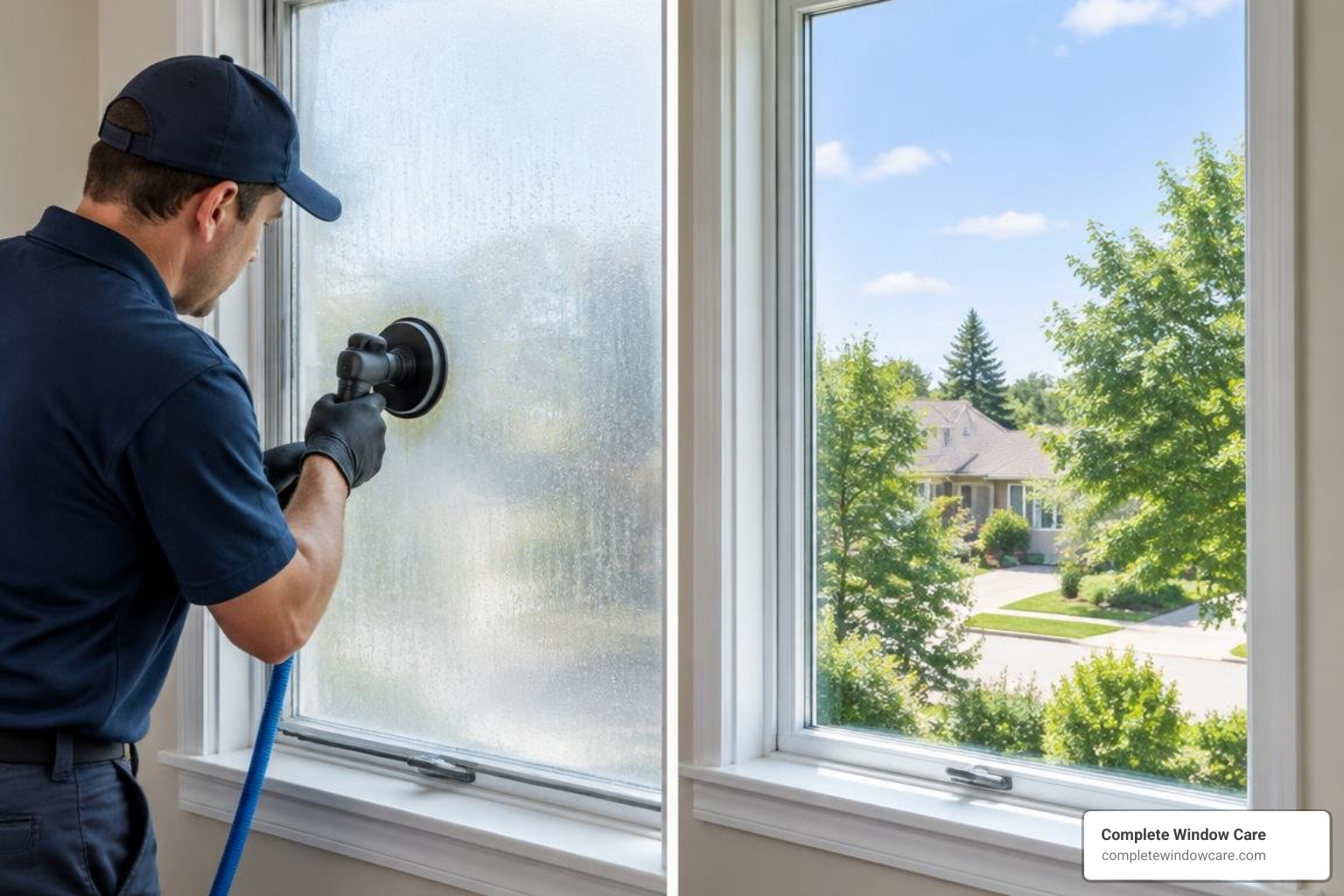
Professional defogging removes trapped moisture and restores visibility without removing the window sash from your wall. Since 2008, thousands of homeowners have used defogging services to fix cloudy units for less money. Defogging can cost up to 70% less than replacing your sealed unit and works remarkably well on structurally sound glass.
The process for repairing condensation in double glazing generally involves four straightforward steps:
- Inspection and Micro-Drilling: A trained technician drills tiny, precise micro-vents into the upper and lower corners of the outer pane using specialized diamond-core drill bits.
- Chemical Cleaning: Specialized cleaning solutions are introduced into the air chamber to dissolve mineral buildup and clean interior glass surfaces.
- Moisture Evacuation: Specialized extraction equipment flushes out residual liquid and dries the space between panes completely.
- Valve Installation: Technicians install micro-venting valves over the drilled access points. These one-way permeable valves allow internal moisture to vent out naturally while blocking liquid water and dust from entering.
Most defogging jobs wrap up in 30 to 60 minutes per window, making the service fast and non-invasive. Because the existing glass pane and window frame remain intact, you avoid repainting interior trim, disturbing exterior stucco or siding, or managing messy construction debris.
When Defogging Isn’t Enough: Signs You Need Glass Replacement
While defogging works wonders on recent seal failures, it cannot fix every damaged unit. Windows left foggy for years often develop white, cloudy silica scale or permanent mineral etching that cleaning solutions cannot remove.
These signs that it is time for window glass replacement can help you decide when defogging is no longer the right solution:
- Severe Internal Staining: Permanent white calcium rings or rainbow-like mineral etching baked into the glass surface from long-term standing moisture.
- Physical Cracks or Chips: Structural fractures in the glass compromise safety and prevent airtight vacuum seals.
- Warped or Damaged Sashes: Vinyl or wood frames that have sagged, rotted, or warped beyond normal tolerances.
- Degraded Low-E Coatings: Internal oxidation that discolors performance coatings, producing purple, bronze, or hazy streaks.
- Saturated Spacer Desiccant: Solidified, powdery desiccant dust that has spilled out into the lower viewing area.
If your window displays these issues, replacing the sealed glass unit is the cleanest, most durable solution. Average-size windows typically cost between $300 and $500, with factors such as low-E coatings, tint, safety tempering, and frame styles significantly impacting the final cost. Technicians measure your existing sash opening, order a custom-manufactured insulated unit with fresh seals and desiccant, remove the old glazing stops, and set the new glass directly into your sound frame.
Preventing Future Moisture and Condensation Problems
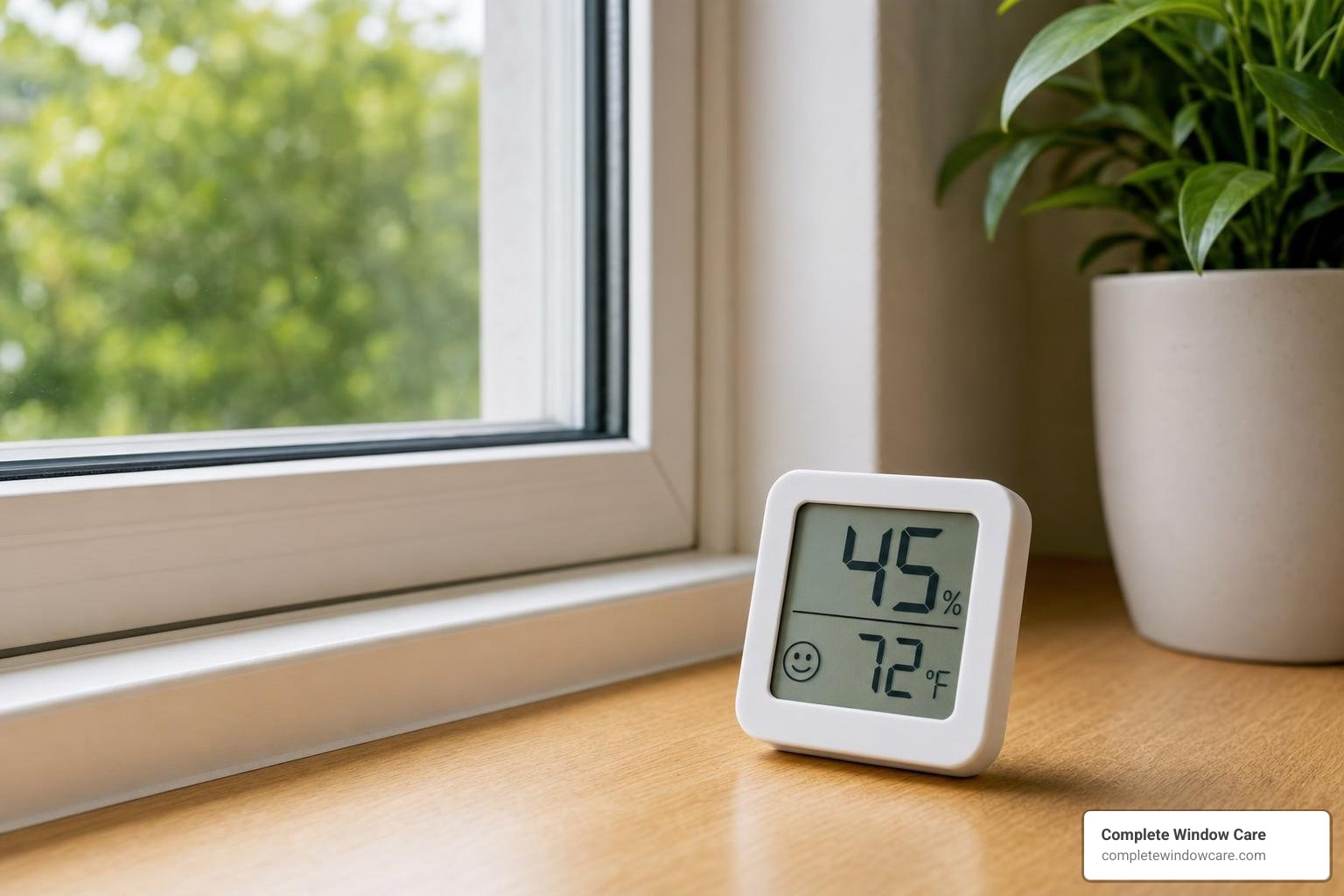
External and interior surface condensation is different from inter-pane seal failure. High humidity inside living spaces often causes water beads to form on interior glass during chilly Colorado mornings. If left unmanaged, persistent surface condensation can puddle along the sash, rotting wood, encouraging mold growth, and degrading perimeter seals prematurely.
Practical ways to keep house windows from fogging up can help protect your window seals over the long haul:
- Manage Indoor Humidity Levels: Keep indoor relative humidity between 30% and 40% during winter months using a home hygrometer, adjusting whole-house humidifiers as outdoor temperatures drop.
- Run Ventilation and Exhaust Fans: Turn on kitchen range hoods while cooking and run bathroom exhaust fans for at least twenty minutes after showering to expel steam.
- Optimize HVAC Circulation: Keep your central HVAC system fan set to circulate air continuously to eliminate cold, stagnant pockets near exterior walls.
- Maintain Perimeter Weatherstripping: Inspect exterior caulking and replace brittle seals to keep moisture from pooling around lower glazing beads.
- Open Window Coverings Daily: Raise blinds and open heavy drapes during cold mornings so warm room air can circulate freely across the glass surface.
If you notice drafty frames or leaks during heavy rain, contact a professional to inspect your windows before moisture damages your walls. If safety concerns arise, specialized tools are required, structural framing is compromised, or you are unsure about performing repairs, you should always consult an experienced glass technician.
Frequently Asked Questions About Foggy Windows
Can all foggy windows be defogged, or do some require full replacement?
Not every window is a candidate for defogging. If moisture has been trapped for several years, dissolved minerals and silica dust from the desiccant spacer can etch the glass permanently. Windows exhibiting etched scale, cracked glass, oxidized Low-E coatings, or rotted sash framing must be resolved with insulated glass replacement rather than defogging.
How much does window defogging cost compared to sealed unit replacement?
Professional defogging typically costs up to 70% less than purchasing and installing a brand-new double-pane unit. For windows requiring complete glass replacement, average-size windows typically cost between $300 and $500, with factors such as low-E coatings, tint, safety tempering, and frame styles significantly impacting the final cost.
Does defogging restore the original energy efficiency of double-pane glass?
Defogging eliminates unsightly internal cloudiness and restores up to 70% of thermal performance by drying out the moist airspace. However, if your original unit was factory-injected with argon or krypton gas, defogging does not reinstall those inert gases. Achieving full factory thermal insulation ratings requires full insulated glass replacement.
How long does a professional defogging appointment take?
Most professional defogging appointments take approximately 30 to 60 minutes per window sash. Technicians perform the drilling, chemical rinsing, moisture extraction, and micro-valve installation directly on the installed window sash, preventing messy demolition and minimizing disruption to your household.
Why do window seals fail in the first place?
Window seals primarily fail due to solar pumping. Daily sunlight warms the trapped gas within the unit, causing it to expand and press against perimeter adhesives. Nighttime cooling contracts the unit. Over years of continuous thermal cycling, edge bonding materials fracture, letting outside humidity infiltrate the chamber.
How can I tell if fog is between the panes or on the surface?
Wipe both the interior room-side glass and the outdoor exterior glass with a clean microfiber towel. If the condensation, moisture droplets, or milky streaks remain completely unchanged and cannot be wiped away from either side, the moisture is trapped inside the sealed unit.
Will broken window seals make my energy bills go up?
Yes. When an insulated glass seal fails, insulating gas escapes and moist outdoor air replaces it. Moist air transfers thermal energy significantly faster than dry air or inert gas, forcing your heating and cooling equipment to work harder and raising your monthly utility expenses.
Can I repair a foggy double-pane window myself?
DIY defogging is not recommended. Attempting to drill into tempered safety glass will cause it to shatter instantly, and consumer hardware cannot properly flush mineral residues or install balanced pressure-relief valves. When safety concerns arise or specialized tools are required, always hire a qualified glass technician.
Are foggy windows covered under homeowners insurance?
Homeowners insurance policies generally cover sudden accidental events, such as impact from hail storms, fallen tree limbs, or vandalism, rather than gradual seal wear and tear. A foggy insulated glass unit caused by seal failure is more commonly handled through the manufacturer warranty when the coverage period and transfer requirements are met. Check the written warranty for the replacement remedy and exclusions before arranging repairs.
What is the difference between single-pane condensation and double-pane seal failure?
Single-pane condensation forms strictly on the exposed indoor surface of the glass when humid indoor air touches cold glass during winter. Double-pane seal failure involves moisture penetrating the sealed interior airspace between the two glass layers, where it cannot be wiped away from either side.
Conclusion
Cloudy glass obstructs your mountain views, diminishes curb appeal, and reduces indoor comfort. Checking your original paperwork for active manufacturer warranty coverage should always be your first move. When coverage is expired or unavailable, targeted glass restoration is the most sensible way to renew your home without overspending.
Complete Window Care specializes in cost-effective window glass repair, insulated unit replacements, screen repair, and sliding door glass solutions across Colorado Springs, CO, and the surrounding Pikes Peak Region. We are an authorized Larson and Casco dealer, and we install new storm doors to protect your home year-round. For help with a foggy or failed insulated glass unit, contact our professional window repair technicians to schedule an evaluation and restore your home’s clarity and comfort.