
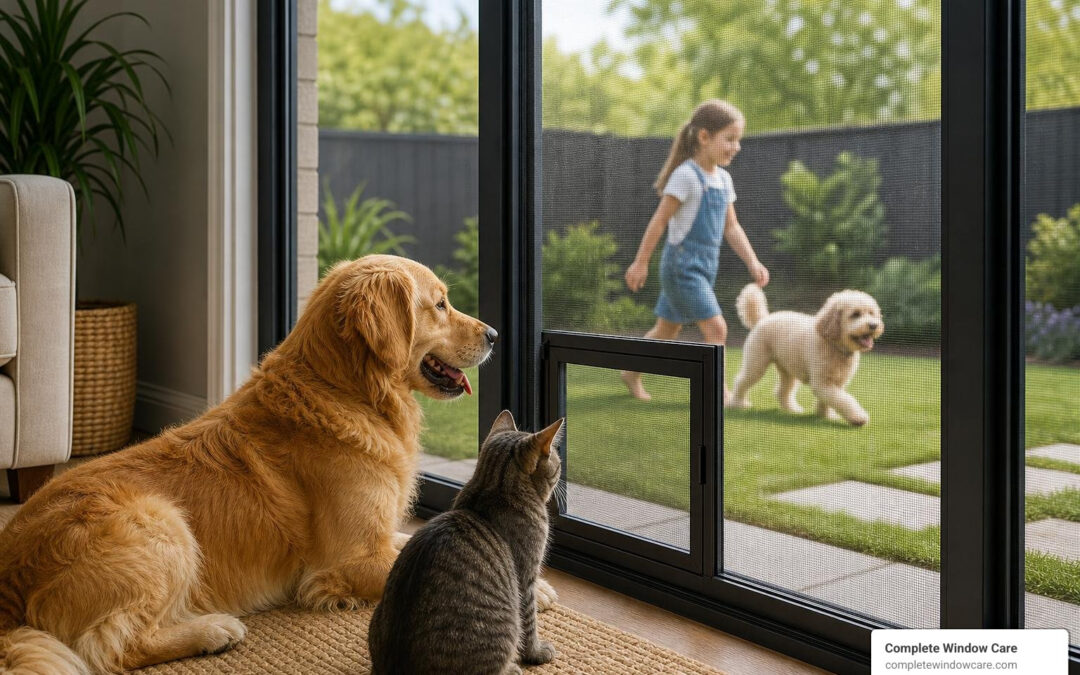
Why Pet Proof Screens Are Worth It (And What to Look For)
Pet proof screens are heavy-duty mesh screens designed to resist scratching, clawing, and impact from dogs and cats — unlike standard fiberglass screens, which tear easily under pet pressure.
Quick answer for homeowners:
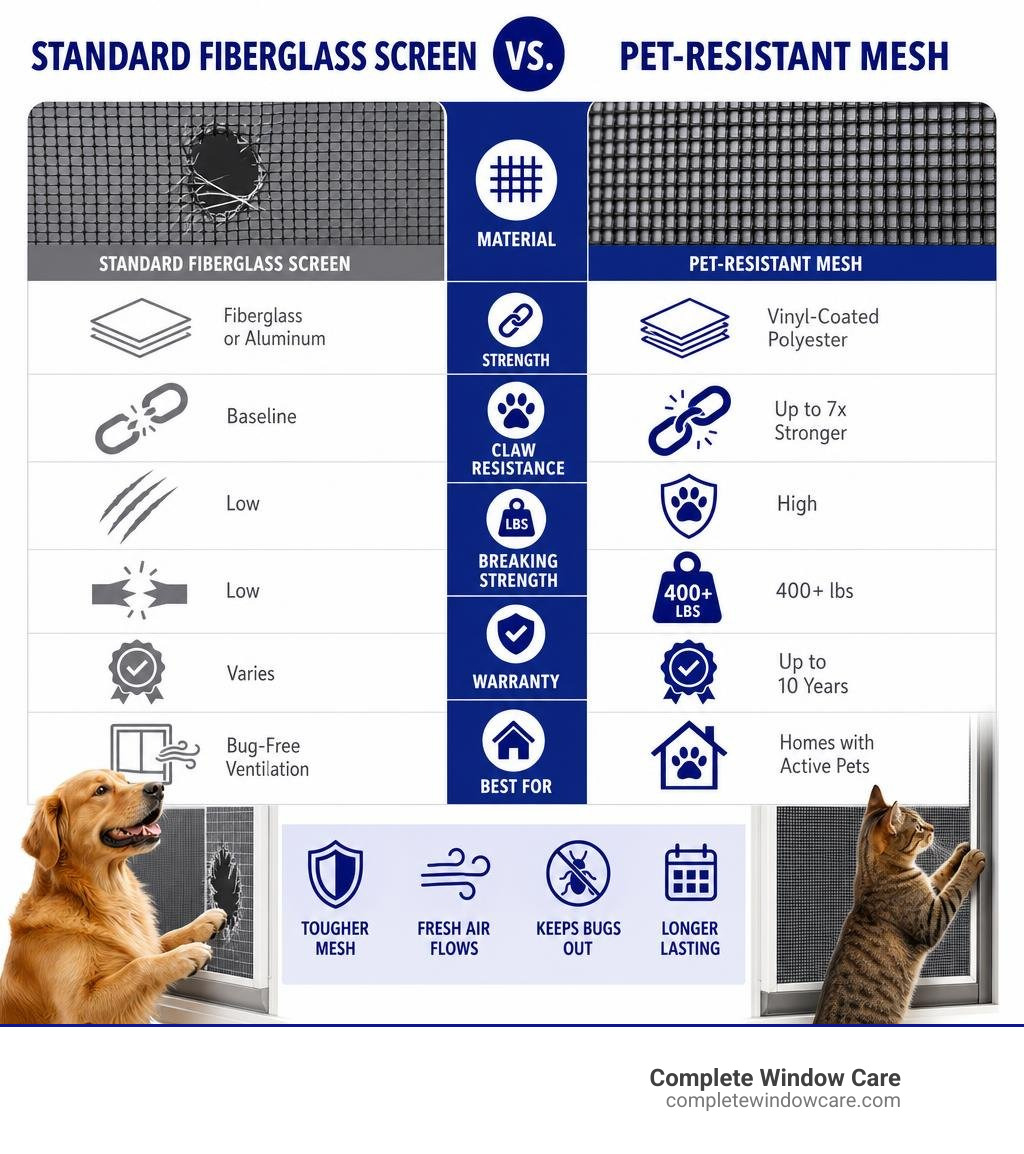
| Feature | Standard Screen | Pet Proof Screen |
|---|---|---|
| Material | Fiberglass or aluminum | Vinyl-coated polyester |
| Strength | Baseline | Up to 7x stronger |
| Claw resistance | Low | High |
| Breaking strength | Low | 400+ lbs |
| Warranty | Varies | Up to 10 years |
| Best for | Bug-free ventilation | Homes with active pets |
If your screens keep getting torn, clawed, or pushed out — a pet resistant screen is almost certainly the right fix. It keeps bugs out, lets air in, and holds up to daily pet activity without constant replacement.
If you have a dog or cat, you already know the frustration. You open the window for some fresh Colorado air, and within days — or hours — your screen has a hole in it. Standard fiberglass mesh simply wasn’t built for pets. It’s thin, it’s fragile, and claws go right through it.
The good news? Pet proof screens exist specifically for this problem. They use thicker, reinforced materials that can take real punishment from even the most enthusiastic pets — while still doing the basic job of keeping insects out and letting air flow through.
I’m Michael Smith, owner of Complete Window Care, and with over 18 years of hands-on experience repairing and replacing window and door screens for Colorado Springs homeowners, I’ve seen how much damage pets can do to standard mesh — and how well pet proof screens hold up by comparison. In this guide, I’ll walk you through everything you need to know to choose, measure, and install the right screen for your home.
What Are Pet Proof Screens and How Do They Work?
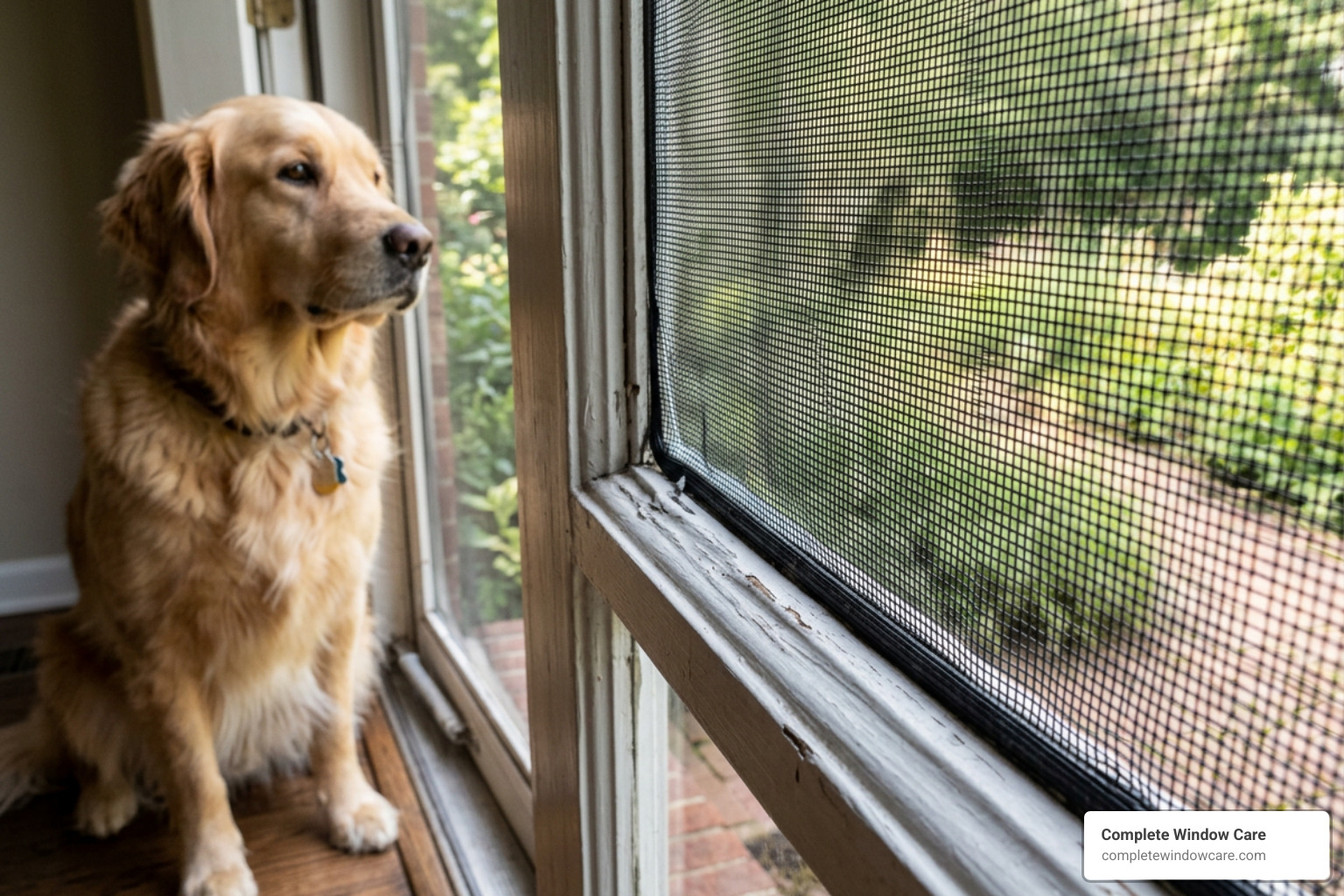
Pet proof screens are reinforced insect screens made for homes where pets scratch, paw, lean, jump, or push against window and door screens. They look similar to regular screens from a distance, but the mesh is thicker, heavier, and more flexible under pressure.
Most high-quality pet resistant mesh is made from vinyl-coated polyester. That combination matters:
- Polyester gives the screen its tensile strength.
- Vinyl coating adds abrasion resistance, weather resistance, and a smoother surface.
- Thicker yarns make it harder for claws to puncture or pull the mesh apart.
- Heavier mesh helps the screen absorb impact instead of ripping immediately.
In plain English: a regular screen is a bug barrier. A pet proof screen is a bug barrier that has been going to the gym.
These screens are commonly used for windows, sliding screen doors, patio doors, porch enclosures, and screened areas where pets spend time. Some products, such as tear-resistant pet screening for doors and windows, are designed specifically to resist damage from dogs and cats while still functioning as insect screen.
Why Standard Mesh Fails and Why You Need Pet Proof Screens
Standard fiberglass mesh is popular because it is affordable, lightweight, and easy to install. For many homes, it works fine. But in a home with pets, it has a weakness: it is not designed to handle repeated clawing or pushing.
Common reasons standard screens fail include:
- Cat claws catching in the mesh
- Dogs pawing at doors when they want outside
- Pets leaning against loose screen panels
- Excited pets jumping at windows
- Old mesh becoming brittle from sun exposure
- Weak spline or bent frames letting the mesh pull out
Aluminum screen can be stronger than fiberglass in some ways, but it can dent, crease, and deform. Once metal mesh is bent or stretched, it usually does not bounce back cleanly.
If your screens rip again and again, the mesh may not be the only issue. Frame fit, spline size, screen tension, sun exposure, and pet behavior all play a role. We cover more of those causes in Why Window Screens Keep Ripping.
Heavy-Duty Materials: Polyester vs. Fiberglass
The biggest difference between pet resistant screens and standard screens is material.
Most standard window screens are fiberglass. It is flexible, inexpensive, and easy to work with, but it is relatively thin. Pet resistant screens are usually vinyl-coated polyester, which is thicker and tougher.
Some advanced pet screen materials use very high-strength polyester yarns. For example, certain heavy-duty pet mesh specifications reference 1000 denier polyester with PVC coating, which helps explain why these products can resist abrasion, tearing, and impact better than ordinary mesh.
There are also reinforced fiberglass options made for pet applications. Unlike standard fiberglass, pet-grade fiberglass may use stronger yarns and scratch-resistant coatings. Some pet fiberglass screen products are designed with higher tear resistance and longer service life than ordinary fiberglass.
For most Colorado Springs homeowners, vinyl-coated polyester is the go-to choice because it balances strength, availability, appearance, and cost.
Claw and Impact Resistance
Pet proof screens are not magic force fields. If a very large dog charges full speed into a screen door, the frame, spline, latch, or track may still fail. But compared with standard mesh, pet resistant mesh is dramatically tougher.
Common performance claims for quality pet screen products include:
- Up to 7 times stronger than standard fiberglass screen
- Over 400 lbs. of breaking strength on some custom pet screen products
- Strong resistance to scratching, fraying, and tearing
- Better impact absorption than brittle or lightweight mesh
- Long warranty coverage on certain products, often up to 10 years
That extra strength is especially useful for cats who climb, dogs who paw, and pets who think the screen door is a suggestion rather than a boundary.
The Key Benefits of Installing Pet Resistant Screens
Pet resistant screens solve several problems at once. The obvious benefit is fewer tears, but the real value goes beyond that.
| Category | Standard Fiberglass Screen | Pet Resistant Screen |
|---|---|---|
| Pet claw resistance | Tears easily under repeated scratching | Built to resist clawing and pawing |
| Pet containment | Can be pushed out if loose or damaged | Stronger mesh helps reduce escape risk |
| Insect protection | Good when intact | Good when intact and properly installed |
| Airflow | Usually higher | Slightly reduced but still comfortable |
| Visibility | Usually clearer | Slightly darker/thicker mesh |
| Durability | Lower in pet areas | Much higher in pet areas |
| Repair frequency | Often frequent with pets | Typically much less frequent |
| Best use | Low-traffic windows | Pet zones, doors, patios, porches |
The biggest benefits include:
- Fewer repeat screen repairs
- Better protection against insects
- More confidence opening windows for fresh air
- Reduced chance of pets pushing through damaged mesh
- Better durability for sliding doors and patios
- Cost savings over repeated standard screen replacements
- A cleaner, better-looking home exterior
For pet owners, pet screen is often the more cost-effective choice even though it costs more up front. Replacing one standard screen is cheaper. Replacing the same standard screen five times because your cat has hobbies is not.
Where Can You Install Pet Proof Screens in Your Home?
Pet proof screens can be used in many of the same places as regular screen mesh, including:
- Window screens
- Sliding screen doors
- Hinged screen doors
- Patio enclosures
- Porch screens
- Sunroom screens
- Balcony screen panels
- Catio enclosures
- Garage ventilation screens
- Custom pet barriers
In Colorado Springs and the Pikes Peak Region, we often see pet damage on low windows, back doors, patio sliders, and porch screens. These are the areas where pets watch wildlife, greet delivery drivers, or attempt negotiations with squirrels.
Pet resistant mesh is especially useful in high-traffic areas. If your dog paws at the back slider every day or your cat camps in the front window, that is where we would prioritize the upgrade first.
Airflow, Visibility, and Insect Protection
Pet proof screens still let air through and keep insects out, but there are tradeoffs.
Because the mesh is thicker, airflow and visibility are usually slightly reduced compared with standard fiberglass. That said, quality pet screen is still designed for ventilation and outward visibility. Some pet screen specifications list around 36% openness, with significant UV blockage. That means you get fresh air and some sun filtering, but the screen may look darker than standard mesh.
Here is what to expect:
- Airflow: Good, but not quite as open as lightweight fiberglass
- Visibility: Good from inside, especially with black mesh
- Light: Slightly reduced because the strands are thicker
- Insect protection: Strong, as long as the mesh size is appropriate and the frame fits tightly
- Privacy: Slightly improved in some lighting because of the darker, heavier mesh
Black or charcoal mesh usually offers the best outward visibility. Lighter colors may stand out more visually, but they can be useful for design preferences or specialty projects.
Available Sizes, Colors, and Customization Options
Pet resistant screen mesh is available in many sizes. Rolls may come in common widths like 36, 48, 60, 72, and up to 96 inches, depending on the product. Bulk rolls may be available in longer lengths such as 25, 50, or 100 feet.
Color options vary by manufacturer and supplier. Black and gray or charcoal are the most common. Some pet screen mesh is available in 12+ colors, including brighter specialty colors. You can review examples of colored pet screen options if you are considering a custom look.
For most homes, we recommend black or charcoal because they tend to:
- Blend well with existing frames
- Improve outward visibility
- Hide dust better than light colors
- Match common window and door screen styles
Customization options may include:
- Exact screen frame size
- Frame color
- Mesh color
- Crossbar placement
- Pull tabs or lift tabs
- Tension springs or other hardware
- Screen frame thickness
- Pet door compatibility in some screen doors
Measuring, Ordering, and Installing Your New Screens
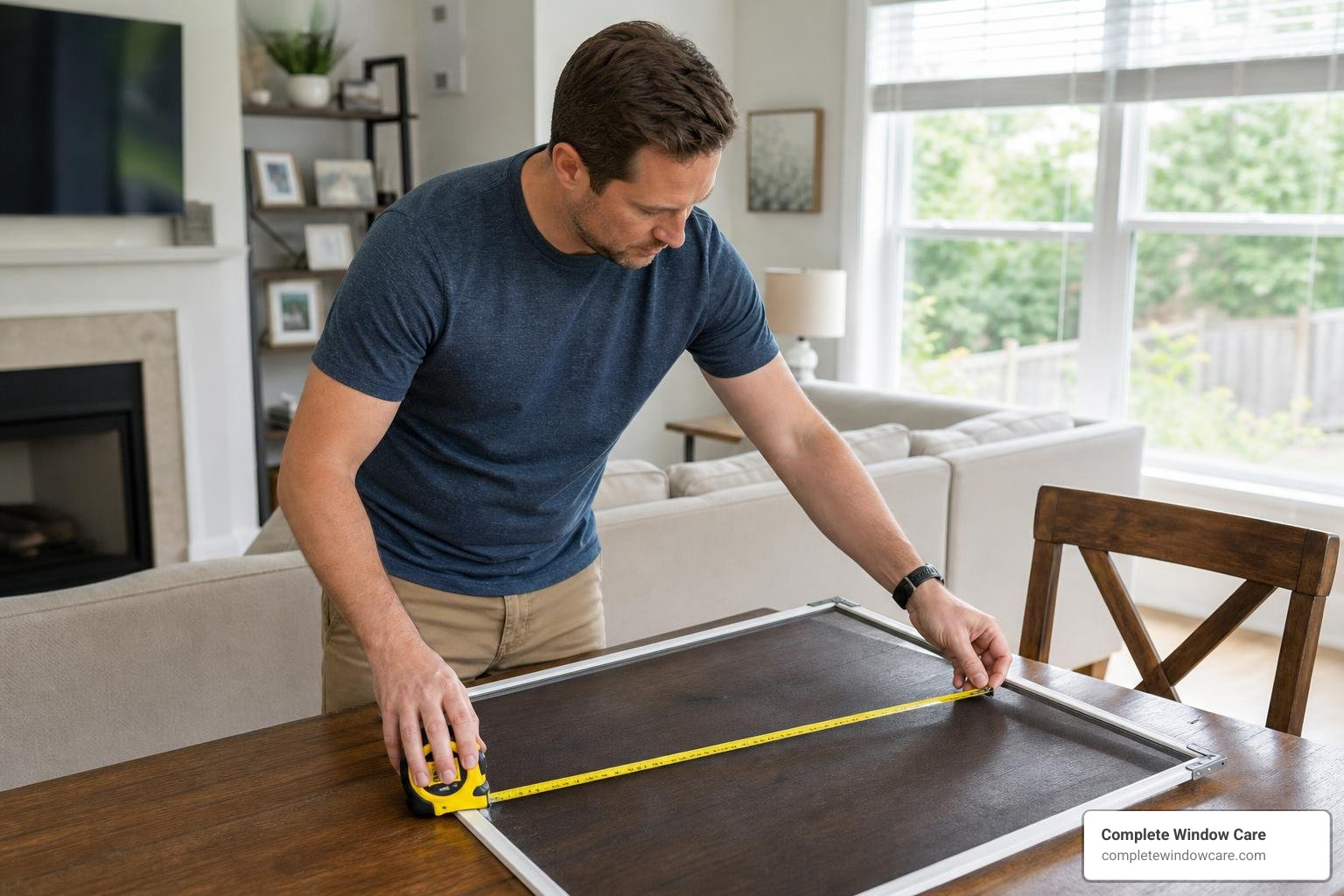
The best pet screen material will not perform well if it is measured poorly, stretched unevenly, or installed with the wrong spline. A snug, square frame and properly tensioned mesh are just as important as the mesh itself.
How to Measure and Order Custom Screens
If you are ordering or replacing a screen, measure the existing screen frame if you have it. That is usually more accurate than measuring the window opening alone.
Basic measuring steps:
- Remove the existing screen carefully.
- Measure the screen frame width from outside edge to outside edge.
- Measure the screen frame height from outside edge to outside edge.
- Measure the frame thickness or profile if needed.
- Note the location and type of hardware.
- Check whether the frame is bent, bowed, or damaged.
- Decide whether you need only new mesh or a full new screen frame.
Measure in more than one place. Older frames are not always perfectly square, especially after years of weather, pets, and “I can fix this myself” moments.
When ordering custom screens, you may need to select:
- Width
- Height
- Frame size
- Frame color
- Screen mesh type
- Screen mesh color
- Hardware type
- Hardware location
- Crossbar location, if needed
Some custom screen suppliers provide detailed ordering options for pet resistant screens, including frame and hardware selections.
If you are unsure, we recommend having a professional measure. A small measuring error can lead to gaps, rattling, poor fit, or a screen that simply will not seat properly.
Step-by-Step Installation Process
For a typical screen frame rescreening, the process looks like this:
- Remove the screen frame from the window or door.
- Place it on a flat, stable work surface.
- Pull out the old spline using a spline hook or small tool.
- Remove the damaged mesh.
- Clean the frame groove.
- Lay the new pet screen mesh over the frame.
- Cut the mesh slightly larger than the frame.
- Press new spline into the groove with a spline roller.
- Keep even tension across the mesh.
- Trim excess mesh with a sharp utility knife.
- Reinstall the screen and check the fit.
Pet resistant mesh is thicker than standard fiberglass, so installation can take more effort. It may require the correct spline diameter and careful tensioning. If the spline is too small, the mesh may pull out. If it is too large, it may be difficult to seat or could distort the frame.
For more repair guidance, see our guide to repair options for torn or damaged window screens.
Cost Comparison and Quantity Discounts
Pet proof screens cost more than standard screens because the material is heavier and more durable. However, the long-term cost can be lower if it prevents repeated repairs.
Typical cost factors include:
- Screen size
- Mesh type
- Frame condition
- Whether the existing frame can be reused
- Hardware needs
- Door screen vs. window screen
- Custom sizing
- Quantity ordered
- Professional labor
DIY mesh rolls can be a budget-friendly option for handy homeowners. For example, pet resistant mesh rolls are sold in project sizes such as 48 inch by 25 foot pet screen rolls, which may be enough for several window screens or a small door project depending on dimensions.
Professionally made or repaired screens cost more than raw mesh, but they provide better fit, cleaner installation, and fewer headaches. Quantity discounts may be available from some suppliers when ordering multiple custom screens, and homeowners often save by upgrading several pet-damaged screens at once instead of handling them one at a time.
Our advice: if only one screen is damaged, repair that one. If your pet has declared war on every window facing the yard, consider a whole-zone upgrade.
Warranties and Lifespan Expectations
Warranty coverage varies by product and installer. Some pet resistant screen products offer up to a 10-year factory warranty against issues such as ripping, fraying, and discoloration. Other products may have shorter or more limited coverage.
A realistic lifespan depends on:
- Sun exposure
- Wind and hail exposure
- Pet size and behavior
- Mesh quality
- Installation quality
- Frame condition
- Cleaning habits
- Whether pets are trained not to scratch
In Colorado Springs, screens deal with sun, wind, temperature swings, dust, and the occasional hailstorm. Pet screen is tough, but maintenance still matters. For seasonal tips, read Preventing Window Screen Tears: Tips for Springs.
Safety Considerations and Limitations
Pet proof screens are stronger than standard screens, but they are not a substitute for supervision, fall protection, child safety devices, or security bars.
Important safety notes:
- Do not rely on any insect screen to prevent a child or pet from falling out of a window.
- Large or highly energetic dogs can still damage frames, tracks, latches, or spline.
- A loose screen frame can pop out even if the mesh itself does not tear.
- Pet screen is not the same thing as a security screen.
- Screen doors should latch properly if used for pet containment.
- Upper-story windows require extra caution.
- Pets should be trained not to climb or launch themselves at screens.
Pet resistant mesh helps reduce damage and escape risk, but it works best as part of a complete setup: sturdy frame, correct spline, snug fit, working latch, and realistic expectations.
If your pet scratches out of anxiety, boredom, or separation stress, the screen upgrade will help protect the mesh, but behavior training may still be needed. A determined dog with time, leverage, and a personal vendetta against your patio door can be surprisingly persuasive.
For practical prevention ideas, see 4 Tips for Avoiding Damage to Window Screens.
Frequently Asked Questions About Pet Resistant Mesh
Pet resistant screens are simple in concept, but homeowners usually have a few questions before upgrading. Here are the big ones we hear most often.
Can cats claw through pet proof screens?
Cats are one of the top reasons homeowners choose pet proof screens. Their claws catch and slice through standard fiberglass easily. Vinyl-coated polyester mesh is much harder for cats to tear because it uses thicker, stronger strands and a more durable coating.
Can a cat damage it eventually? Possibly, especially if the screen is old, loose, poorly installed, or attacked daily by a very determined climber. But compared with standard screen, pet resistant mesh performs much better against normal scratching, pawing, and climbing behavior.
For existing damage scenarios, see our guide to screen repair solutions for pet-caused damage.
Do pet proof screens block airflow or light?
They reduce airflow and light slightly compared with standard fiberglass because the mesh is thicker. However, they still provide good ventilation for normal home use.
Expect:
- A slightly darker appearance
- Good outward visibility, especially with black mesh
- Fresh air flow through windows and doors
- Strong insect protection
- Some UV filtering depending on the product
If maximum airflow is your only goal and pets never touch the screen, standard fiberglass may be enough. But if pets are causing damage, the small tradeoff in openness is usually worth the durability.
How do you clean and maintain pet resistant screens?
Cleaning pet resistant screens is straightforward.
Use this simple process:
- Remove the screen if practical.
- Brush or vacuum loose dust and debris.
- Wash with mild dish soap and warm water.
- Use a soft brush or sponge.
- Rinse gently with clean water.
- Let the screen air dry before reinstalling.
- Inspect the spline, frame corners, and mesh tension.
Avoid:
- Bleach
- Ammonia
- Harsh solvents
- Pressure washing too close to the mesh
- Wire brushes
- Sharp scraping tools
Also check frames after storms or high winds. A pet screen can only do its job if the frame is still square and secure.
Conclusion
Pet proof screens are one of the smartest upgrades for Colorado Springs homeowners with dogs or cats. They are stronger than standard fiberglass, resist claw damage, help keep insects out, and reduce the cycle of repairing the same torn screens over and over.
The main things to remember are:
- Most pet resistant screens use vinyl-coated polyester.
- Quality pet mesh can be up to 7 times stronger than standard fiberglass.
- Some products offer over 400 lbs. of breaking strength.
- Many pet screen options are available in custom sizes, colors, and widths up to 96 inches.
- Airflow and visibility remain good, though slightly reduced compared with standard mesh.
- Proper measuring and installation are essential.
- Pet screens are durable, but they are not fall-prevention or security devices.
At Complete Window Care, we focus on cost-effective repairs whenever possible. If your existing frames are still in good shape, we may be able to replace the damaged mesh instead of replacing the entire screen assembly. If the frame is bent or failing, we can help you understand the best repair or replacement option for your home.
If your pets have turned your screens into modern art, we can help. Get professional window screen repair services from Complete Window Care in Colorado Springs and the Pikes Peak Region.