
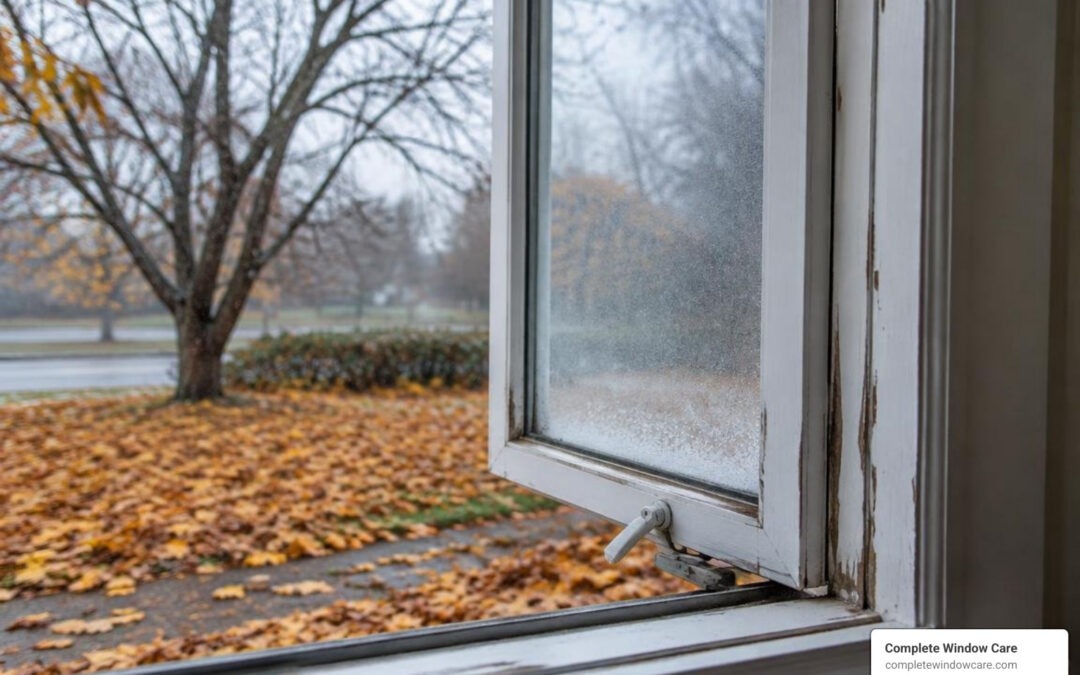
Window Lock Won’t Latch? Fix It Before Winter
In Colorado Springs, CO, an unlatched window can let in cold air and moisture and leave your home less secure. Finding the cause before winter helps you choose a targeted repair when the rest of the window is sound. Preparing your home for sub-zero temperatures and high mountain winds is essential for maintaining consistent indoor thermal comfort throughout the colder months.
Window repair can often fix a lock that won’t latch without replacing the whole window. First, clear dirt from the track and check whether the sash closes evenly. Don’t force the lock. If it still won’t catch, have the window checked for a worn latch, poor alignment, or frame damage.
The Complete Window Care team brings more than 18 years of hands-on window repair and installation experience, including diagnosing air and water leaks across the region’s varied architectural styles.
Why an Unlatched Window Lock is a Critical Pre-Winter Risk
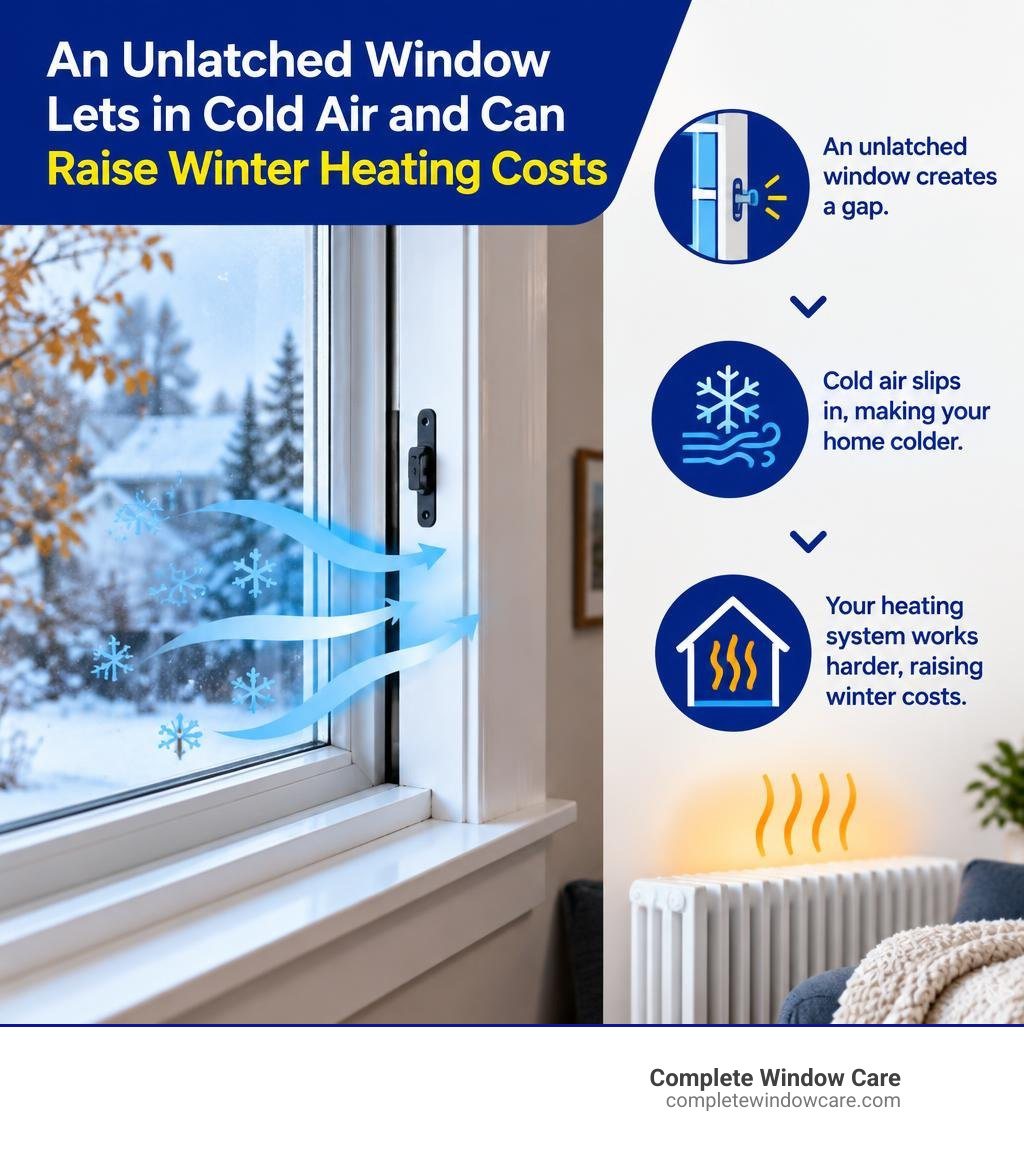
As temperatures begin to drop across the Pikes Peak Region, preparing your home for freezing weather becomes a top priority. Many homeowners assume that a window lock serves only one purpose: basic home security. While locking your windows certainly deters intruders, the primary mechanical purpose of a window latch is to draw the moving sashes tightly against the weatherstripping, creating an airtight, weather-resistant thermal seal.
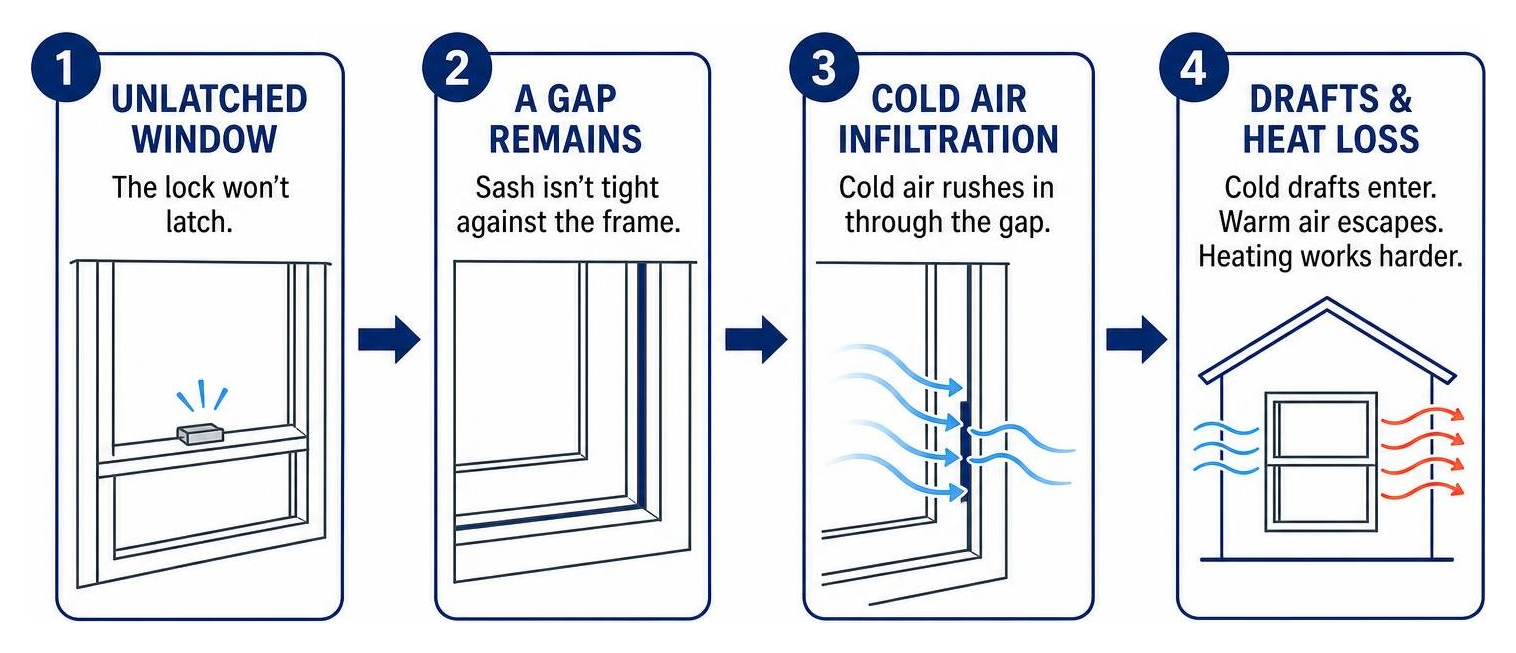
When a lock refuses to latch, that tight compression never happens. Even if a window appears completely shut to the naked eye, a hairline gap remains open to outdoor elements. Leaving that small gap unaddressed before winter exposes your living space to substantial heat loss, higher utility bills, moisture intrusion, and unexpected structural problems. According to federal energy guidelines published in the DOE guide to air sealing the home, uncontrolled air leakage around building envelopes accounts for significant domestic energy waste each winter.
In alpine and high-altitude climates like Colorado Springs, CO, fluctuating atmospheric pressure combined with steep day-to-night temperature drops creates substantial air pressure differentials across your exterior walls. Warm air naturally seeks escape pathways, while dense freezing air exerts continuous pressure against unlatched seams. Over an entire winter season, this silent exchange wastes hundreds of kilowatt-hours of heating energy.
Drafts, Moisture Infiltration, and HVAC Strain
The most immediate symptom of an unlatched window is a continuous cold draft. During freezing nights, dense, frigid air rushes through unsealed seams while warm, conditioned indoor air escapes out the top. This continuous airflow forces your heating equipment to work around the clock just to maintain a steady room temperature. The added workload places unnecessary strain on your HVAC and AC systems, driving up monthly utility bills and accelerating mechanical wear on your furnace.
Beyond cold drafts, unlatched windows invite moisture into the surrounding wall cavities. Blowing snow and winter rains can seep past loose sashes, leading to hidden leaks. Taking early action and preventing window water leaks protects your interior drywall, paint, and trim from costly water staining and mold development. When moisture accumulates inside enclosed framing, it often goes undetected until surface bubbling, wallpaper peeling, or persistent musty odors become visible inside your living spaces.
Structural Risks, Wood Rot, and Security
When moisture repeatedly enters the perimeter of an unlatched window during freezing weather, it undergoes continuous freeze-thaw cycles. Water expands as it freezes within tiny crevices, widening gaps between the sash and frame. Over time, this causes wood sashes to warp, sill structures to soften, and vinyl extrusions to bow out of alignment.
If moisture has already begun compromising your exterior woodwork, speaking with exterior window repair pros helps halt decay before it destroys structural framing. In addition, an unlatched ground-floor window remains an easy target for forced entry, leaving your household vulnerable when winter storms keep you indoors. Ensuring every opening compresses fully and latches securely gives you dependable peace of mind and preserves structural integrity throughout the coldest months.
Common Causes of Latching Failures and Targeted Window Repair Solutions
Diagnosing why a window won’t lock requires examining the moving parts of the unit. Window mechanisms rely on precise physical tolerances. If any single component shifts by even a fraction of an inch, the lock cam cannot engage the keeper.
Sash Misalignment, Warping, and Track Debris
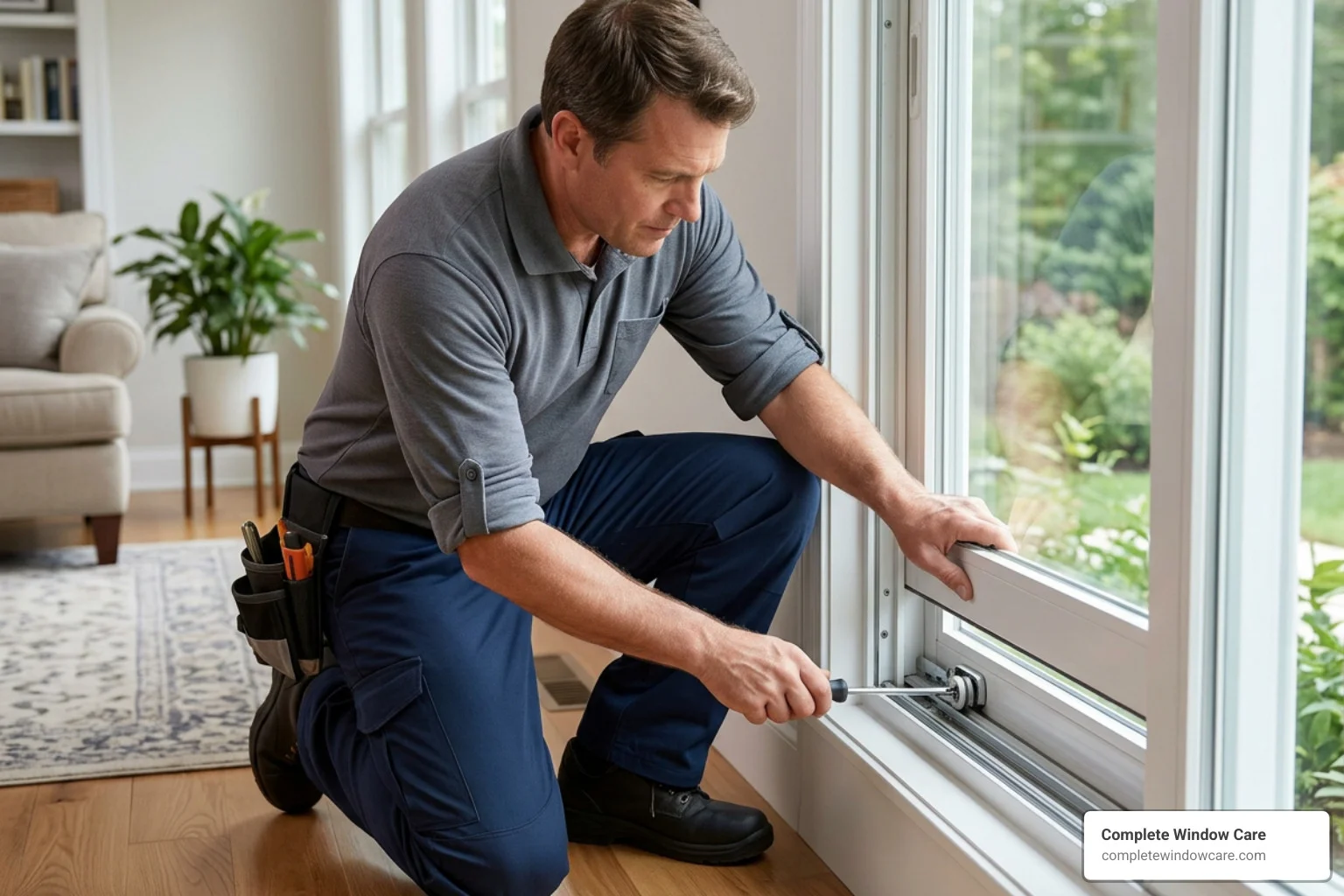
Over months of open-and-close operation, household dust, pet hair, dirt, and outdoor debris settle inside lower tracks and jamb channels. This buildup blocks the sash from dropping or sliding fully into its seated position. When the sash stops just an eighth of an inch too high, the lock cannot meet the keeper.
In other instances, seasonal humidity changes or subtle house settling cause window sashes to sag or rack out of square. Following a thorough window track repair procedure to clear out packed debris often restores proper travel. However, if tracks are bent, balances are broken, or sashes are severely warped, professional mechanical adjustments are necessary to re-square the unit safely without cracking brittle vinyl or splitting vintage wood.
Failing Glass Seals and Professional Window Repair
Sometimes, latching problems occur alongside or because of thermal pane deterioration. When the perimeter seal around a modern insulated glass unit (IGU) fails, moisture enters the space between the glass panes. Condensation, mineral hazing, and internal fogging soon follow, degrading both the view and the window’s insulating capability. Professional window glass replacement can restore the insulated unit while preserving a sound frame and sash.

When glass seals break down, homeowners often wonder if they can repair condensation in double glazing without ripping out their trim and siding. Fortunately, specialized glass services allow technicians to swap out only the failed IGU glass panel while preserving your original window frames, saving substantial time and money.
Mechanical Failure in Locks, Operators, and Cranks
Window hardware handles continuous mechanical stress. Cam locks can strip out, mounting screws can loosen inside aged wood or vinyl, and internal gears in casement operators can wear down until they slip under load. Attempting to force a misaligned sash into a locked position often bends the keeper or strips screw threads completely out of the frame profile.
If you have casement or awning windows, forcing a stiff handle can strip the worm drive completely. Learning how to restore a broken casement window crank mechanism allows you to replace worn internal gears and realign locking tie-bars without ordering an entirely new window unit. Routine hardware lubrication and gentle operational habits prevent premature operator wear.
Restoring vs. Replacing: Making the Cost-Effective Choice
A faulty latch or foggy pane does not mean your entire window assembly has reached the end of its useful life. Many replacement sales companies encourage full-frame tear-outs for minor hardware defects, but targeted component restoration is usually the smarter, more economical path.
| Evaluation Factor | Targeted Window Component Repair | Full Window Frame Replacement |
|---|---|---|
| Overall Project Cost | Generally 1/3 to 1/2 the cost of total replacement | Highest overall investment |
| Turnaround Time | Often completed in a single site visit once glass or parts arrive | Requires multi-day measuring, custom fabrication, and tear-out |
| Frame and Trim Preservation | Completely preserves interior trim, exterior siding, and finishes | Requires tearing out existing frames, risking drywall and paint damage |
| Environmental Impact | Minimizes landfill waste by reusing structurally sound framing | Generates substantial disposal waste from discarded frames and materials |
| Energy Seal Restoration | Fully restores compression seals, airtight locks, and thermal panes | Replaces entire opening to meet current thermal performance ratings |
When to Choose Component Window Repair Over Full Replacement
Choosing targeted component repairs is almost always the right decision when the outer frame, sill, and surrounding wall structures remain structurally sound. Replacing individual components, such as balances, rollers, weatherstripping, locks, or failed insulated glass units, typically costs only one-third to one-half the price of a complete window replacement.
For standard glass panel replacements, average-size windows typically cost between $300 and $500, with factors such as low-E coatings, tint, safety tempering, and frame styles significantly impacting the final cost. Exact pricing varies depending on project complexity, which is why having an expert technician assess the opening on-site provides the most accurate path forward. Choosing targeted repair protects your budget while completely restoring thermal comfort before winter sets in.
In addition to standard window maintenance, the team installs new storm doors and is an authorized Larson and Casco dealer, helping homeowners add an extra thermal barrier over exterior entryways for comprehensive pre-winter weather protection. For latch failures, damaged glass, drafts, or leak concerns, our window repair services provide a repair-first assessment tailored to the opening.
When Full Window Replacement Is Unavoidable
While targeted repairs solve most issues, there are specific circumstances where complete window replacement is the only responsible option. If an inspection reveals extensive structural frame rot that has compromised the wall framing, severe frame racking from significant foundation settlement, or the windows are well past 20 years old with universally degraded parts, a full replacement becomes necessary. Similarly, while we provide comprehensive glass replacement solutions, our company does not install warranty glass for third parties unless paid by the manufacturer or distributor.
Frequently Asked Questions About Pre-Winter Window Maintenance
1. How do I know if my window needs repair or full replacement?
If the window frame and sash materials are solid and free of widespread rot or structural warping, targeted repair is ideal. Repair is the right choice for isolated issues like broken locks, stuck balances, or foggy glass. Full replacement is usually reserved for frames older than 20 years that have severe structural rot, bowed jambs, or extensive storm destruction.
2. Can foggy double-pane windows be repaired without replacing the frame?
Yes. Professional glass technicians can remove the failed insulated glass unit (IGU) directly from the sash and install a brand-new, factory-sealed double-pane unit. This process fully restores your thermal barrier and clear visibility while keeping your existing frame, exterior trim, and interior paint completely intact.
3. How much does window repair cost compared to full replacement?
Targeted window repairs generally cost between one-third and one-half the price of a full-frame replacement. Average-size windows typically cost between $300 and $500 for standard glass replacements, with variables like low-E coatings, custom tints, safety tempering, and specialty frame shapes impacting the final cost. Exact pricing varies depending on project complexity, which is why a professional assessment is always recommended.
4. What are the most common causes of window latch failures?
The most frequent culprits behind an unlatched lock are packed dirt in the lower tracks, misaligned sashes that do not close completely, stripped lock mounting screws, worn-out internal gears on crank mechanisms, and subtle seasonal frame movement that misaligns the lock from its keeper.
5. Are energy-efficient upgrades or rebates available for window repairs?
While government and utility rebate programs typically require installing complete ENERGY STAR-certified replacement systems rather than basic repairs, restoring your windows with high-efficiency low-E glass and fresh weatherstripping still provides immediate reductions in monthly winter heating bills.
6. How long does a professional window repair take to complete?
Most hardware repairs, lock realignments, and balance replacements can be performed in under an hour per window. When ordering custom-fabricated insulated glass units, measurements are taken first, and once the new unit is manufactured, on-site glass installation typically takes just one to two hours per window.
7. What should I look for in a professional window repair company?
Look for an established local specialist with extensive hands-on experience, proper licensing and insurance, strong regional reviews, and a clear repair-first philosophy. Trustworthy technicians prioritize fixing your existing components rather than pushing aggressive, high-pressure sales pitches for complete window replacements.
8. Can sliding glass doors and patio doors be repaired instead of replaced?
Yes. Sliding patio doors frequently suffer from worn bottom rollers, bent tracks, degraded perimeter weather seals, and broken latch assemblies. Replacing worn rollers, cleaning and realigning the track, and installing fresh latching hardware usually restores smooth, airtight operation without the high expense of replacing the entire door unit.
9. What is an IGU and when does it need to be replaced?
An IGU (insulated glass unit) consists of two or more panes of glass sealed together with an insulating air or gas space between them. An IGU must be replaced whenever you notice permanent condensation or mineral hazing between the panes, or if one of the glass surfaces suffers a crack or impact break.
10. Do you provide emergency or storm damage window repair services?
Yes. Professional glass service providers offer responsive scheduling to address urgent security risks, severe storm damage, and broken glass panes. Promptly securing compromised openings before freezing winter weather arrives protects your home from sudden water intrusion and rapid heat loss.
Conclusion
A window lock that refuses to latch is far more than a minor daily annoyance. Leaving it unaddressed before freezing weather arrives invites persistent cold drafts, drives up winter heating costs, strains your HVAC and AC equipment, and leaves your home vulnerable to moisture damage and security threats. Taking time during early autumn to inspect, clean, and realign your window hardware ensures your home stays warm, secure, and energy-efficient all season long.
Whenever simple cleaning fails to solve the issue, safety concerns arise, or specialized glass tools are needed, working with trusted local specialists is the safest and most effective solution. You should always contact a professional if structural framing is compromised, glass panes are shattered, or you are unsure about balancing mechanisms under tension. Complete Window Care proudly serves homeowners throughout Colorado Springs, CO, and the surrounding Pikes Peak Region with honest, cost-effective solutions designed to extend the lifespan of your existing windows. To secure your home before freezing temperatures arrive, contact our professional window repair technicians and keep your living spaces comfortable all winter long.