
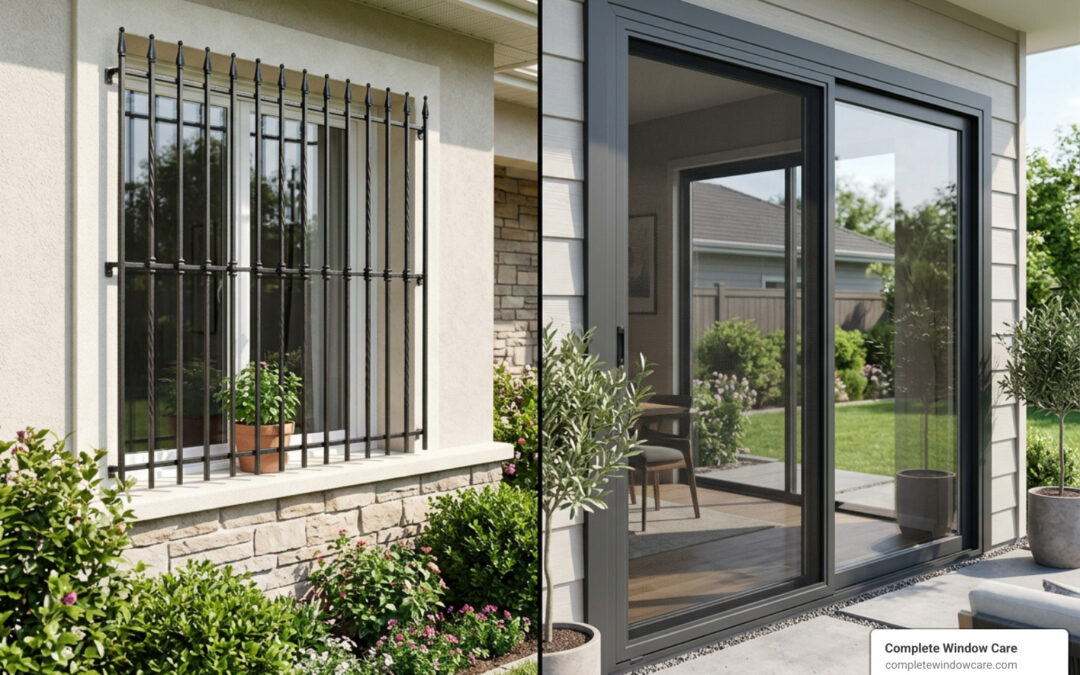
Understanding the Metal Mesh Sliding Door: Key Benefits and Security Features
Standard fiberglass patio screens do a decent job keeping flies out, but they offer virtually zero resistance against an excited dog, a curious raccoon, or an intruder testing your patio entrance. Upgrading to a heavy-duty metal mesh screen shifts the dynamic entirely. Instead of fragile strands held together by thin vinyl spline, high-tensile woven metal creates a structural barrier across your doorway.
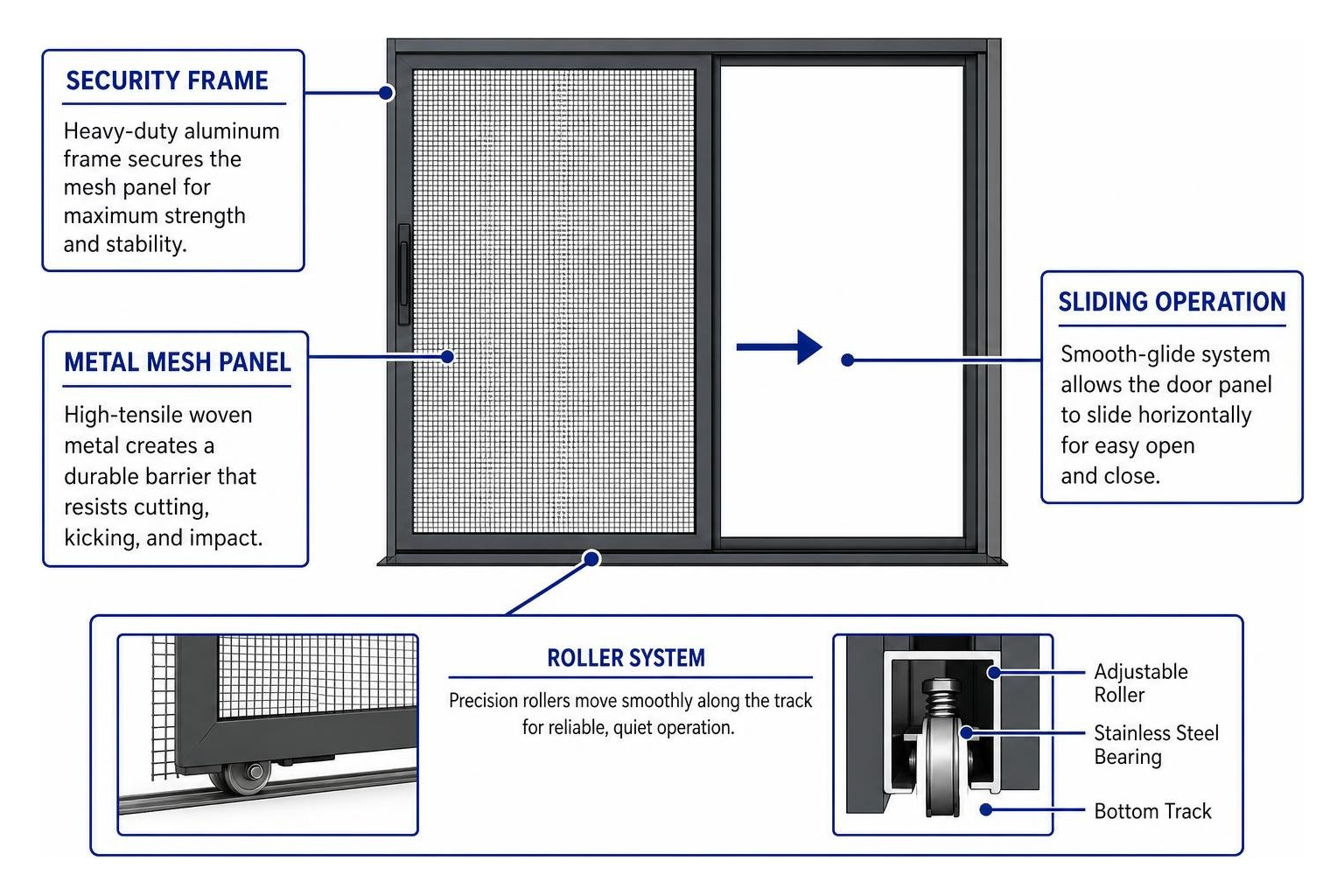
When homeowners begin comparing sliding door screen options, they often find that woven metal assemblies solve multiple problems at once:
- Forced Entry Resistance: High-strength wire stands up to knife attacks, crowbar prying, and heavy kicking without tearing out of the frame.
- Blunt Impact Protection: High-tensile weaves absorb and dissipate kinetic energy from airborne debris, sports equipment, and running pets.
- Continuous Airflow: Even with robust physical defense, natural air circulates freely to keep indoor spaces cool during warm afternoons.
- UV and Solar Heat Reduction: Denser woven wire blocks a portion of direct solar radiation, moderating interior room temperatures.
- Modern Visual Appeal: Crisp powder-coated frames integrate seamlessly into modern architectural sightlines without creating an institutional look.
Impact Resistance and Intrusion Protection
Physical security depends on tensile yield strength. Traditional insect screens rip open under modest pressure, but security-grade stainless steel wire mesh resists slicing tools, punctures, and blunt-force impacts.
When combined with deep clamping channels and multi-point mortise locking mechanisms, these doors resist forced entry attempts that would destroy conventional screen assemblies. The metal surface distributes direct impact energy outward to the reinforced frame and building rough opening, preventing localized blowout.
Natural Ventilation, Solar Shading, and Insect Exclusion
Security is only half the equation. You still want fresh air without inviting mosquitoes, moths, and gnats inside. Security woven meshes feature precision apertures engineered to exclude pests while maintaining natural cross-ventilation.
Architectural woven metal can also achieve solar heat gain coefficients (SHGC) that soften harsh glare and reduce radiant heat load. Blocking excessive solar heat before it passes through your glass sliding panels lowers cooling strain on hot sunny days.
Types of Metal Mesh and Technical Specifications
Selecting the right mesh material ensures your door lasts for decades without corroding, sagging, or degrading under UV exposure.
| Mesh Type / Grade | Thickness / Wire Gauge | Free Airflow / Open Area | Corrosion Resistance Level | Ideal Application |
|---|---|---|---|---|
| 316 Marine-Grade Stainless Steel | .028 in (0.71 mm) to .035 in | 40% – 45% | Superior (Resists salt spray & chemical exposure) | Coastal climates, high-humidity zones, high-security builds |
| 304 Structural Stainless Steel | .023 in (0.58 mm) to .028 in | 42% – 48% | High (Ideal for non-coastal inland regions) | Residential patio security, golf-course homes, pet protection |
| 201 Commercial Stainless Steel | .020 in to .023 in | 45% – 52% | Moderate (Best for sheltered interior or dry climates) | Budget-conscious builds, light commercial interior partitions |
| Architectural Rigid Mesh (e.g., Lago/Sambesi/Tigris) | 3.5 mm to 7.0 mm (fabric thickness) | 42% – 65% | Exceptional (Heavy-duty architectural alloy) | Commercial roll-up closures, parking garages, industrial storefronts |
Stainless Steel Weaves and Mesh Count Specifications
A standard security sliding panel utilizes a balanced 12 x 12 mesh count (12 vertical and 12 horizontal wires per square inch). This specific density delivers an optimal balance between airflow, insect filtration, and blunt-force shear resistance.
When you look into choosing a metal screen door, mesh count is a primary factor. Weaker weaves (such as 10 x 10 or wide-gap wire) might allow small biting insects through, while overly dense configurations choke airflow and obscure outdoor sightlines.
Selecting the Right Metal Mesh Sliding Door Wire Diameter and Finish
Wire diameter dictates structural rigidity:
- .023 Inch Diameter: The residential standard. It provides dependable impact resistance against domestic accidents, pet collisions, and accidental punctures while keeping panel weight manageable.
- .028 Inch Diameter: The heavy-duty security gauge. It delivers elevated defense against aggressive intrusion attempts and high-velocity projectiles.
Finish is equally vital. A semi-gloss or matte black powder-coated finish drastically improves optical clarity compared to raw mill-finish silver metal. The black coating absorbs ambient sunlight rather than reflecting glare into your eyes, creating a subtle tint effect from the outside while keeping your outward view crisp and unobstructed.
Comparing Metal Mesh Doors to Traditional Screens and Security Bars
Homeowners seeking upgraded protection often debate between lightweight insect screens, bulky wrought iron bars, or durable screen doors fitted with stainless steel wire.
Durability and Pet Resistance vs. Standard Fiberglass Screens
Standard vinyl and fiberglass screens fail quickly against pet claws. Cats can slice through mesh within seconds, and large dogs can pop screens right out of their thin tracks during energetic backyard sprints.
Specialized pet proof screens solve this challenge. Rigid stainless wire stands up to persistent scratching and body impacts. Because the mesh is mechanically anchored rather than held by flexible rubber spline, the fabric remains flat, taut, and securely locked in the frame.
Architectural Aesthetics vs. Fixed Wrought Iron Security Bars
Fixed wrought iron bars offer solid security, but they introduce serious drawbacks:
- Institutional Appearance: Bars can make a home feel enclosed or industrial.
- Fire Egress Hazards: Fixed exterior grilles can block emergency exit pathways unless fitted with expensive, regularly serviced quick-release latches.
- Maintenance Headaches: Painted wrought iron rusts readily at joints and needs periodic scraping, priming, and repainting.
In contrast, high-tensile metal mesh sliding doors maintain a clean, modern aesthetic. They slide open effortlessly for code-compliant egress and deliver strong break-in resistance without the heavy, closed-in look of iron bars.
Installation, Framing Systems, and Motorization Options
A heavy-duty mesh screen panel is only as strong as its surrounding frame and hardware. High-tensile wire cannot be pressed into standard lightweight screen extrusions with a hand roller; the structural tension would bow the frame immediately.
Structural Extrusions, Heavy-Duty Rollers, and Track Alignment
Proper installations rely on architectural-grade 6060-T6 or 6063-T5 extruded aluminum frames. These heavy-gauge extrusions use mechanical corner stakes and high-pressure retention clamping channels to grip the perimeter wire firmly.
Because high-gauge stainless mesh assemblies weigh substantially more than standard fiberglass screens:
- Tandem Steel or Delrin Rollers: Heavy-duty, ball-bearing roller assemblies are required to prevent premature flat-spotting and maintain a smooth glide.
- Precision Track Alignment: Upper and lower guide tracks must sit plumb and level to stop panel racking and roller binding.
- Anti-Lift Security Blocks: Integrated top blocks prevent intruders from simply lifting the door out of its bottom track.
Automating a Metal Mesh Sliding Door with Modern Safety Sensors
For large architectural glass walls, commercial entries, or accessible residential layouts, sliding and roll-up metal mesh screens can be fully automated using motorized drive assemblies.
- Drive Motors: Compact tube motors mounted inside the overhead roller housing handle low-to-moderate cycle applications, while external industrial motor drives support continuous, high-frequency operations.
- Safety Light Curtains and Photo Eyes: Optical sensors cast infrared beams across the door threshold. If a pet, child, or object crosses the path while the door is closing, the motor reverses instantly to avoid injury or equipment damage.
- Access Integrations: Automated doors easily connect to smart-home apps, wall switches, key fobs, or hardwired access keypads.
Maintenance, Cleaning, and Repair Considerations
Metal mesh sliding doors require very little day-to-day upkeep, but basic preventive care keeps them gliding quietly and looking pristine for years.
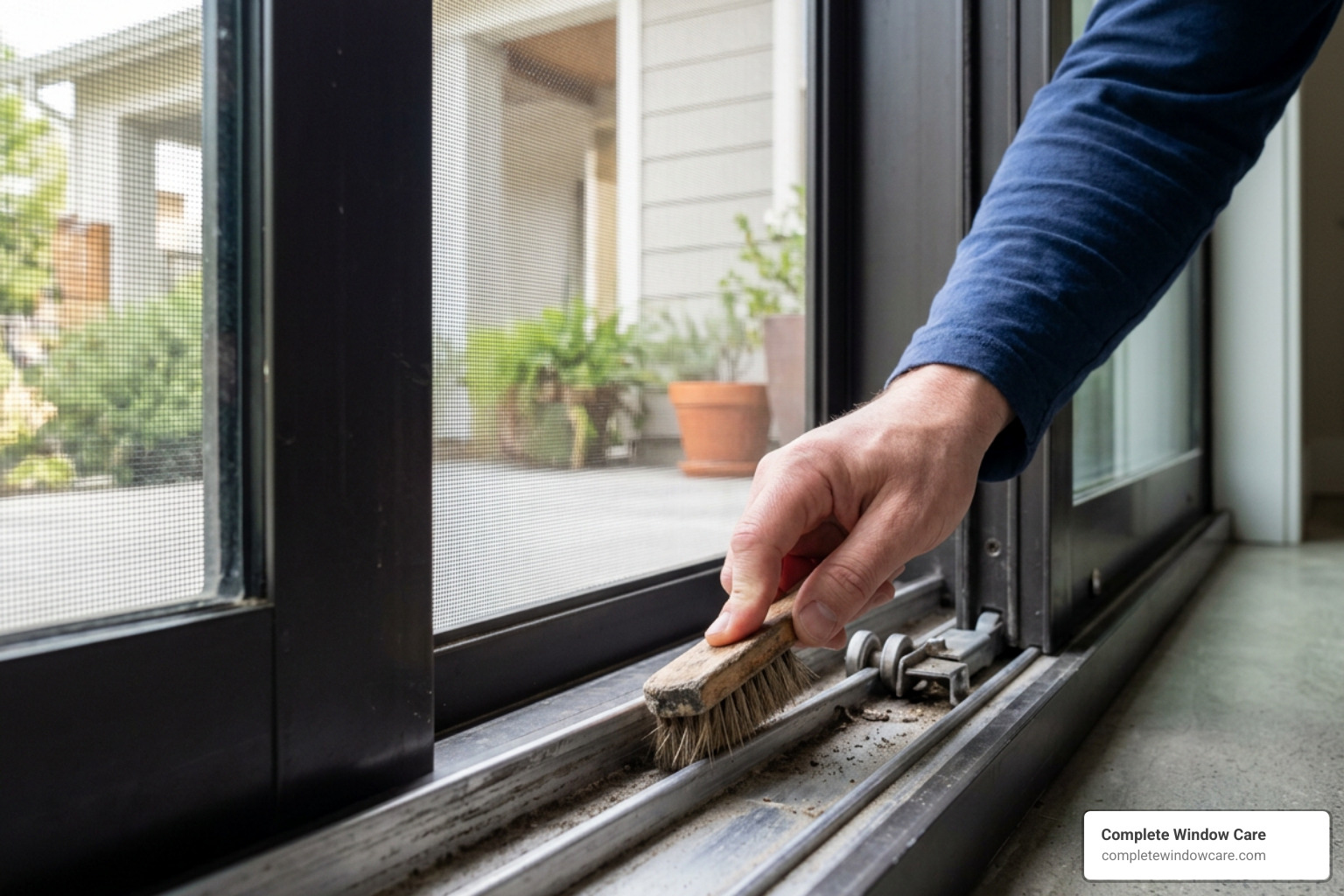
Following our ultimate screen door maintenance guide helps you prevent common wear-and-tear issues before they start.
Preventing Galvanic Corrosion and Lubricating Sliding Tracks
When stainless steel wire connects directly with aluminum frames in moist environments, galvanic corrosion can form if the metals are not properly isolated. Premium doors use non-conductive PVC isolation barriers, powder coatings, and stainless steel fasteners to protect frame integrity.
To keep tracks moving effortlessly:
- Vacuum Bottom Channels: Clear loose dirt, gravel, pet hair, and pine needles from the bottom track every few months.
- Wash the Mesh Surface: Wipe the wire surface with a soft microfiber cloth, warm water, and a mild, pH-neutral car wash soap to remove airborne grime. Avoid harsh acids, abrasive scouring pads, or bleach.
- Use Dry Silicone Lubricant: Spray bottom track rails and roller bearings with dry silicone spray. Never use thick petroleum grease or WD-40, which attract dirt and turn into sticky sludge.
Restoring Damaged Mesh vs. Full Frame Replacement
If a door binds or stops rolling smoothly, you rarely need to scrap the entire system. In most cases, targeted repairs restore complete functionality:
- Roller Adjustments and Replacements: Worn wheel bearings can be quickly swapped out for fresh, sealed stainless steel or precision Delrin units.
- Track Re-alignment: If settlement or heavy use throws the frame out of square, adjusting the top and bottom tension screws brings the panel back into plumb.
- Mesh Restretching and Retensioning: If an extreme impact shifts the wire mesh within the clamping jaws, certified technicians can dismount the retention bead, realign the mesh, and re-clamp the panel.
Understanding how to repair your screen door helps you extend the working life of your existing hardware, avoiding the cost of a full frame replacement whenever simple component restoration will do the job.
Frequently Asked Questions About Metal Mesh Sliding Doors
Can high-tensile metal mesh stop flying objects like golf balls and rocks?
Yes. High-tensile stainless steel mesh (.023 to .028 wire diameter) easily absorbs and deflects stray golf balls, rocks kicked up by lawnmowers, and windblown branches. The interlocking weave dissipates kinetic force across the entire face of the screen rather than concentrating impact energy at a single breaking point.
Does the black powder-coated finish reduce outward visibility?
Black powder coating actually improves your outward view compared to bright silver mill-finish metal. Shiny raw wire reflects sunlight back toward your eyes, creating glare and haze. A dark matte or semi-gloss black finish absorbs ambient daylight, allowing your eyes to focus straight through the apertures to the scenery beyond.
What is the typical price range for a metal mesh sliding door system?
Pricing depends on overall dimensions, stainless steel wire grade (304 vs. marine-grade 316), heavy-duty frame profile thickness, custom locksets, and whether the installation uses manual hardware or an automated motor drive. Basic off-the-shelf steel mesh screen replacements sit at the entry-level price tier, while custom heavy-gauge architectural security assemblies with multi-point locking mechanisms represent a larger long-term investment.
Conclusion
A metal mesh sliding door gives you the best of both worlds: fresh, natural airflow and solid physical protection against intruders, pet damage, and stray flying debris. By pairing high-tensile stainless steel wire with heavy-duty extruded aluminum framing, you can enjoy wide-open patio views, lower cooling demands, and lasting peace of mind.
At Complete Window Care, we believe in practical, cost-effective solutions for your home. Whenever possible, we focus on repairing, realigning, and restoring existing patio tracks and screen assemblies before recommending full replacements. Whether you need your sliding tracks tuned up, high-grade rollers installed, or a tough screen system fitted to your patio, our team is here to help.
For help with a metal mesh sliding door installation in Colorado Springs or the Pikes Peak region, turn to Complete Window Care. Our team can assess your sliding door, recommend practical screen and weather-protection solutions, and help improve comfort, airflow, and long-term performance. Contact Complete Window Care to discuss your project and request service.