
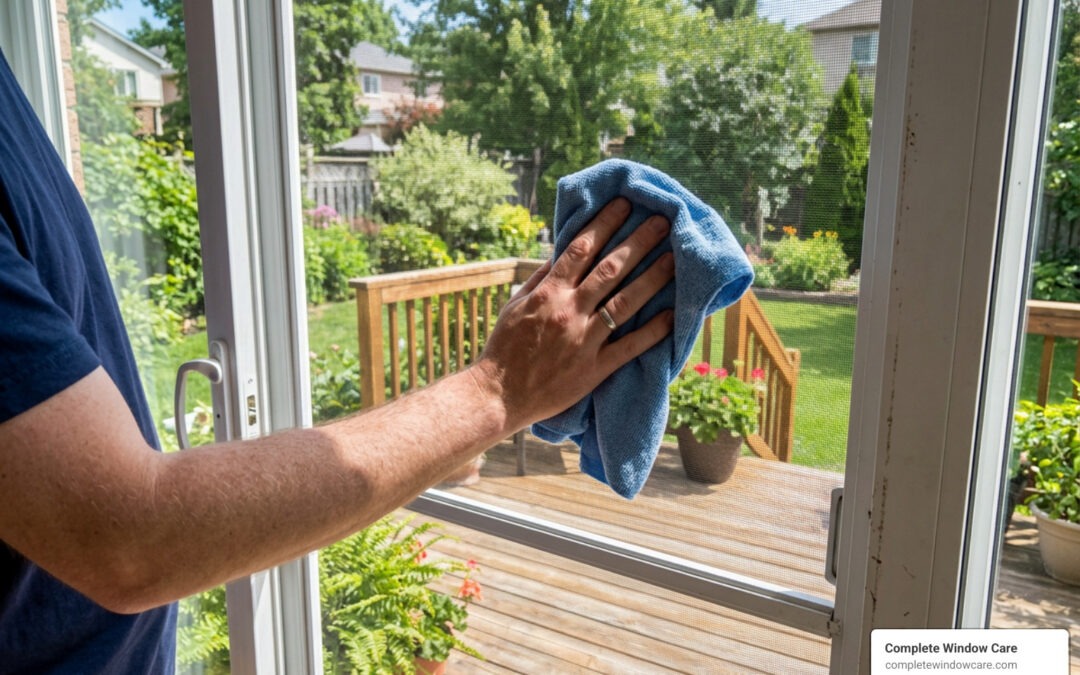
Why Screen Door Maintenance Is the Easiest Way to Avoid Costly Repairs
Screen door maintenance done regularly is the single best way to keep your doors sliding smoothly, your screens intact, and bugs outside where they belong. Here’s a quick overview of what good maintenance looks like:
Quick-reference screen door maintenance checklist:
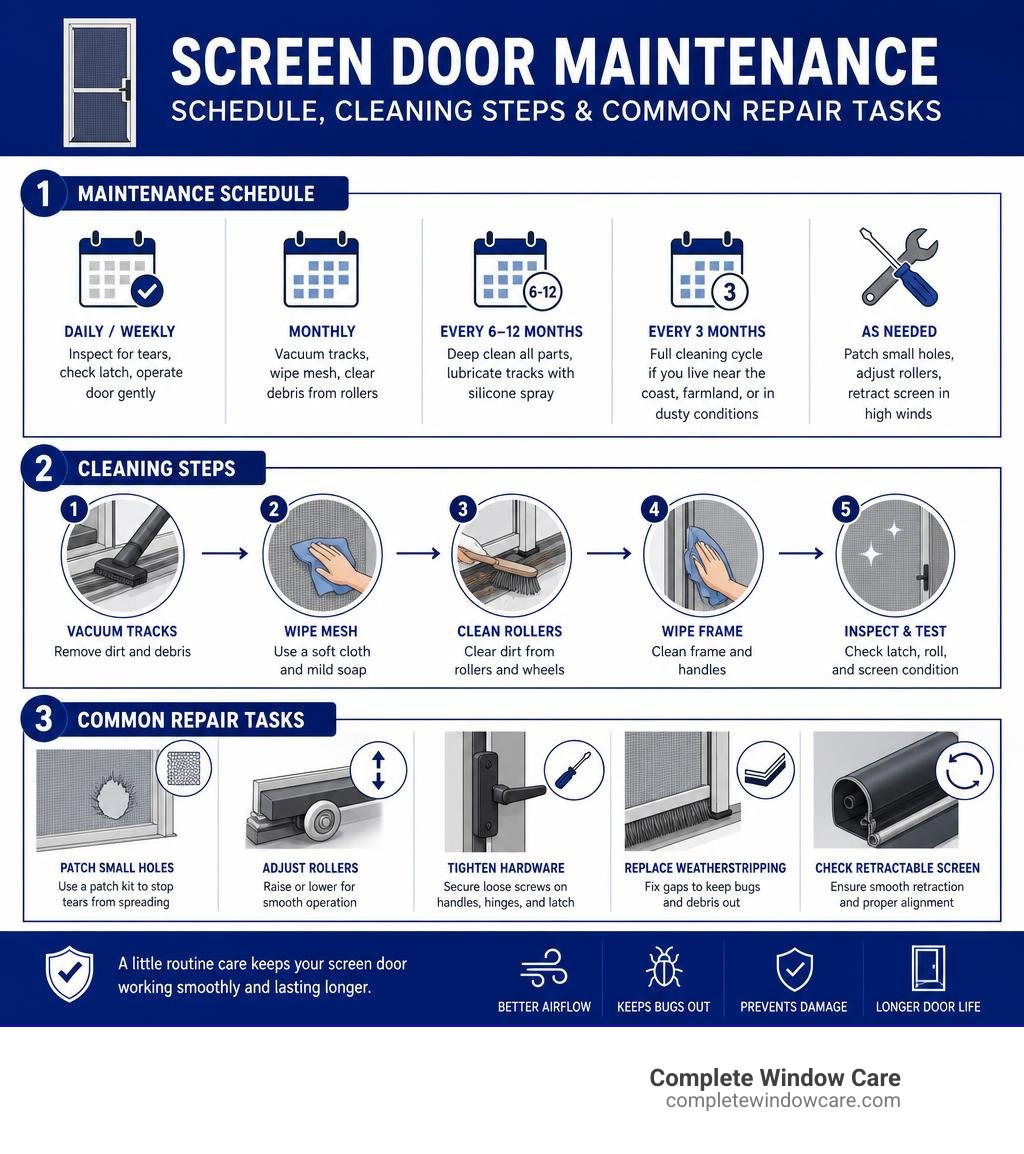
| Frequency | Task |
|---|---|
| Daily/Weekly | Inspect for tears, check latch, operate door gently |
| Monthly | Vacuum tracks, wipe mesh, clear debris from rollers |
| Every 6-12 months | Deep clean all parts, lubricate tracks with silicone spray |
| Every 3 months | Full cleaning cycle if you live near the coast, farmland, or in dusty conditions |
| As needed | Patch small holes, adjust rollers, retract screen in high winds |
Your screen door works hard every single day. It keeps insects out, lets fresh air in, and takes a beating from pets, weather, and everyday use. But most homeowners don’t think about it until something goes wrong — a stuck door, a torn mesh, or a screen that won’t retract.
The good news? Most screen door problems are completely preventable. A little routine care goes a long way. In fact, one simple rule sums it up well: a little cleaning once a month will prevent a major cleaning project down the road.
This guide covers everything — cleaning, lubricating, fixing common problems, and knowing when to call in a pro.
I’m Michael Smith, owner of Complete Window Care and a certified AAMA Installation Masters instructor with over 18 years of hands-on experience in screen door maintenance and window and door service across Colorado Springs and the Front Range. I’ll walk you through exactly what works — no fluff, no unnecessary product recommendations — just straightforward advice to keep your screen doors in top shape.
Essential Screen Door Maintenance Schedules and Benefits

Whether you have a traditional sliding door or a modern retractable model, consistent care is the secret to extending its lifespan. Many homeowners ask us why regular maintenance is so critical, particularly for retractable screen doors. The answer lies in their delicate engineering.
Unlike standard sliding screens, retractable models rely on internal spring tension, precise track alignment, and a rolled mesh cartridge. If dirt, pet hair, or grit builds up in the tracks, the retraction mechanism faces resistance. This extra friction can cause the mesh to crease, tear, or completely derail, eventually burning out the internal spring.
To make matters worse, neglecting this care can cost you financially. For many high-end brands, following manufacturer-specified routine maintenance guidelines is a strict requirement to keep your product warranty valid.
By committing to a few simple habits, you can keep your screens operating flawlessly. Let’s look at how we can split these tasks into daily habits and seasonal routines.
Daily and Weekly Habits to Prevent Damage
Developing simple daily habits can prevent 90% of screen door problems before they start. It all begins with how you handle the door.
- Operate with a gentle touch: Never slam a sliding screen or force a retractable screen. For retractable doors, keep your hand level with the handle and avoid applying upward, downward, or outward pressure.
- Run quick visual checks: Take just a moment to look for small tears, loose spline, or debris sitting in the bottom track. Catching a tiny tear early makes it much easier to patch before it ruins the entire mesh.
- Train your pets: Keep dogs and cats from clawing or pushing against the screen. If you have active pets, we highly recommend upgrading to a heavy-duty pet mesh.
- Use visual safety decals: To prevent distracted family members or guests from accidentally walking straight through a crystal-clear screen, apply a small decorative decal at eye level.
Monthly and Seasonal Cleaning Schedules
While daily habits protect against physical damage, a structured schedule defends against environmental wear. We recommend performing a comprehensive track cleaning and roller inspection every 6 to 12 months to stop your sliding screen door from sticking.
However, your local environment plays a massive role in how often you should clean. Here in Colorado Springs and the surrounding Pikes Peak Region, we experience dry, windy conditions that kick up a lot of dust, dirt, and agricultural debris. Because of this, standard guidelines don’t always cut it.
If you live in a particularly dusty, windy, or agricultural area, you should step up your maintenance schedule. We advise cleaning and checking your screen doors at least every three months to prevent gritty mountain dust from grinding down your rollers.
Keeping up with these seasonal intervals is a core part of maintaining your screens for year-round performance.
Step-by-Step Cleaning and Lubrication Guide
When it’s time for a deep clean, taking a gentle, systematic approach will ensure you don’t accidentally damage the screen mesh or warp the frame.
Before we dive into the steps, let’s look at how different screen materials react to various cleaning methods:
| Screen Material | Vacuum Brush | Mild Soap & Water | High-Pressure Hose | Harsh Chemicals (Bleach/Ammonia) |
|---|---|---|---|---|
| Fiberglass | Yes (Gentle) | Yes | No (Can stretch) | No (Degrades fibers) |
| Aluminum/Metal | Yes | Yes | No (Can dent/kink) | No (Causes corrosion) |
| Polyester/Pet Mesh | Yes | Yes | No | No |
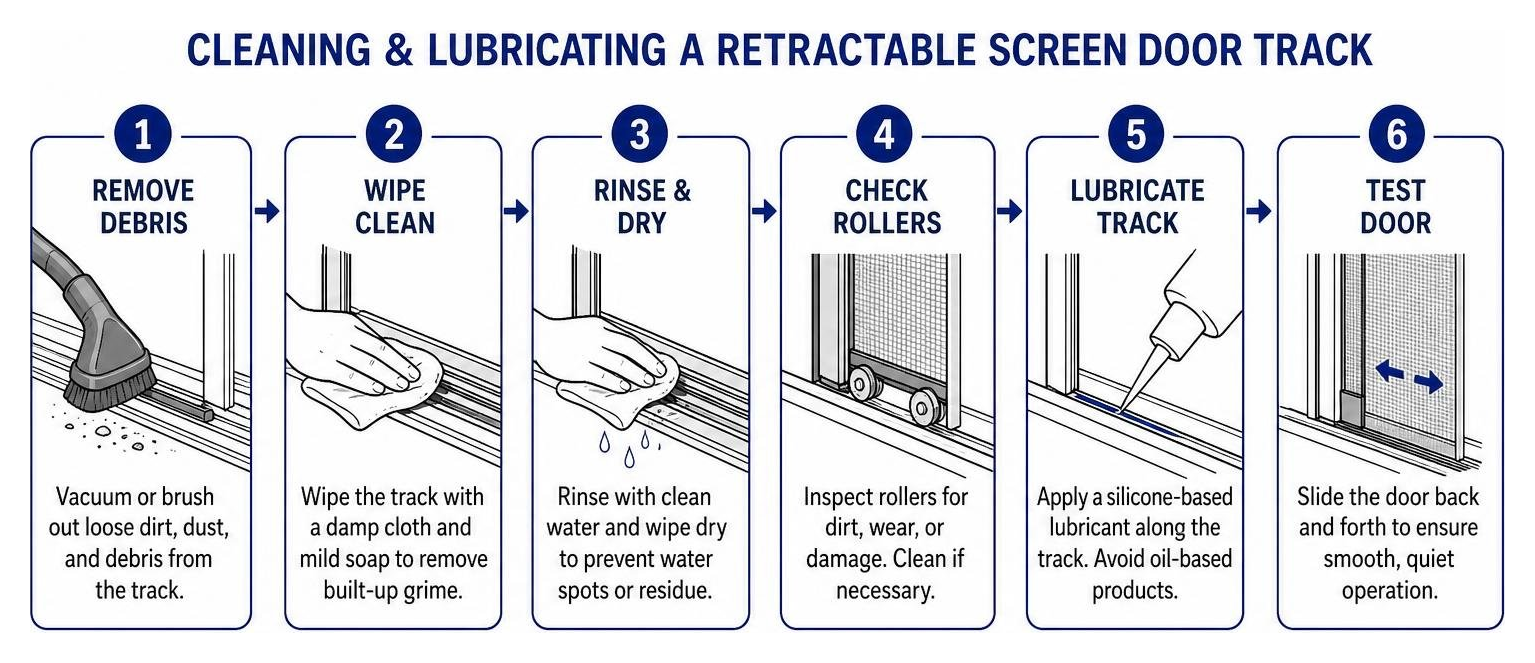
To help you clean efficiently, follow this step-by-step track cleaning sequence:
How to Clean Screen Mesh Safely
Screen mesh is incredibly functional, but it can be delicate. To clean it without stretching, tearing, or leaving behind piles of lint, follow this process:
- Remove loose dust first: Gently run a vacuum cleaner equipped with a soft upholstery brush attachment over the mesh. This lifts away pollen, pet hair, and loose dust.
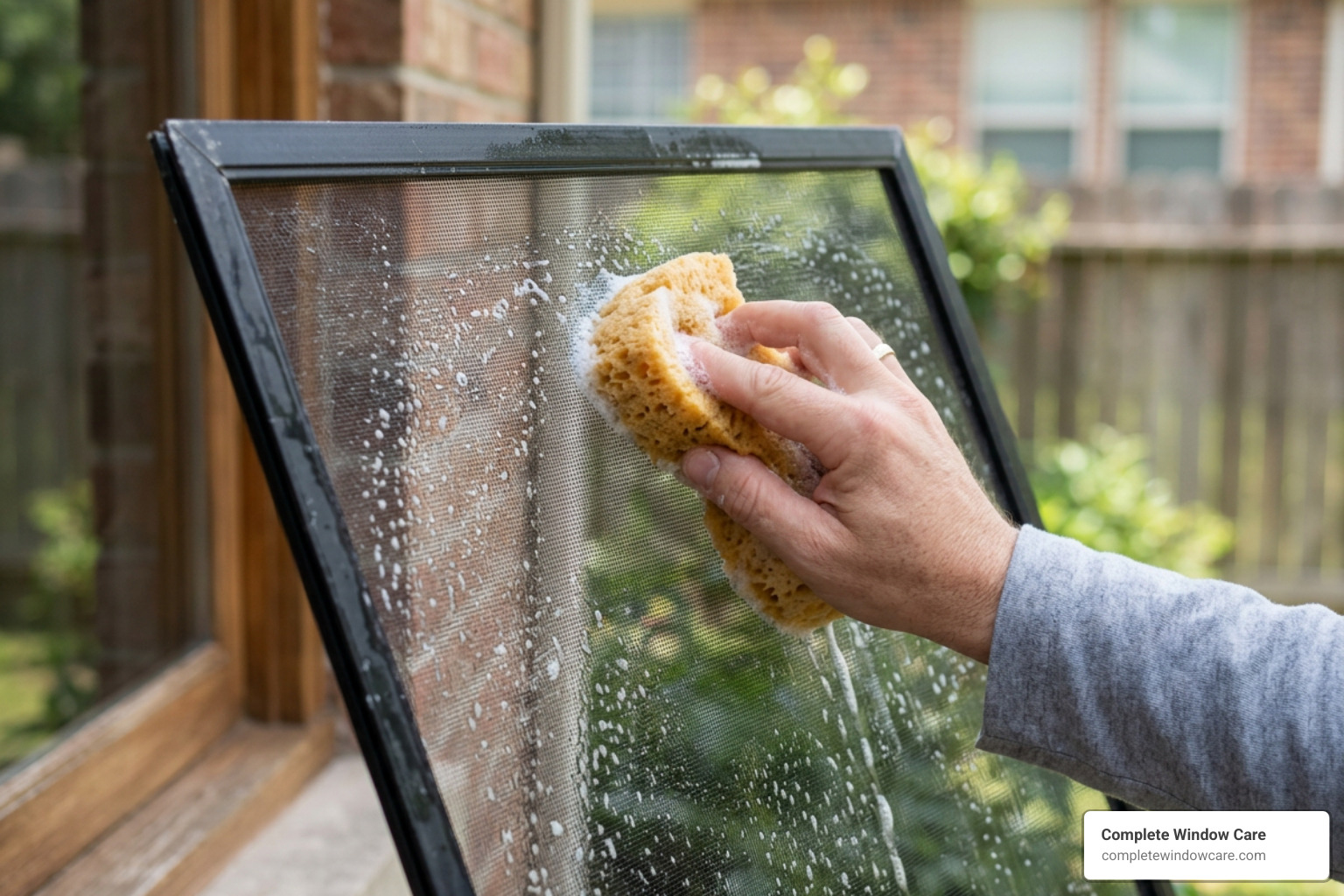
- Wash gently: Mix a few drops of mild dish soap or white vinegar with warm water. Using a soft sponge or a clean cotton cloth, gently wipe down the mesh from top to bottom. Avoid scrubbing aggressively, as this can stretch fiberglass or warp aluminum mesh.
- Avoid microfiber on screen fabric: While microfiber is great for countertops, it generates static electricity on screen fabrics, which can actually cause dust to stick more aggressively. Use a soft cotton cloth instead.
- Rinse and dry completely: Wipe away soapy residue with a damp cloth or a gentle spray from a garden hose. If you have a retractable screen, always let the mesh dry completely before rolling it back into its housing. Retracting a damp screen creates a dark, humid environment that invites mold, mildew, and rot.
Taking these precautions is one of the best tips for avoiding damage to window screens and doors alike.
Cleaning Aluminum Frames and Housings
Most modern screen door frames and retractable housings are made from extruded aluminum with a powder-coated or anodized finish. While highly durable and rust-resistant, these finishes can be scratched by abrasive cleaners.
To clean the frame, simply wipe it down with a soft, damp cloth and a mild detergent solution. Never use harsh chemicals like bleach, ammonia, or alcohol-based solvents, as they can cause rapid discoloration, finish deterioration, and metal corrosion.
Once the frame is clean and dry, you can apply a thin coat of high-quality automotive car wax or aluminum polish to the exterior housing. This extra step enhances the shine and provides a protective barrier against Colorado’s intense UV rays and winter snow. If you are dealing with older or damaged frames, we have put together a guide on fixing aluminum frames to help you restore them without a headache.
Choosing the Right Lubricant for Screen Door Maintenance
Lubrication is where many well-intentioned DIYers make a critical mistake that can ruin their doors.
- What to use: Always use a high-quality, non-oil-based silicone spray or a dry Teflon lubricant. These specialty sprays create a slick, friction-reducing barrier without leaving a wet residue.
- What to avoid at all costs: Never use oil-based lubricants, grease, petroleum jelly, or standard WD-40 on your screen door tracks or rollers.
Oil-based products are sticky. In our dry, breezy Colorado climate, spraying oil in your tracks is essentially creating a magnet for dirt, pet hair, and outdoor grit. This mixture quickly turns into a thick, abrasive paste that clogs the rollers, grinds down the track, and can permanently seize up a retractable screen’s spring mechanism.
Troubleshooting Common Issues: Sticking, Derailing, and Tears
Even with regular cleaning, screen doors can run into operational hiccups over time. Let’s look at how to tackle the three most common issues: sticking, derailing, and tears.
Fixing a Sticky or Stubborn Sliding Screen
If your sliding screen door is fighting back every time you try to open it, the issue is almost always located in the tracks or the rollers.
First, look closely at the bottom track. If it’s filled with packed dirt, pet hair, or pine needles, vacuum it out thoroughly using a crevice tool. Next, inspect the track for any bent sections. If you spot a dented or warped channel, you can gently straighten it using a pair of pliers or by placing a block of wood over the spot and tapping it lightly with a hammer.
If the track is clean and straight but the door still drags, you likely need to adjust the roller tension. Sliding screen doors have small spring-loaded wheels at the top and bottom. Locate the small adjustment screws, which are usually found on the bottom corners of the door frame.
Using a screwdriver, turn these screws clockwise to raise the door or counterclockwise to lower it. Adjust them until the door sits perfectly level and glides smoothly along the track. For a deeper dive into adjusting these mechanisms, you can consult our detailed sliding glass door screens guide.
What to Do When Mesh Comes Off the Track
It’s a common headache: a gust of wind catches the screen, or a pet bumps into it, and suddenly the mesh has derailed from the track.
If you have a high-quality retractable screen door, you’re in luck. Many modern retractable screens are designed with a safety release feature that allows the mesh to pop out under pressure to prevent tearing. To reset it, you usually don’t need any tools at all. Simply slide the door slowly and fully open into its housing, then pull it closed again. This action automatically resets the mesh back into its guide tracks.
For traditional sliding screen doors, manual intervention is required. You will need to carefully guide the bottom edge of the screen back into the track channel. If the screen has popped out because the tension spline (the rubber cord holding the mesh to the frame) has pulled loose, you can gently press the spline back into its groove using a specialized spline rolling tool. For more detailed instructions, see our comprehensive walkthrough on how to repair your screen door.
Repairing Small Holes and Tears
A torn screen doesn’t always mean you need to buy a brand-new door. If you catch the damage early, you can perform quick, cost-effective repairs:
- Tiny holes (under 1/4 inch): Apply a tiny drop of clear nail polish or super glue directly over the hole. Let it dry completely. The adhesive binds the broken fibers together and prevents the hole from spreading.
- Medium tears (up to 1 inch): Use a self-adhesive screen repair patch. These mesh patches stick directly over the tear, providing a quick, functional fix that keeps bugs out.
- Large tears or ruined mesh: If a dog has clawed a massive hole through the center, patching won’t cut it. You will need to perform a full rescreening. This involves pulling out the old rubber spline, removing the damaged mesh, laying down a new sheet of fiberglass or aluminum screen, and rolling new spline into the frame groove with a rolling tool.
If you’re planning to tackle this yourself, check out our guide on fixing damaged screens to ensure a tight, professional-looking finish.
When to Call a Professional for Screen Repairs
While basic cleaning, lubricating, and minor patching are perfect DIY weekend projects, some screen door issues require specialized tools, training, and experience.
Professional vs. DIY Screen Door Maintenance
Knowing when to roll up your sleeves and when to call in the experts can save you a lot of time, frustration, and money.
DIY-friendly tasks:
- Vacuuming and washing tracks, frames, and mesh.
- Applying silicone lubricant to tracks.
- Patching tiny holes with clear nail polish or small adhesive patches.
- Adjusting basic roller tension screws.
When to call a professional:
- Warped or structurally damaged frames: If the metal frame of your door is severely bent, twisted, or cracked, it’s incredibly difficult to straighten without advanced equipment.
- Retractable spring tension issues: Retractable doors rely on highly tensioned internal spring cartridges. If the door loses its tension and refuses to retract, attempting to open the cartridge yourself can be dangerous and will likely void your warranty.
- Complete rescreening of large doors: Getting a large patio screen tight and wrinkle-free requires a steady hand. If the screen is loose, it will sag and blow out of the track at the first gust of wind.
- Custom sizes and specialized hardware: Sourcing exact replacement rollers, latches, or custom-sized mesh can be incredibly tricky for homeowners.
If you’re on the fence about whether to tackle a repair yourself, we’ve put together a thorough comparison of DIY vs. professional screen repair to help you weigh the time, cost, and quality differences.
Protecting Your Screen from High Winds and Winter Weather
Here in the Pikes Peak Region, our weather can change in the blink of an eye. Strong wind gusts coming off the mountains can act like a sail on extended screen doors, putting immense pressure on the frame and mesh.
To prevent wind damage, always retract or close your screen doors during severe windstorms. If you have a retractable screen, think of it like a patio umbrella — when the wind picks up, store it safely away in its protective housing.
Additionally, Colorado winters bring heavy snow and freezing ice. If you have removable sliding screen doors that you don’t plan to use during the cold months, take them off, clean them, and store them flat in a dry garage or basement. This protects the mesh from heavy snow loads and keeps the tracks clear of freezing water that can warp the metal. For more seasonal advice, read our tips on preventing screen tears during our unpredictable spring and winter transitions.
Frequently Asked Questions about Screen Doors
Why does my sliding screen door keep getting stuck?
A sticky sliding screen door is almost always caused by one of three things: accumulated dirt and pet hair clogging the tracks, worn-out or damaged roller wheels, or a misaligned frame. Start by thoroughly vacuuming the tracks and applying a silicone-based spray. If that doesn’t work, try adjusting the roller tension screws on the bottom corners of the door.
Can you replace the screen on a retractable screen door?
Yes, but the process is significantly more complex than rescreening a traditional sliding door. Because retractable screens rely on a spring-loaded cartridge and delicate tensioning systems, replacing the mesh usually requires disassembling the housing or replacing the inner mesh cartridge entirely. This is a task best left to professional service technicians to avoid damaging the internal spring mechanism.
How often should I clean the tracks of a retractable screen door?
For standard environments, we recommend a thorough cleaning and lubrication at least once a year. However, because Colorado Springs experiences high levels of dry wind, summer dust, and seasonal debris, we highly recommend cleaning your tracks every three months to ensure smooth, stress-free operation.
Conclusion
Taking care of your screen doors doesn’t have to be a daunting chore. By spending just a few minutes vacuuming the tracks once a month, applying a high-quality silicone lubricant once or twice a year, and handling your doors with care, you can enjoy smooth operation and fresh air for years to come.
At Complete Window Care, our philosophy is built on providing cost-effective repairs over full replacements. We serve homeowners across Colorado Springs, the Pikes Peak Region, and the surrounding areas, helping you save money while keeping your home comfortable and pest-free.
If you are dealing with a warped frame, a broken retractable mechanism, or a screen that’s seen better days, don’t sweat it. Reach out to us at Complete Window Care today, and let our experienced team handle the hard work for you!