
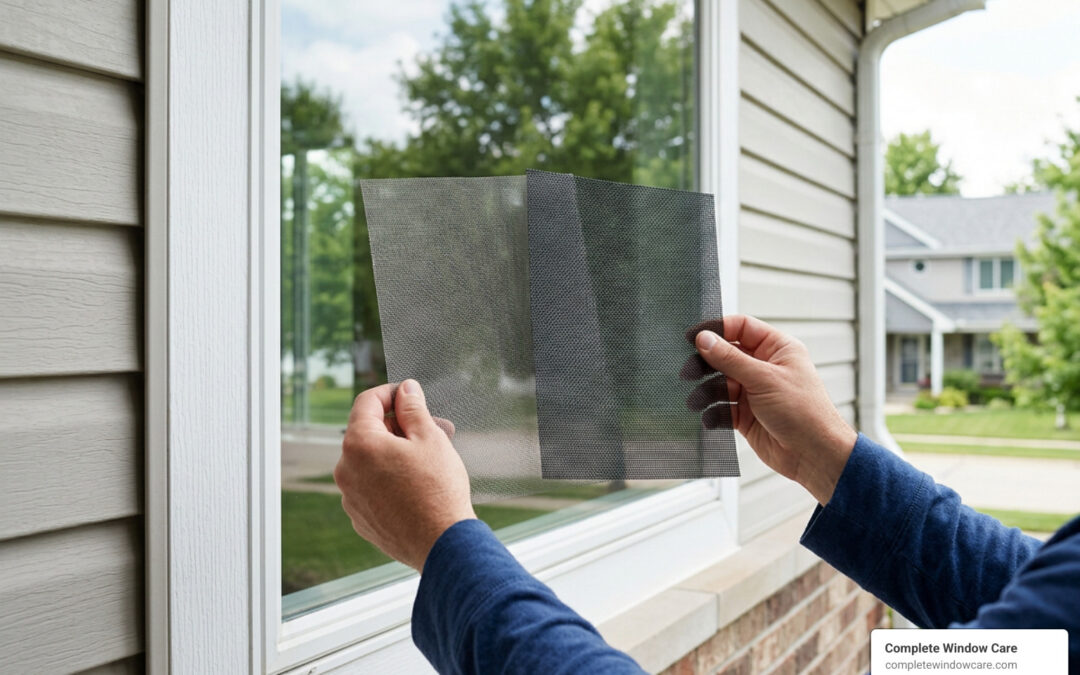
Choose the Right Window Screen Material Upgrade
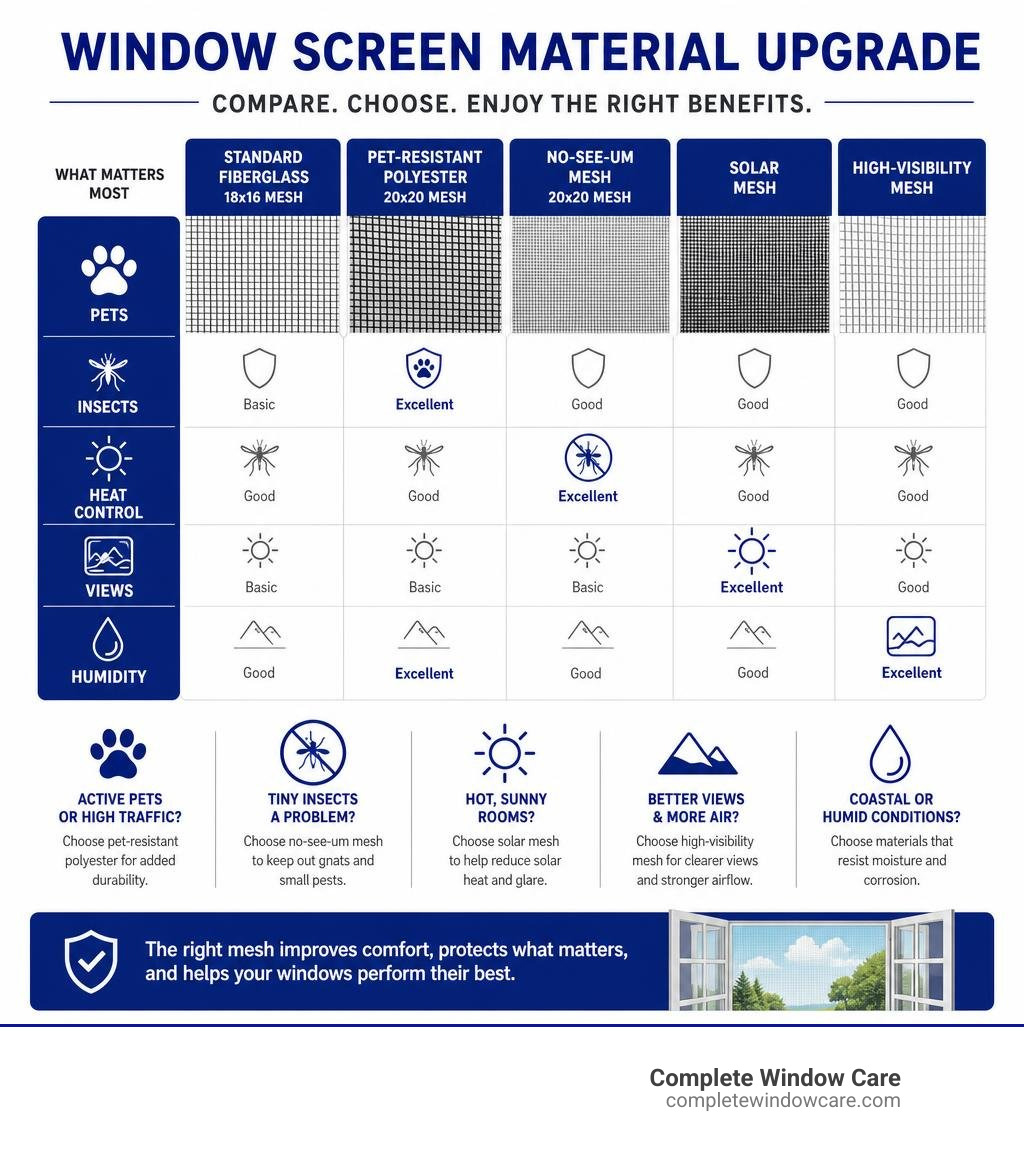
A window screen material upgrade should match the problem you need to solve. Choose standard fiberglass for everyday insect control, vinyl-coated polyester for pets and high-traffic doors, 20×20 no-see-um mesh for gnats and tiny insects, solar mesh for hot sunny windows, and high-visibility mesh when a clearer view and stronger airflow matter most.
A quick way to compare your options:
- Torn screens or active pets: Choose heavy-duty pet-resistant polyester.
- Hot, glare-prone rooms: Choose solar screen fabric. Some products can reduce solar heat and glare by up to 70% and block substantial UV exposure.
- Mosquitoes, gnats, or sand flies: Choose fine no-see-um mesh instead of the common 18×16 screen.
- Views and fresh air: Choose a less-visible mesh. Some high-visibility options improve airflow by up to 25% over standard fiberglass or aluminum.
- Coastal or humid conditions: Choose fiberglass, vinyl-coated polyester, or corrosion-resistant metal suited to salt exposure.
The right mesh can restore airflow, stop repeat tears, reduce sun-related fading, and help a room feel more comfortable without replacing the whole window. Standard screen is not always the best screen.
The Complete Window Care team brings more than 18 years of hands-on experience repairing and servicing windows and doors across Colorado Springs and the Front Range. Our AAMA Installation Masters Program certified expertise helps homeowners choose a practical window screen material upgrade that fixes the issue without pushing an unnecessary full replacement.
Comparing Common Window Screen Mesh Types and Properties
Selecting the right screen material involves balancing physical strength, outward visibility, ventilation dynamics, and your local environment. Most builder-grade window frames come fitted with basic screening designed purely for minimum insect protection. Over time, factors like sun exposure, wind pressure, and clawing show why screens can fail year after year.
For damaged frames, torn mesh, or screens that no longer sit securely in the opening, Complete Window Care offers local window screen repair in Colorado Springs that helps homeowners restore protection without replacing the entire window. Upgrading the mesh gives you control over light transmission, airflow performance, and overall lifespan.
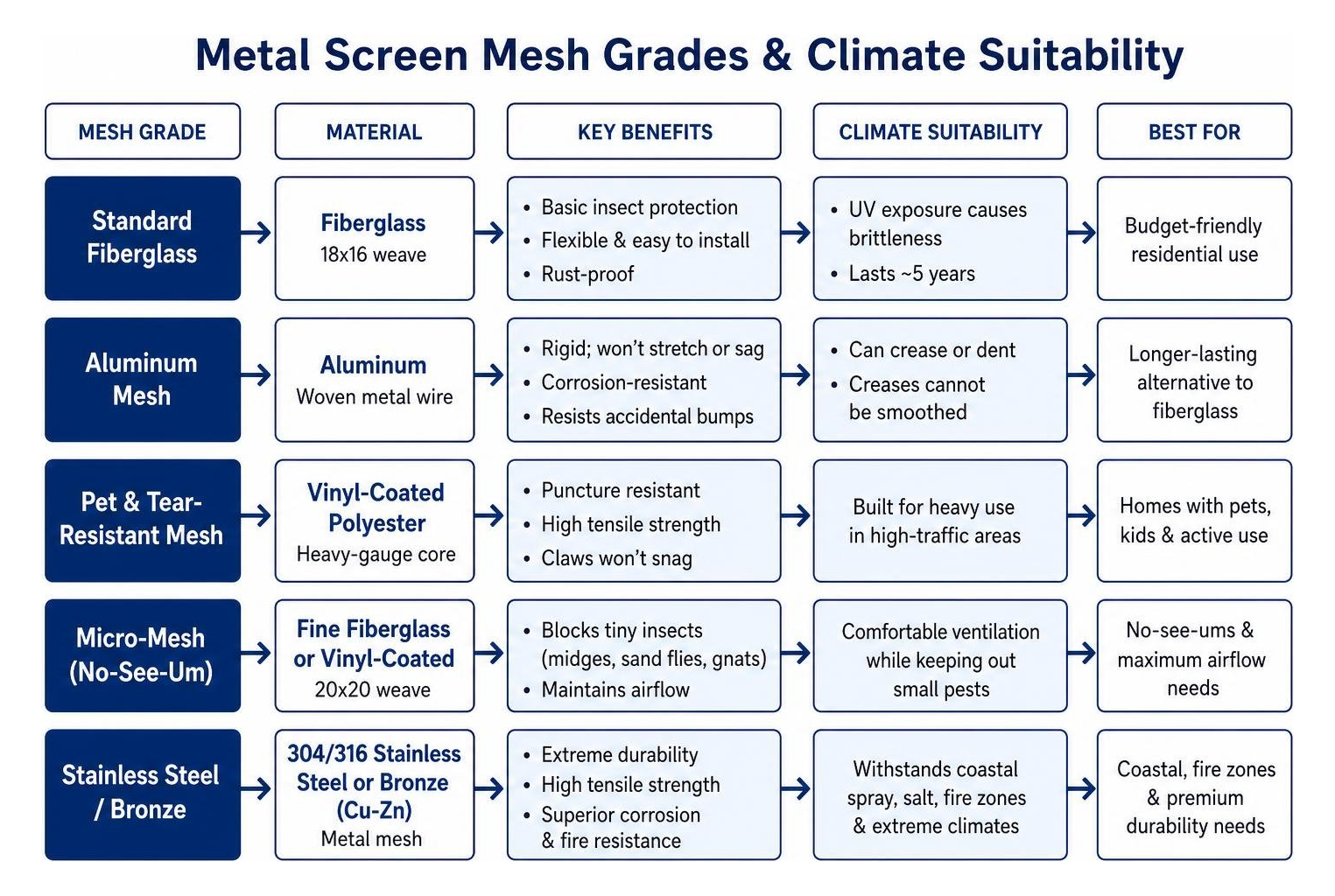
| Mesh Type | Primary Material | Durability Level | Airflow Performance | Relative Cost | Best Practical Application |
|---|---|---|---|---|---|
| Standard Fiberglass | Vinyl-Coated Glass Yarn | Moderate | Baseline (Standard) | Economical | Budget-conscious general insect barrier |
| Aluminum | Woven Aluminum Wire | High (Rigid) | Moderate | Moderate | Stable, non-sagging general utility |
| Pet & Heavy-Duty | Heavy Polyester / Vinyl | Maximum | Reduced (~10–15%) | Moderate to High | Patio sliders, ground-level pet zones |
| Micro-Mesh / No-See-Um | Dense Fiberglass | Moderate | Moderate | Moderate | Riverbeds, marshy areas, tiny biting pests |
| Solar Control | Heavy Coated Fiberglass | High | Moderate to Low | Premium | Sun-drenched rooms, south/west facades |
| High-Visibility (Clear) | Ultra-Fine Synthetic Yarn | Moderate | +20% to +25% Boost | Premium | Scenic mountain views, maximum airflow |
| Stainless Steel / Bronze | 304/316 Steel or Cu-Zn | Extreme | High | Specialty / High | Coastal spray, fire zones, premium durability |
Standard Fiberglass vs. Aluminum Mesh
Standard fiberglass remains the default choice across residential construction. Built with an 18×16 weave (18 horizontal strands by 16 vertical strands per square inch), it offers reliable basic insect protection without denting your budget. Fiberglass is flexible, easy to manipulate during DIY rescreening, and naturally rust-proof. However, prolonged UV exposure will cause standard fiberglass to become brittle over roughly 5 years, leading to tears and fraying.
Aluminum screening provides a rigid alternative made from woven metal wire. Unlike fiberglass, aluminum will not stretch or sag under tension. It is corrosion-resistant and withstands accidental bumps better than standard mesh. The tradeoff is installation forgiveness: aluminum can easily crease or dent if struck by branches or mishandled during spline rolling. Creased aluminum cannot be smoothed out and must be replaced. Homeowners can often catch small holes, tears, or creases early by watching for the top signs a window screen needs repair before pests find their way inside.
Heavy-Duty Pet and Tear-Resistant Mesh
For homes with energetic dogs, curious cats, or active toddlers, standard screens rarely survive intact. Heavy-duty pet screening solves this by utilizing a core of heavy-gauge polyester coated in exterior-grade vinyl.
This material is significantly heavier than standard fiberglass, boasting remarkable puncture resistance and tensile strength. Claws glide across the surface without snagging the strands, making pet proof screens useful through years of daily use. We routinely deploy specialized screen repair solutions for pet damage on sliding screen doors and ground-level windows where animals push against the frame to watch outdoor wildlife.
Micro-Mesh and No-See-Um Insect Screens
Standard 18×16 mesh stops typical flies and mosquitoes, but tiny pests such as midges, sand flies, and gnats easily squeeze through normal screen openings.
No-see-um screening uses an ultra-tight 20×20 weave density. By tightening the grid spacing, it creates an impenetrable barrier against the smallest biting insects while maintaining comfortable daytime airflow. Micro-mesh is manufactured using fine-gauge fiberglass or vinyl-coated threads to ensure that closing the mesh gaps doesn’t completely block your outdoor ventilation.
Corrosion-Resistant Metal Screens for Coastal and Extreme Climates
Harsh environmental conditions demand specialized metal alloys:
- 304 Grade Stainless Steel: A robust metal mesh offering high tensile strength, basic rust resistance, and superior fire endurance compared to synthetic options.
- 316 Marine-Grade Stainless Steel: Formulated with molybdenum, this alloy provides top-tier resistance to salt-spray oxidation, making it mandatory for coastal properties.
- Bronze and Copper Alloys: Comprising approximately 90% copper and 10% zinc, architectural bronze mesh resists salt corrosion naturally. Instead of rusting or turning green, bronze oxidizes into an elegant dark bronze patina over time.
Choosing the Right Window Screen Material Upgrade for Your Needs
Picking the right upgrade means aligning the screen material with your primary household challenge. Rather than treating all window openings the same, smart homeowners often mix and match screen types, installing heavy pet mesh on lower porch doors, solar fabrics on unshaded southern exposures, and high-clarity screening on north-facing living room windows. Tailoring materials across your property delivers targeted screen repair solutions while maximizing home comfort.
Solar Control Screens for Heat and UV Reduction
Unfiltered sunlight passing through window glass drives up interior temperatures and bleaches hardwood floors, rugs, and furniture. Solar screen fabrics absorb and dissipate thermal energy before it strikes the glass panes.
- Heat Reduction: High-performance fabrics block up to 65% to 70% of solar heat gain, significantly lowering cooling demands on your A/C equipment.
- UV Defense: Heavy-density weaves provide up to 75% to 90% UV blockage, protecting delicate fabrics and art from sun damage.
- Glare & Daytime Privacy: The dense exterior weave limits visibility into your home during daylight hours while maintaining clear outward vision.
- Fabric Construction: Vinyl-coated fiberglass fibers are designed to handle intense thermal loads without warping.
High-Visibility Mesh: A Premium Window Screen Material Upgrade
If your home overlooks scenic landscapes, standard mesh can feel like looking through a dark grid. High-visibility mesh, often called “invisible screen,” uses ultra-fine synthetic yarns woven into an optimized pattern that allows maximum light transmission.
Modern optical screens use advanced manufacturing and clear insect screening technology. These micro-yarns increase natural ventilation by 20% to 25% compared to standard fiberglass or aluminum screening. Integrated hydrophobic coatings also shed rainwater and prevent dust accumulation, keeping your view clear with minimal routine maintenance.
Severe Weather and Hail Protection
Seasonal storms, heavy wind gusts, and hail can shred lightweight window screening in minutes. Upgrading to high-tensile polyester core mesh or rigid metal screening provides the structural resilience needed to deflect windblown debris and hail strikes. After sudden Front Range storms, it helps to know how hail damage affects window screens so you can assess frame alignment and replace torn mesh with stronger, storm-resistant alternatives.
Cost Comparison for Every Window Screen Material Upgrade
When evaluating screen upgrades, balance upfront materials expenses against long-term durability:
- Standard Fiberglass: Lower upfront expense with a shorter replacement cycle under normal UV exposure.
- Aluminum Screening: Low-to-moderate initial cost with a long lifespan if protected from direct physical impacts.
- Pet-Resistant Polyester: Moderate investment that can reduce frequent pet-induced replacements.
- High-Visibility & Solar Fabrics: Moderate-to-premium material tier that can support energy savings, improved ventilation, and enhanced room aesthetics.
- Stainless Steel & Architectural Bronze: Premium investment grade that delivers multi-decade lifespan under extreme weather and coastal environments.
DIY Installation and Maintenance for Upgraded Screens
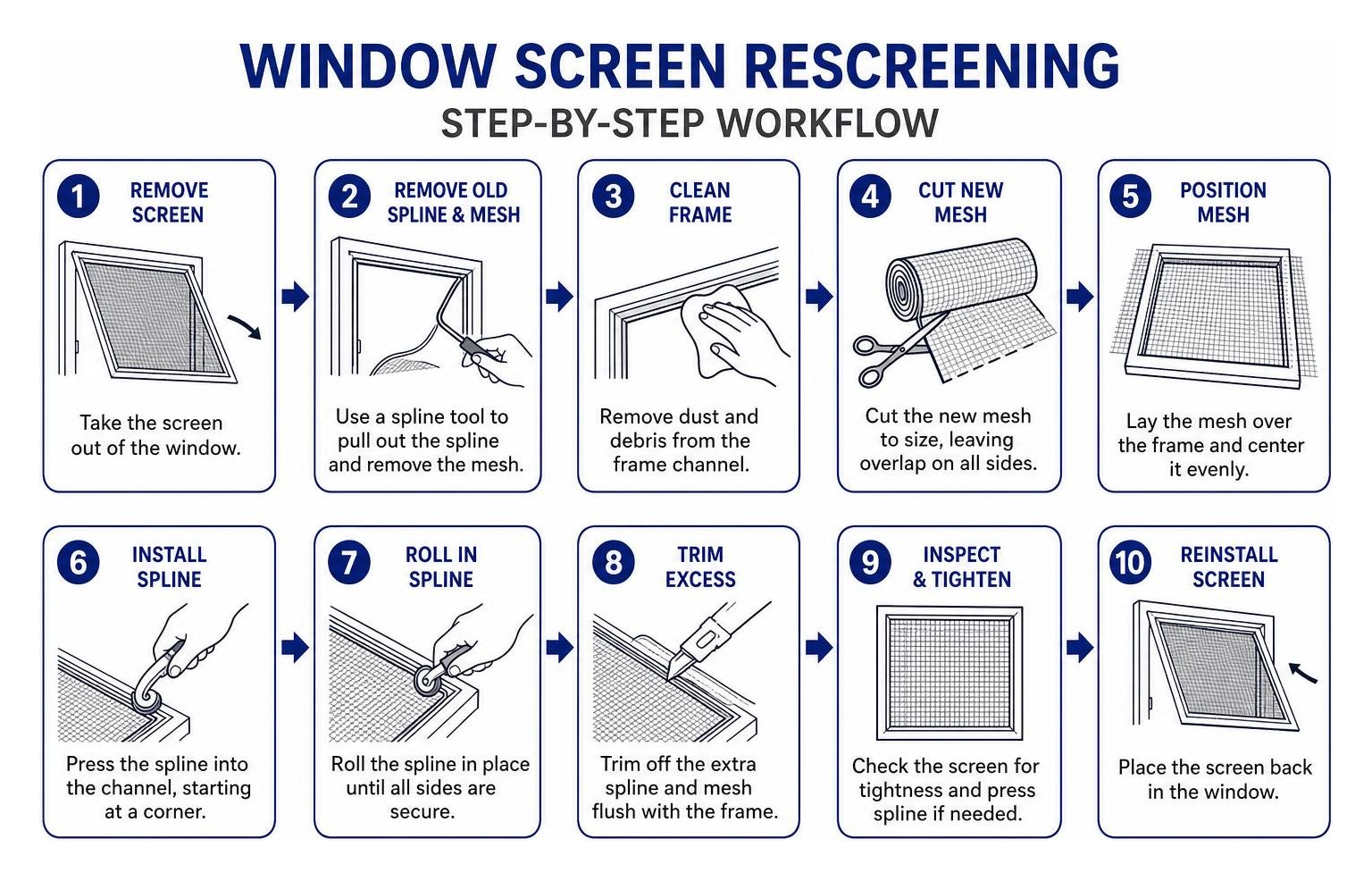
Upgrading your screens is a rewarding DIY project if you follow the right process. Basic window screen repair 101 can help you understand the parts, tools, and early warning signs before you pick up the spline roller.
For homeowners deciding between a simple rescreen and a full replacement, a step-by-step look at how to replace window screens explains where measurements, frame condition, and mesh selection affect the final result.
Sizing Spline and Measuring Mesh Correctly
A successful rescreening job depends on matching the spline thickness to the screen material and frame channel. Spline is the flexible vinyl cord that locks the mesh into the frame channel:
- Spline Gauge Selection: Thicker screen materials, like pet mesh or solar fabric, take up more space in the channel, requiring a spline one size smaller than standard.
- Measuring Mesh Count: Verify your mesh spacing by placing a 1-inch by 1-inch cutout template against the screen and counting the horizontal and vertical strands.
- Preventing Frame Bowing: Clamp the center of long frame sides lightly or maintain balanced outward tension to avoid the “hourglass” frame distortion caused by over-tightening spline. Mastering frame tension helps when repairing window screens and frames with upgraded materials.
Routine Cleaning and Mesh Care
Proper maintenance preserves optical clarity and airflow across all screen types:
- Standard & Synthetic Screens: Wash twice a year using mild dish soap diluted in warm water. Use a soft-bristle nylon brush to loosen pollen and dirt, then rinse thoroughly with a low-pressure garden hose.
- Metal Mesh (Aluminum/Steel/Bronze): Rinse with clean water to prevent mineral buildup; avoid harsh acidic cleaners that can strip protective coatings.
- Hydrophobic Coatings: Clean gently with fresh water to avoid wearing down water-repellent surface treatments. Routine care and timely repairs help maintain window screens so upgraded mesh performs at peak capacity for years.
Frequently Asked Questions About Window Screen Upgrades
How long does an upgraded window screen typically last?
While standard fiberglass screens usually last 3 to 5 years before sun exposure weakens the fibers, upgraded materials offer significantly longer service lives. Heavy vinyl-coated polyester and premium solar fabrics regularly endure 10 to 15 years of continuous exposure. Marine-grade stainless steel and bronze alloys can easily last several decades with basic annual washing.
Can solar screens significantly lower indoor temperatures?
Yes. Solar screens work by absorbing and deflecting solar radiation on the exterior side of the glass before thermal energy enters the building. By stopping up to 70% of solar heat gain on exposed south- and west-facing windows, solar screens lower interior room temperatures and reduce A/C runtimes during hot summer afternoons.
Which screen material works best for households with pets?
Heavy-gauge vinyl-coated polyester is the industry standard for pet protection. It is engineered with a burst strength and tear resistance far exceeding standard fiberglass or aluminum, preventing dog and cat claws from puncturing or unraveling the mesh.
Conclusion
Upgrading your window screen mesh is one of the most cost-effective ways to improve home comfort, protect interiors from UV damage, boost airflow, and keep persistent pests outside. Rather than investing in costly, unnecessary full-window replacements, custom rescreening refreshes your existing frames with high-performance mesh tailored to your lifestyle.
At Complete Window Care in Colorado Springs, CO, our team specializes in high-quality glass repair, screen restoration, and custom frame fabrication across the Pikes Peak region. To keep your home protected and efficient throughout every season, contact our professional window screen repair technicians for expert local service.