
Identifying When You Need Window Screen and Frame Repair
How do you know if you are looking at a simple weekend project or a total system failure? In Colorado Springs, our windows face unique challenges—from intense UV rays at high altitude to sudden, golf-ball-sized hail.
The first thing to look for is the physical condition of the mesh. If your screens have a “shiny” appearance, it’s often a sign of age and UV degradation. Over time, fiberglass mesh loses its coating, becoming brittle and prone to tearing at the slightest touch. You should also check the spline—the rubber-like cord that holds the mesh in the frame. If it’s hard, cracked, or shrinking away from the corners, it’s time for a refresh.
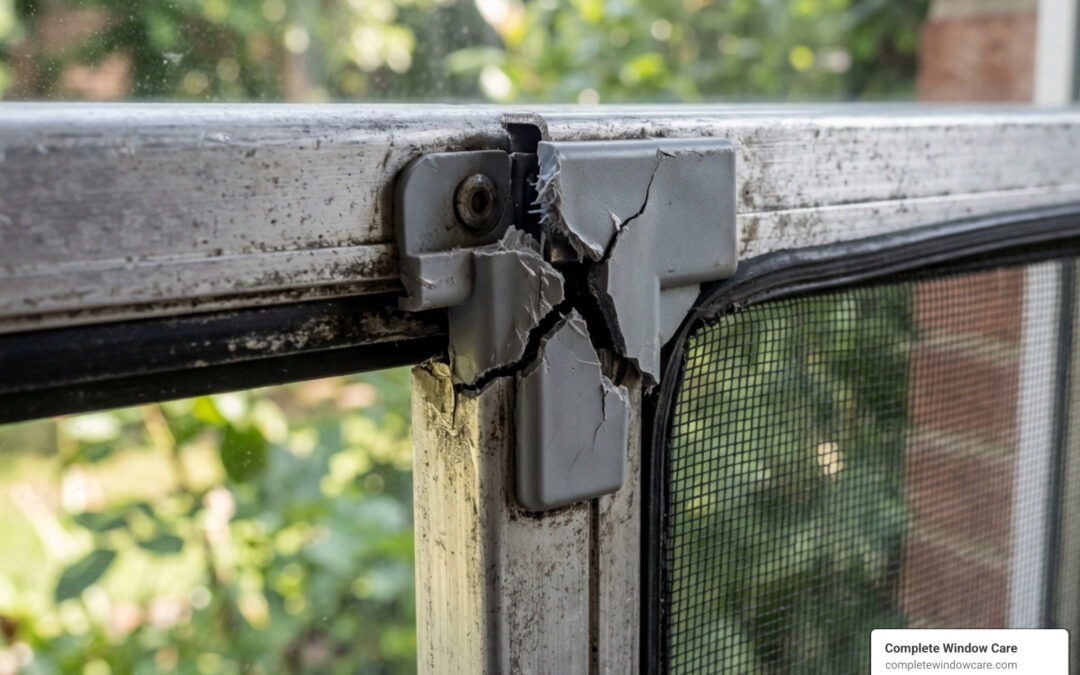
One easy-to-miss problem is a split corner clip. Most aluminum screen frames rely on small plastic corner keys inside the frame to hold everything square. If a screen gets dropped during cleaning, or the plastic turns brittle after years of sun exposure, those clips can crack. The frame may look twisted, loose, or unable to sit flat in the window. If you spot that kind of movement, it is worth taking care of the repair early before the whole screen slips out or becomes harder to fix.
In our region, hail damage is a major factor. Even if the mesh isn’t fully torn, hail can stretch it out, creating “dimples” that look terrible and weaken the material. Furthermore, damaged window screens can attract pests like wasps and spiders who find the loose edges perfect for nesting. If you notice an increase in outside noise or drafts when the window is open, it’s a sign that the seal between the frame and the window track has been compromised. Knowing when you should replace a window screen frame versus just the mesh is key to maintaining your home’s curb appeal and functionality.
Essential Tools and Materials for Rescreening
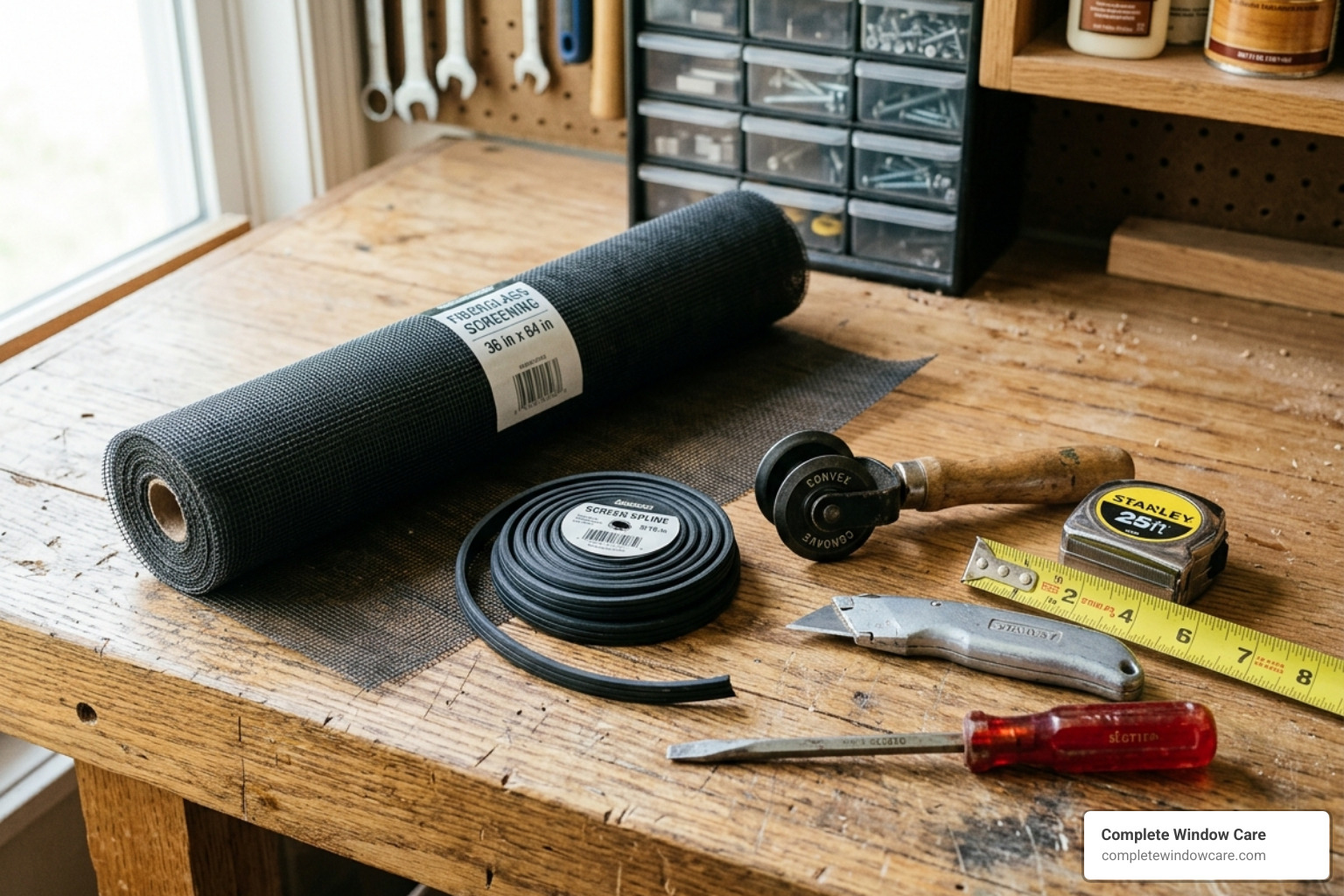
Before you dive into window screen and frame repair, you need the right kit. You don’t need a massive workshop, but a few specialized tools make the difference between a professional-looking taut screen and a saggy mess.
The Tool Kit
- Spline Roller: This is a double-ended tool with one concave and one convex wheel. It’s the most important tool you’ll own for this job.
- Utility Knife: For trimming the excess mesh. Make sure the blade is fresh!
- Flathead Screwdriver: Helpful for prying out old, stubborn spline.
- Tape Measure: Essential for measuring frame dimensions and spline diameter.
The Materials
Choosing the right mesh is about more than just blocking bugs. Here is a quick comparison of the most common types:
| Mesh Type | Best For | Material |
|---|---|---|
| Standard Fiberglass | General use, low cost, good visibility | Vinyl-coated fiberglass |
| Pet-Resistant | Homes with cats or dogs who scratch at windows | Heavy-duty vinyl-coated polyester |
| Solar Screen | Reducing heat gain and UV damage (Great for CO!) | Densely woven synthetic fiber |
| BetterVue/Invisible | Maximum airflow and optical clarity | Fine-gauge fiberglass |
Don’t forget the spline. It comes in various diameters (common sizes include .125, .140, and .160). You want a diameter that fits snugly but doesn’t require extreme force to roll in. If you are rebuilding the frame, you will also need corner keys and pull tabs. Using metal pull tabs instead of plastic ones is a pro tip—they won’t snap off after three years in the sun, helping you fix window screens without losing curb appeal.
Step-by-Step Guide to Window Screen and Frame Repair
Ready to get to work? The secret to a professional finish is a large, flat surface. A dining table (covered with a blanket) or a clean garage floor works best. You want enough room to lay the frame completely flat so it doesn’t twist while you’re applying tension.
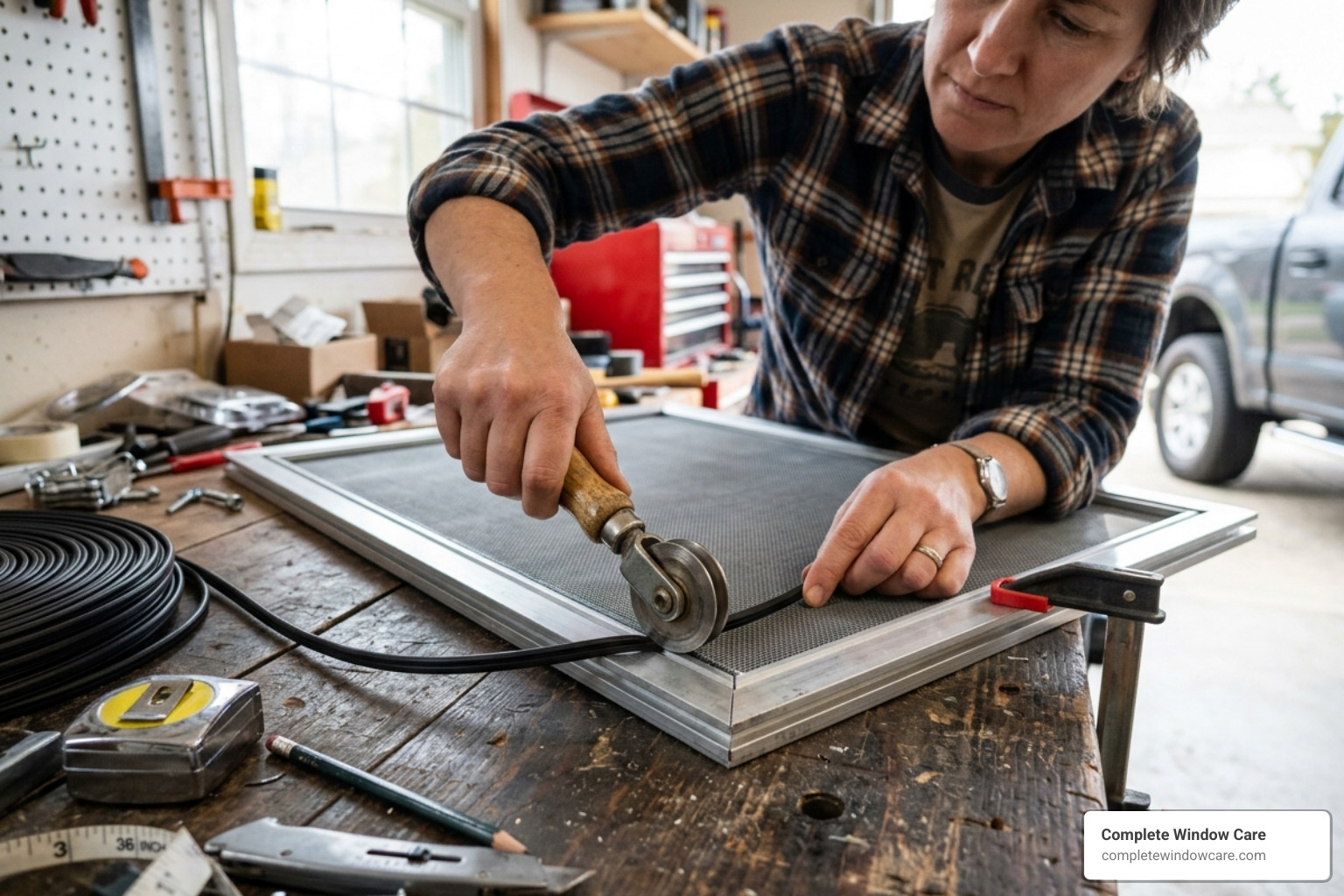
Following a step-by-step window screen replacement process ensures you don’t miss the small details that prevent sagging.
Removing the Damaged Mesh
Start by finding the end of the spline. Use your screwdriver to pry it up and pull it out. If the spline is over 10 years old, it will likely come out in brittle chunks. Once the spline is out, the old mesh will lift right off.
This is the perfect time for addressing window screen issues like dirt buildup. Use a stiff brush to clean the “channel” (the groove where the spline goes). Dirt and debris in the channel are common causes for window screens ripping because they create friction points during installation.
Fixing a Broken Window Screen Frame
If your frame is bent or has a broken corner, you need to fix this before putting in new mesh. Most modern frames are made of aluminum extrusions. If a side is badly bent, you can actually buy “sticks” of aluminum frame and cut a new piece to length using a hacksaw.
If the plastic corner clips are the issue, simply pull the frame pieces apart at the corner, slide out the broken bits, and tap in a new corner key. This is one of those fixes for damaged window screens that saves you from buying a whole new custom frame. For more complex issues, check out our guide on solutions for common window screen repairs.
Installing New Mesh and Spline
- Cut the Mesh: Lay the new mesh over the frame, ensuring it overlaps the edges by at least an inch on all sides.
- The “L” Technique: Start at one corner. Use the convex end of the roller to “pre-roll” the mesh into the channel. Then, press the spline in. Pro tip: Don’t try to do the whole frame with one continuous piece of spline. Using two “L-shaped” pieces (covering the top/right and bottom/left) makes it much easier to keep the frame square.
- Maintain Tension: As you roll, use your non-dominant hand to gently pull the mesh toward the outside of the frame. You don’t want it “drum-tight” yet, as the spline will naturally tighten it. Many people ask, “Is window screen repair difficult?“—the answer is no, as long as you don’t over-tighten the first two sides, which causes the frame to “hourglass” or bow inward.
- Trimming: Use your utility knife to cut the excess mesh. Angle the blade away from the spline and toward the outside of the frame to avoid accidentally slicing your new screen or the spline itself.
Professional vs. DIY Window Screen and Frame Repair
DIY repair is a fantastic way to save money, especially for standard-sized windows. A basic rescreening can be done in about 10–15 minutes once you have the hang of it. However, comparing DIY and professional screen repair often comes down to the “frustration factor” and the scale of the project.
When to Call a Professional
While we love a good DIY project, there are times when calling us at Complete Window Care is the smarter move:
- Warped or Twisted Frames: If the aluminum itself is twisted (not just bent), it’s very difficult to get a screen to sit flat without professional equipment.
- Large-Scale Hail Damage: If every screen in your house was hit by a Colorado Springs storm, the sheer volume of work can be overwhelming.
- Specialty Hardware: Some older homes use unique tension springs or latches that aren’t available at big-box stores.
- High-Altitude Safety: If you have second or third-story windows that require a ladder, the benefits of professional screen repair include safety and peace of mind.
Hiring a screen repair service company ensures that the tension is perfect and the materials are rated for our specific Pikes Peak climate.
Maintenance Tips to Prevent Future Damage
Once your screens are looking sharp, a little prevention goes a long way.
- Clean Regularly: Use a low-pressure garden hose and a soft brush once a year to remove dust and pollen. This prevents the “shiny” oxidation we mentioned earlier.
- Winter Storage: In Colorado, we get heavy snow that can stretch out mesh. If you don’t plan on opening your windows in the winter, consider removing the screens and storing them flat in a garage or basement. This is one of our top tips for avoiding screen damage.
- Spring Inspection: Make it a habit to check your screens every spring. Preventing window screen tears starts with catching small snags before they turn into giant holes.
- Lubricate Tracks: A little silicone spray in the window tracks makes it easier to remove and reinstall screens without bending the frames. For more detailed advice, see our guide on how to maintain and repair window screens.
Frequently Asked Questions about Screen Repair
Can I repair a small tear with a patch?
Yes, you can! For holes smaller than a dime, a mesh patch with waterproof adhesive can work as a temporary fix. However, patches are always visible and can affect your curb appeal. Most homeowners find that fully replacing the mesh is more satisfying and only takes a few more minutes than fiddling with a patch.
How do I measure for a replacement screen frame?
If the original frame is missing, measure the “screen track” of the window. Measure the width and height to the nearest 1/16th of an inch. Subtract 1/8th of an inch from your measurements to ensure the frame has enough “wiggle room” to be installed. Check out our guide on what to do before installing new screens for more measuring tips.
What is the best mesh for pets?
If you have a cat that thinks your window screen is a climbing wall, you need pet-resistant mesh. This is made from vinyl-coated polyester and is about seven times stronger than standard fiberglass. It’s nearly impossible for a pet to tear, making it the ultimate solution for pet-caused damage.
Conclusion
Taking the time for window screen and frame repair is an investment in your home’s comfort and health. Whether you’re tackling a single torn screen or looking to upgrade your entire home to solar mesh to beat the Colorado sun, the process is straightforward once you have the right tools.
At Complete Window Care, we’ve been serving the Colorado Springs and Pikes Peak region for nearly two decades. We believe in cost-effective repairs that extend the life of your windows without the need for expensive full replacements.
If you’ve looked at your screens and realized the job is a bit bigger than a 10-minute DIY fix, we’re here to help. From hail damage restoration to custom frame fabrication, we’ll make sure your home stays pest-free and beautiful. Why window screen repair needs to be on your checklist is simple: it’s the best way to enjoy our beautiful Colorado air without the “uninvited guests.”
Ready for a professional touch? Contact us today to learn more about our repair services and get your windows back in top shape!